Pin header female header connectors are essential components in various electronic applications, providing a reliable and convenient way to connect different circuit boards or components. As a supplier of these connectors, I often receive inquiries about the number of pins a typical pin header female header connector has. In this blog post, I will explore this question in detail, discussing the common pin configurations, factors influencing pin count, and the importance of choosing the right pin count for your specific application. Pin HeaderFemale Header Connector
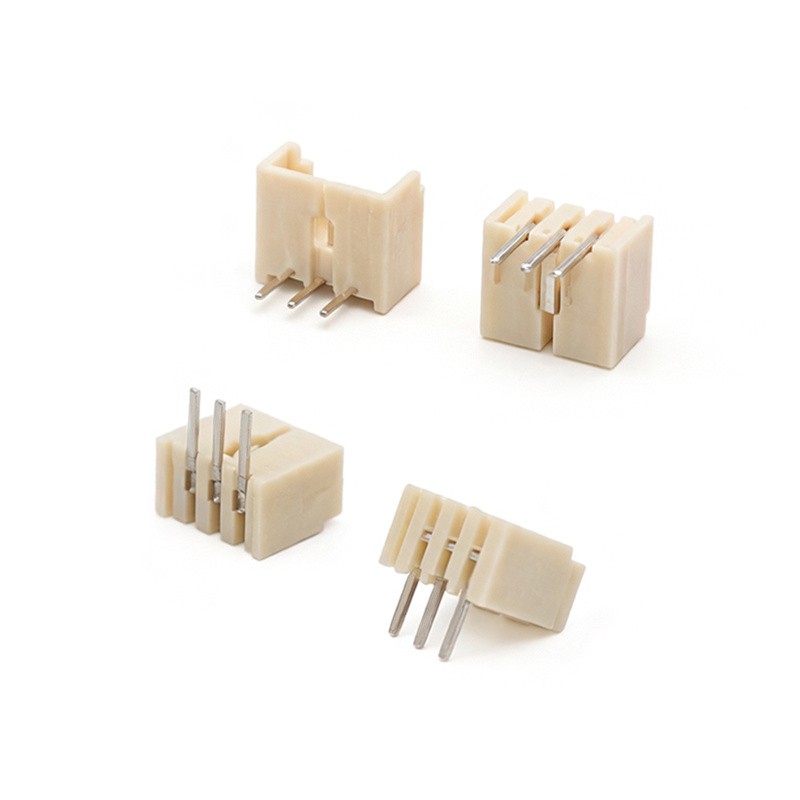
Common Pin Configurations
Pin header female header connectors come in a wide range of pin counts, with some of the most common configurations being 2-pin, 3-pin, 4-pin, 6-pin, 8-pin, 10-pin, 12-pin, 16-pin, 20-pin, 24-pin, and 40-pin connectors. These configurations are widely used in different electronic devices and systems, from simple hobby projects to complex industrial applications.
- 2-pin and 3-pin connectors: These are often used for power supply connections, such as connecting a battery or a power adapter to a circuit board. They are also used in some simple sensor applications, where only a few signals need to be transmitted.
- 4-pin to 10-pin connectors: These connectors are commonly used in applications that require a moderate number of signals, such as connecting a display module, a keyboard, or a mouse to a computer motherboard.
- 12-pin to 20-pin connectors: These connectors are often used in more complex applications, such as connecting a hard drive, a solid-state drive, or a graphics card to a computer motherboard. They can also be used in industrial control systems, where multiple signals need to be transmitted between different components.
- 24-pin and 40-pin connectors: These connectors are typically used in high-speed data transfer applications, such as connecting a USB 3.0 or USB 3.1 device to a computer. They are also used in some industrial applications, where a large number of signals need to be transmitted simultaneously.
Factors Influencing Pin Count
The number of pins in a pin header female header connector is determined by several factors, including the specific application requirements, the type of signals being transmitted, and the physical space available on the circuit board.
- Application requirements: The number of pins required for a particular application depends on the number of signals that need to be transmitted. For example, a simple power supply connection may only require 2 or 3 pins, while a complex data transfer application may require 24 or 40 pins.
- Type of signals: Different types of signals require different numbers of pins. For example, analog signals typically require fewer pins than digital signals, as they can be transmitted using a single wire. Digital signals, on the other hand, often require multiple pins to transmit data, clock, and control signals.
- Physical space: The physical space available on the circuit board also plays a role in determining the number of pins. If there is limited space on the board, a connector with a smaller pin count may be required. Conversely, if there is ample space, a connector with a larger pin count can be used.
Importance of Choosing the Right Pin Count
Choosing the right pin count for your specific application is crucial for ensuring reliable and efficient operation. Using a connector with too few pins may result in insufficient signal transmission, while using a connector with too many pins may lead to unnecessary complexity and cost.
- Reliability: A connector with the right pin count ensures that all the necessary signals are transmitted reliably. This helps to prevent signal loss, interference, and other issues that can affect the performance of the electronic device or system.
- Efficiency: Using a connector with the right pin count helps to optimize the use of resources, such as power, space, and materials. This can lead to cost savings and improved efficiency in the overall design of the electronic device or system.
- Compatibility: Choosing a connector with the right pin count ensures compatibility with other components and devices in the system. This helps to simplify the design process and reduce the risk of compatibility issues.
Conclusion

In conclusion, the number of pins in a typical pin header female header connector can vary widely depending on the specific application requirements, the type of signals being transmitted, and the physical space available on the circuit board. As a supplier of these connectors, I understand the importance of choosing the right pin count for your specific application. Whether you are working on a simple hobby project or a complex industrial application, I can help you select the right connector with the appropriate pin count to meet your needs.
Automotive Connector If you are interested in purchasing pin header female header connectors or have any questions about our products, please feel free to contact me. I would be happy to discuss your requirements and provide you with a quote.
References
- "Pin Header Connectors: A Comprehensive Guide," Electronics Notes.
- "Connector Basics: Pin Headers and Sockets," SparkFun Electronics.
- "Choosing the Right Connector for Your Application," TE Connectivity.
Wenzhou JKUN Connector Co., Ltd.
As one of the most professional pin headerfemale header connector manufacturers and suppliers in China, we’re featured by quality products and low price. Please rest assured to wholesale bulk customized pin headerfemale header connector from our factory. For quotation and free sample, contact us now.
Address: No.2667, Ningkang East Road, Yueqing City, Zhejiang Province, China
E-mail: sales@cnjkun.com
WebSite: https://www.jkunjcj.com/
