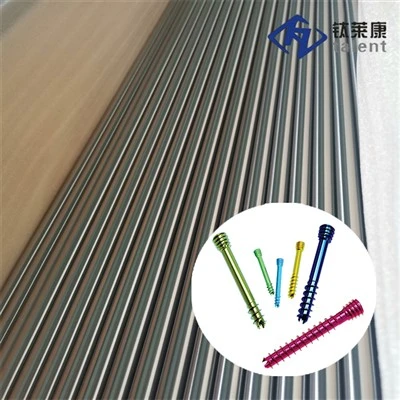
As a supplier of titanium wires, I’ve witnessed firsthand the growing demand for these versatile materials across various industries, from aerospace and medical to automotive and jewelry. Titanium wires offer a unique combination of high strength, low density, excellent corrosion resistance, and biocompatibility, making them an ideal choice for many applications. However, to fully leverage these properties and meet the stringent requirements of modern industries, optimizing the performance of titanium wires is crucial. In this blog post, I’ll share some insights and strategies on how to achieve this goal. Titanium Wires
Understanding the Basics of Titanium Wires
Before delving into optimization techniques, it’s essential to understand the basic properties and characteristics of titanium wires. Titanium is a transition metal with an atomic number of 22. It exists in two allotropic forms: alpha (α) and beta (β). The properties of titanium wires can vary significantly depending on their composition, microstructure, and processing history.
The most common grade of titanium used for wire production is Grade 2, which is commercially pure titanium. It offers good corrosion resistance, formability, and weldability, making it suitable for a wide range of applications. Other grades, such as Grade 5 (Ti-6Al-4V), are alloyed with aluminum and vanadium to enhance strength and heat resistance, making them ideal for high-stress applications in aerospace and automotive industries.
Raw Material Selection
The quality of the raw material is the foundation for optimizing the performance of titanium wires. When selecting titanium ingots or billets, it’s important to consider the following factors:
- Chemical Composition: Ensure that the raw material meets the required chemical specifications for the intended application. Impurities such as iron, carbon, and nitrogen can have a significant impact on the mechanical properties and corrosion resistance of titanium wires.
- Microstructure: The microstructure of the raw material affects its formability and mechanical properties. A fine-grained microstructure generally leads to better ductility and toughness, while a coarse-grained microstructure may result in reduced formability.
- Manufacturing Process: The manufacturing process used to produce the raw material can also influence its quality. For example, vacuum arc remelting (VAR) is a common method for producing high-quality titanium ingots with low impurity levels and uniform microstructure.
Melting and Casting
The melting and casting process is a critical step in the production of titanium wires. It involves melting the raw material in a furnace and casting it into ingots or billets. The following factors should be considered during this process to optimize the performance of titanium wires:
- Melting Technique: Vacuum arc remelting (VAR) is the most widely used melting technique for titanium due to its ability to produce high-quality ingots with low impurity levels and uniform microstructure. Electron beam melting (EBM) and plasma arc melting (PAM) are also used in some applications, offering advantages such as faster melting rates and better control over the melting process.
- Casting Method: The casting method used can affect the microstructure and properties of the cast ingots or billets. For example, investment casting is a precision casting method that can produce complex shapes with high dimensional accuracy, while continuous casting is a high-volume production method that can produce long lengths of titanium bars or rods.
- Quality Control: Strict quality control measures should be implemented during the melting and casting process to ensure the consistency and quality of the cast products. This includes monitoring the chemical composition, microstructure, and mechanical properties of the cast ingots or billets, as well as conducting non-destructive testing (NDT) to detect any internal defects.
Hot Working
Hot working is a process in which titanium wires are formed at elevated temperatures to improve their mechanical properties and microstructure. The following hot working techniques are commonly used in the production of titanium wires:
- Hot Rolling: Hot rolling is a process in which titanium ingots or billets are passed through a series of rolling mills to reduce their thickness and increase their length. This process helps to refine the microstructure of the titanium and improve its mechanical properties, such as strength and ductility.
- Hot Forging: Hot forging is a process in which titanium billets are heated to a high temperature and then shaped using a hammer or press. This process can be used to produce complex shapes with high precision and excellent mechanical properties.
- Hot Extrusion: Hot extrusion is a process in which titanium billets are heated and forced through a die to produce long, continuous sections of wire or rod. This process can be used to produce wires with a wide range of diameters and cross-sectional shapes.
During hot working, it’s important to control the temperature, strain rate, and deformation amount to ensure the desired microstructure and mechanical properties are achieved. Additionally, proper lubrication and cooling techniques should be used to prevent surface damage and improve the quality of the finished product.
Cold Working
Cold working is a process in which titanium wires are formed at room temperature to improve their strength and hardness. The following cold working techniques are commonly used in the production of titanium wires:
- Cold Drawing: Cold drawing is a process in which titanium wires are pulled through a series of dies to reduce their diameter and increase their length. This process helps to refine the microstructure of the titanium and improve its strength and hardness.
- Cold Rolling: Cold rolling is a process in which titanium sheets or strips are passed through a series of rolling mills to reduce their thickness and increase their width. This process can be used to produce thin sheets or foils with excellent surface finish and mechanical properties.
- Cold Forging: Cold forging is a process in which titanium billets are shaped at room temperature using a hammer or press. This process can be used to produce small, complex parts with high precision and excellent mechanical properties.
Cold working can significantly increase the strength and hardness of titanium wires, but it also reduces their ductility and toughness. Therefore, it’s important to balance the amount of cold working with the desired mechanical properties of the finished product. Additionally, annealing may be required after cold working to relieve internal stresses and restore the ductility of the titanium wires.
Heat Treatment
Heat treatment is a process in which titanium wires are heated to a specific temperature and then cooled at a controlled rate to improve their mechanical properties and microstructure. The following heat treatment techniques are commonly used in the production of titanium wires:
- Annealing: Annealing is a heat treatment process in which titanium wires are heated to a high temperature and then cooled slowly to relieve internal stresses and improve their ductility and toughness. This process can be used to restore the properties of cold-worked titanium wires or to prepare them for further processing.
- Solution Treatment: Solution treatment is a heat treatment process in which titanium wires are heated to a high temperature and then quenched rapidly to dissolve the alloying elements in the titanium matrix. This process can be used to improve the strength and hardness of titanium alloy wires.
- Aging: Aging is a heat treatment process in which solution-treated titanium wires are heated to a lower temperature and held for a specific period to precipitate the alloying elements from the titanium matrix. This process can further improve the strength and hardness of titanium alloy wires.
The choice of heat treatment technique depends on the composition, microstructure, and intended application of the titanium wires. It’s important to carefully control the temperature, time, and cooling rate during heat treatment to ensure the desired properties are achieved.
Surface Treatment
Surface treatment is an important step in optimizing the performance of titanium wires. It can improve the corrosion resistance, wear resistance, and biocompatibility of the wires, as well as enhance their appearance. The following surface treatment techniques are commonly used in the production of titanium wires:
- Passivation: Passivation is a chemical process in which titanium wires are treated with an oxidizing agent to form a thin, protective oxide layer on the surface. This layer helps to prevent corrosion and improve the biocompatibility of the wires.
- Anodizing: Anodizing is an electrochemical process in which titanium wires are immersed in an electrolyte solution and an electric current is applied to form a thick, porous oxide layer on the surface. This layer can be dyed to achieve different colors and can improve the wear resistance and corrosion resistance of the wires.
- Coating: Coating is a process in which a thin layer of a different material is applied to the surface of titanium wires to improve their performance. For example, a ceramic coating can be applied to improve the wear resistance of the wires, while a polymer coating can be applied to improve their corrosion resistance and biocompatibility.
The choice of surface treatment technique depends on the intended application of the titanium wires. It’s important to carefully select the surface treatment method and ensure that it is compatible with the properties and requirements of the wires.
Quality Control
Quality control is an essential part of optimizing the performance of titanium wires. It involves monitoring and testing the wires at various stages of the production process to ensure that they meet the required specifications and standards. The following quality control measures are commonly used in the production of titanium wires:
- Chemical Analysis: Chemical analysis is used to determine the chemical composition of the titanium wires. This can be done using techniques such as spectroscopy, X-ray fluorescence, and wet chemical analysis.
- Mechanical Testing: Mechanical testing is used to evaluate the mechanical properties of the titanium wires, such as strength, ductility, and hardness. This can be done using techniques such as tensile testing, compression testing, and hardness testing.
- Microstructural Analysis: Microstructural analysis is used to examine the microstructure of the titanium wires. This can be done using techniques such as optical microscopy, scanning electron microscopy (SEM), and transmission electron microscopy (TEM).
- Non-Destructive Testing (NDT): Non-destructive testing is used to detect any internal defects or flaws in the titanium wires without damaging them. This can be done using techniques such as ultrasonic testing, magnetic particle testing, and eddy current testing.
By implementing strict quality control measures, we can ensure that our titanium wires meet the highest standards of quality and performance. This not only helps to satisfy our customers’ requirements but also enhances our reputation as a reliable supplier of high-quality titanium wires.
Conclusion
Optimizing the performance of titanium wires is a complex and challenging process that requires a deep understanding of the material’s properties and characteristics, as well as the various processing techniques involved. By carefully selecting the raw materials, controlling the melting and casting process, using appropriate hot and cold working techniques, applying effective heat treatment and surface treatment methods, and implementing strict quality control measures, we can produce titanium wires with excellent mechanical properties, corrosion resistance, and biocompatibility.
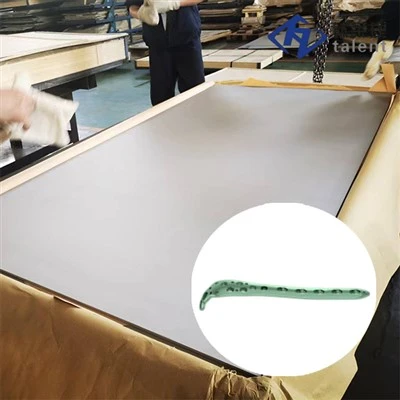
Medical Titanium Plates As a supplier of titanium wires, we are committed to providing our customers with the highest quality products and services. We have a team of experienced engineers and technicians who are dedicated to continuously improving our production processes and optimizing the performance of our titanium wires. If you are interested in purchasing titanium wires or have any questions about our products, please feel free to contact us. We look forward to working with you to meet your specific needs and requirements.
References
- Boyer, R., Welsch, G., & Collings, E. W. (1994). Materials properties handbook: Titanium alloys. ASM International.
- Donachie, M. J., & Donachie, S. J. (2002). Titanium: A technical guide. ASM International.
- Lütjering, G., & Williams, J. C. (2007). Titanium. Springer Science & Business Media.
Baoji Tailaikang High-Tech Metal Materials Co., Ltd.
With abundant experience, we are one of the most professional titanium wires manufacturers and suppliers in China. Please feel free to buy titanium wires for sale here and get pricelist from our factory. For price consultation, contact us.
Address: No. 1, Southeast Cross of Gaoxin Avenue and Fenghuang 3rd Road, High-tech Development Zone, Baoji City, Shaanxi Province, China
E-mail: sale@tlkjs.com
WebSite: https://www.tlkmetal.com/
