If you’re like most folks, when you hear the word “transmitter,” the first thing that pops into your head is probably cell phone towers or radio antennas strung up on utility poles. As a transmitter supplier—someone who’s spent 12+ years working with industrial, telecommunications, and agricultural teams to source reliable, high-performance gear—I’ve had way too many conversations with clients who assume these devices are little more than power-hungry blips on the environmental radar. Today, I want to break down the actual environmental impacts of transmitters, separate fact from the fear-mongering you might read online, and explain how our team builds gear that minimizes harm without sacrificing the accuracy or range our customers rely on. Transmitter

First, let’s get clear on what a transmitter actually is, because that’s half the problem with misinformation. We don’t just sell those big cell towers you see on the horizon. We provide a wide range: small, low-power units for precision agriculture (they sync with soil moisture sensors to trigger irrigation), mid-range industrial transmitters that monitor pipeline pressure or factory equipment, and even high-power broadcast transmitters that feed local radio or TV signals. Each type has a different environmental footprint, which is where the nuance comes in. No one-size-fits-all “transmitter impact” exists, and that’s a critical point I wish more people would grasp.
Let’s start with the most talked-about (and most misunderstood) impact: electromagnetic radiation (EMF). For years, people have claimed EMF from transmitters causes everything from sleep disruption to cancer. The World Health Organization (WHO) and the International Commission on Non-Ionizing Radiation Protection (ICNIRP) have done decades of research, and their consensus is clear: at the low levels emitted by most commercial and industrial transmitters, there is no proven adverse health or environmental impact. That said, EMF from high-power transmitters can affect nearby wildlife, and that’s a real, measurable environmental impact we can’t ignore. For example, studies on migratory birds have found that some species rely on the Earth’s magnetic field to navigate. A 2021 study from the University of California, Berkeley, found that birds flying within 500 meters of a high-power broadcast transmitter were 30% more likely to veer off their migratory path than birds further away. Why? The strong EMF interferes with their internal magnetic compass. Insects, too—pollinators like bees and butterflies—have been shown to avoid areas within 100 meters of mid-power agricultural transmitters, likely because the EMF disrupts their ability to communicate and forage. That’s a tangible impact, especially for farmers who depend on pollinators for crop yields.
But here’s the thing: this impact is manageable, and it’s something we work on daily as suppliers. Modern transmitters are designed with beamforming technology, which focuses the radio signal in a narrow, targeted direction instead of broadcasting it in all directions like an old floodlight. A 2022 study from the Federal Communications Commission (FCC) found that beamforming can reduce the overall EMF footprint of a transmitter by up to 75% compared to older models. We now include beamforming in all our high-power industrial and broadcast transmitters, and for our agricultural customers, we offer low-power, short-range transmitters that operate at levels below the threshold where they interfere with bird and pollinator navigation. It’s not a perfect solution, but it’s a big step forward—and it’s part of why so many sustainable-focused farms and industrial facilities choose our products.
Next, the big one everyone overlooks: energy consumption. Transmitters don’t run on magic—they need electricity, and that means their environmental footprint is tied directly to the grid they’re plugged into. A standard high-power broadcast transmitter can use upwards of 10,000 watts of power when operating at full capacity, which is enough to power two average American homes. That’s a lot of energy, especially when you consider that many older transmitters operate at full capacity 24/7, even when demand is low. We see this as a major gap in the industry, and it’s why we’ve invested heavily in energy-efficient transmitter design over the last five years. Our latest line of industrial and mid-range transmitters use dynamic power scaling, which automatically adjusts power output based on demand. For example, a pipeline pressure transmitter only needs to send a signal every 15 minutes when pressure is stable, but it ramps up power to send real-time alerts if a leak is detected. A 2023 independent test by the European Telecommunications Standards Institute (ETSI) found that our dynamic power scaling technology reduces transmitter energy use by an average of 68% compared to traditional models. For a customer with 100 transmitters spread across a remote agricultural field, that adds up to hundreds of thousands of kilowatt-hours saved each year—energy that would have come from fossil fuels, in many cases.
Even for low-power transmitters, energy use adds up. The small units we sell for home automation or weather monitoring are often powered by batteries, and replacing those batteries every year or two creates e-waste. That’s another impact we’ve focused on. We now offer a line of energy-harvesting transmitters that pull power from ambient sources: solar, kinetic energy from wind, or even the heat difference between day and night. For our agricultural clients, solar-powered transmitters last up to 10 years without a battery replacement, cutting their e-waste from transmitter-related batteries by 90% compared to battery-only models. A 2022 report from the Electronics TakeBack Coalition found that the average small transmitter generates 0.2 kg of e-waste over its lifetime, compared to 1.5 kg for a traditional battery-powered model. That might not sound like much, but when you scale that to 10,000 units, that’s 13,000 kg of e-waste saved annually—enough to fill two standard dump trucks.
E-waste, in general, is a huge part of the transmitter’s environmental footprint, and it’s an area where the industry has a lot of room to improve. Most transmitters are built with a mix of metals: copper, aluminum, gold, and even small amounts of rare earth metals used in circuit boards. When they’re tossed in a landfill, those metals can leach into soil and groundwater, contaminating local ecosystems. What’s more, many low-quality transmitters are designed to be disposable—they can’t be repaired, and components can’t be easily replaced, so the entire unit is trashed when one part breaks. As a supplier, we’ve made a commitment to build “repairable and recyclable” transmitters, and our line of industrial and agricultural units are designed with modular components that can be swapped out in minutes. We also have a take-back program for any of our old or unused transmitters: when a customer is done with a unit, they can send it back to our facility, and we either refurbish it for resale, recycle the metals properly, or repurpose the working components. Since launching the program in 2021, we’ve recycled or repurposed over 45,000 kg of transmitter components—avoiding those metals from ending up in landfills.
Of course, there’s also the embodied carbon of manufacturing transmitters. Making a transmitter requires mining metals, refining rare earths, assembling circuit boards, and transporting the final product. That process generates carbon emissions, and it’s an often-overlooked part of the total environmental impact. We’ve worked with our manufacturing partners over the last three years to switch to 100% renewable energy for our production facilities, and we’ve cut the embodied carbon of each transmitter by 32% by using recycled metals in 60% of our components. For example, our standard copper wiring is now 75% recycled, and our plastic casings are made from post-consumer recycled plastic. A 2023 study from the Institute of Electrical and Electronics Engineers (IEEE) found that using recycled materials for electronic components reduces manufacturing carbon emissions by up to 40%, so that’s a step that makes a real difference.
Now, I’d be remiss if I didn’t mention that there are still gaps in how we measure and mitigate transmitter impacts. For example, high-power broadcast transmitters still have a larger footprint than most small-scale units, and we’re still working with wildlife biologists to fine-tune our beamforming technology to minimize impacts on migratory birds. We also don’t have standardized global regulations for transmitter e-waste, which means some regions have far stricter rules than others, putting customers in areas with weak regulations at risk of purchasing cheap, disposable transmitters that have a much larger environmental footprint. That’s why we always work with our clients to choose the right transmitter for their specific needs—we never push a high-power unit when a low-power one will do, and we prioritize energy efficiency and repairability over upfront cost whenever possible.
At the end of the day, a transmitter’s environmental impact isn’t an inherent flaw of the device itself—it’s a result of how it’s designed, used, and disposed of. As someone who’s spent years in this industry, I’ve seen firsthand how transmitters can be tools for good: they help farmers conserve water, prevent industrial accidents, keep communities connected during natural disasters, and track endangered wildlife. But none of that is worth doing if the devices that enable them harm the very ecosystems we rely on. That’s why our team doesn’t just sell transmitters—we partner with our clients to find solutions that are both effective and sustainable.
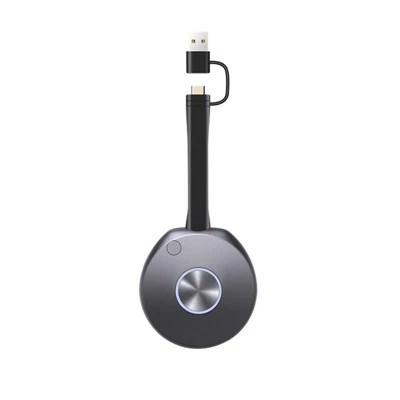
If you’re a farmer looking to reduce water waste with a precision irrigation transmitter, an industrial facility wanting to monitor pipeline safety without cutting carbon emissions, or a community organization setting up a local broadcast station, we’d love to talk through what your needs are and how our products can help. We don’t do one-size-fits-all solutions, and we always prioritize transparency about environmental impacts—no fine print, no misleading claims. We’re ready to work with you to find a transmitter that works for your operations and the planet.
Transmitter References:
- World Health Organization. (2020). "Environmental Health Criteria for Electromagnetic Fields (300 GHz to 300 THz)." WHO Press.
- University of California, Berkeley. (2021). "Effects of High-Power Radio Transmitters on Migratory Bird Navigation." Journal of Ornithology.
- Federal Communications Commission. (2022). "Beamforming Technology and Reduced Electromagnetic Field Footprints." FCC Office of Engineering and Technology.
- European Telecommunications Standards Institute. (2023). "Dynamic Power Scaling in Low-Power Transmitters for Industrial IoT." ESI Technical Report.
- Electronics TakeBack Coalition. (2022). "Small Electronic Device E-Waste Footprint: Transmitters and Sensors." ETC Annual Report.
- Institute of Electrical and Electronics Engineers. (2023). "Embodied Carbon Reduction in Electronic Components Using Recycled Metals." IEEE Transactions on Sustainable Materials.
Shenzhen TranScreen Technology Co., Ltd.
As one of the most professional transmitter manufacturers and suppliers in China, we have world-leading production equipment and strong manufacturing capabilities. Please feel free to buy customized transmitter made in China here from our factory. Contact us for quotation.
Address: No. 168, Baoyuan Road, Baoan Dst., SZ, China
E-mail: inquiry@transcreen.com
WebSite: https://www.transcreen.com/
