If you’ve ever stood at a construction site or wandered through a suburban neighborhood in Australia, the name Colorbond probably isn’t new to you. As a Colorbond fence supplier with over a decade of answering the same questions from homeowners, builders, and renovators alike, one of the most common (and most misunderstood) queries I get is this: “How flexible is a Colorbond fence, anyway?” Colorbond Fence
I get why this question comes up. When you’re investing thousands of dollars in a fence, you don’t just want something that looks good. You want something that can stand up to whatever throws at it—from a rogue cricket ball to a strong southern breeze, or even the occasional accidental knock from a lawnmower. Flexibility here isn’t about the fence bending so much it breaks; it’s about balancing the rigidity you need for security and privacy with the give to handle real-world stressors. Let me break this down, like I do for every customer who walks through our showroom or calls our team.
First, I need to start with what Colorbond steel actually is, because that’s where its flexibility (and its strength) comes from. For anyone who doesn’t know, Colorbond isn’t just regular steel painted a pretty color. It’s a coated steel product developed by BlueScope Steel, an Australian brand that’s been a staple in the building industry for generations. The core is galvanized steel—meaning it’s coated in zinc to stop rust, which is non-negotiable for fences that sit outside in the sun and rain. On top of that, there’s a layer of alloy (usually aluminum and magnesium) for extra corrosion resistance, then a primer, and finally that durable paint coat that gives it that iconic, fade-resistant finish.
Now, flexibility in steel products like Colorbond is measured in a few key ways: ductility (how much it can bend before it cracks or breaks), yield strength (the amount of force it takes to permanently bend it), and tensile strength (the maximum force it can handle before snapping). For Colorbond fence panels and posts, manufacturers tailor the steel gauges and profiles to hit specific benchmarks that work for fencing.
Most standard Colorbond fence panels use either 0.42mm or 0.48mm steel gauge. That’s thin enough to work with easily—manufacturers can roll it into the sleek, flat panels or the subtle corrugations that Colorbond is famous for, without making the fence too heavy to install. But it’s also thick enough to have serious give. Let’s put that in perspective: if you take a 2-meter tall Colorbond fence panel, and apply a moderate push in the middle—say, the force from a medium wind gust (around 50 km/h)—it will bend a little, but it won’t stay bent. That’s the ductility working for it. The steel isn’t brittle, so it doesn’t crack when it flexes. Instead, it returns to its original shape once the force is gone. That’s a huge part of its flexibility.
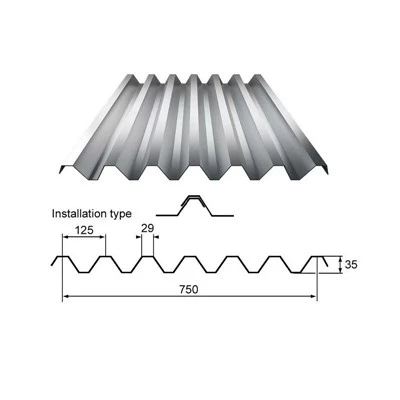
The corrugated profile of most Colorbond panels adds even more to this balance. Corrugations aren’t just for looks—they’re engineered to give the panel rigidity in the right places, but still allow some give. If a kid leans against a Colorbond fence (which I’ve seen happen more times than I can count at local parks), the panel will flex a little under that weight, but it won’t snap. I’ve had customers tell me their fence survived a branch falling on it during a storm, and the only damage was a tiny scratch in the paint—no bend, no crack, because the panel flexed with the impact.
That said, there’s a limit to that flexibility, and it’s important to be honest about that with customers. If you apply too much force, you’ll get a permanent bend. For example, if a car accidentally reverses into a fence panel, the force is strong enough to exceed the yield strength of the steel, and you’ll end up with a permanent curve. But that’s not a flaw—that’s how any steel product works. The design of Colorbond fencing is meant for everyday stresses, not catastrophic accidents.
Another factor that affects flexibility is the way the fence is installed. I always tell customers that a fence is only as flexible (and strong) as its installation. If you set the posts too far apart—say, more than 1.8 meters for a standard 1.8-meter tall panel—the panel will have more room to sway in the wind, and that extra movement can lead to a permanent bend over time. But if you follow the Australian Standards (AS 4687-2014, the code for fencing), posts are spaced 1.5 to 1.8 meters apart, depending on the height. That spacing keeps the panel’s flexibility controlled. The panels don’t have too much room to bend, so they stay straight and intact.
Concrete footings for posts also play a role. If you set posts in shallow footings (less than 600mm deep for a 1.8-meter tall fence), the whole structure can shift in heavy winds. The posts might lean, and that puts stress on the panels, which can lead to bending over time. But when posts are set correctly in concrete, they provide a stable base, so the panel’s flexibility works in tandem with the post’s strength, rather than working against it.
I’ve seen this firsthand with a customer in Brisbane a few years ago. They installed a Colorbond fence for their backyard, and initially set the posts 2 meters apart to save a little on concrete. Within six months, we had to come out to fix three panels that were permanently bent. The wind up there can be strong, and with that extra space, the panels were swaying so much they couldn’t spring back. Once we re-installed the posts at the correct spacing, adding an extra line of posts, the fence held up through several storms after that. That’s why installation is just as important as the product itself when it comes to flexibility and durability.
What about different types of Colorbond fences? Not all Colorbond fences are the same, right? There are the standard flat or corrugated panels, there are slatted fences for more privacy, there are lattice tops, and there are even taller fences for pool boundaries. Let’s talk about their flexibility, because that varies too.
Slatted Colorbond fences are super popular these days—they give you privacy without blocking all the light, and they look sleek. The slats are usually thinner than standard panels, and spaced (or overlapping) to control visibility. Because they’re thinner, they have a little more flexibility than a full solid panel. But if they’re installed correctly, with posts at the right spacing, that flexibility is minimal. I’ve had customers with slatted fences tell me their fence survived a cyclone season a couple of years back, and only a couple of slats needed to be adjusted—no snapping, no permanent damage. The slats flexed with the wind, which is exactly what they’re designed to do.
Pool fences, on the other hand, have different rules. Australian Standards require pool fences to be at least 1.2 meters tall, with no gaps wider than 100mm, and they need to be rigid enough to prevent a child from climbing over. So Colorbond pool fences are built with a slightly thicker steel gauge, usually 0.48mm, and sometimes with a top rail that adds extra strength. That makes them a little less flexible than a standard backyard fence, but they still have enough give to handle minor impacts, like a kid bumping into them, without breaking. They’re not meant to flex as much because they need to be secure, but that doesn’t mean they’re rigid to the point of being brittle.
Another common question I get is about cold weather and heat—do extreme temperatures affect Colorbond’s flexibility? I live in Victoria, where we get freezing winters and scorching summers, so I hear this all the time. The short answer is: no, not significantly. Colorbond steel is engineered to withstand temperature fluctuations, which is one of the reasons it’s so popular across Australia. It doesn’t get brittle in cold weather, and it doesn’t warp or become too soft in heat. I installed a Colorbond fence at a property in the Yarra Valley 12 years ago, and it’s gone through every temperature you can imagine—snow on winter mornings, 40-degree summer afternoons—and it still has the same flexibility as the day it was installed. No permanent bends, no cracks from cold, no sagging from heat.
Compare that to other fencing materials, like wood. Wood can warp and become brittle in extreme temperatures, or soft and flexible when it’s wet. Vinyl fencing can get brittle in cold weather, too, and crack if it’s pushed too hard. Colorbond’s consistency is a big part of its flexibility advantage. It performs the same, no matter the weather.
Now, I need to be clear about what flexibility means for different customers. For a homeowner looking for a privacy fence, flexibility means not having to worry about minor impacts or wind damage. For a builder working on a commercial property, flexibility means the fence can be installed quickly, and can handle the wear and tear of a busy site before the final handover. For a farmer, flexibility might mean the fence can handle the occasional knock from a utility vehicle, or a run-in with livestock, without breaking. Colorbond works for all of these because its flexibility is tailored to the job.
I always tell customers that when they’re choosing a fence, flexibility shouldn’t be the only factor. You also need to consider security, privacy, appearance, and maintenance. But Colorbond’s flexibility is a key part of why it’s such a reliable choice. It’s not so rigid that it breaks when pushed, and not so flexible that it sags or loses shape. It strikes that perfect balance.
If you’re in the market for a Colorbond fence, the best thing to do is work with a reputable supplier (that’s us, by the way) who can help you choose the right gauge, profile, and height for your needs. We can also walk you through the correct installation steps, because even the most flexible fence will fail if it’s installed wrong.
At the end of the day, a fence is an investment, and you want something that will last. Colorbond’s flexibility, combined with its corrosion resistance and durability, makes it one of the best options out there. It’s built to handle the ups and downs of Australian weather and life, so you don’t have to worry about it bending out of shape or breaking when you need it most.

If you’re ready to talk about your Colorbond fence needs, or want more information about flexibility, feel free to reach out to our team to discuss your project. We’re here to help you find the perfect fence for your home or business.
Construction Hoarding References:
BlueScope Steel. Colorbond Steel Technical Specifications.
Australian Standard AS 4687-2014. Fences – Safety and Performance Requirements.
Fencing Industry Association of Australia. Fence Installation Best Practices.
Tianjin Juncheng Weiye Light Steel Color Panel Co., Ltd.
As one of the most professional colorbond fence manufacturers and suppliers in China, we’re featured by quality products and low price. Please rest assured to buy cheap colorbond fence made in China here from our factory. We also accept customized orders.
Address: Beiwang Village, Junliangcheng Street, Dongli District, Tianjin, China
E-mail: finnxu3575@gmail.com
WebSite: https://www.fencefactorycn.com/
