Hey there! I’m a guy in the PCBA business, and I often get asked, "What’s the full meaning of PCBA?" Well, let’s dive right into it. PCBA
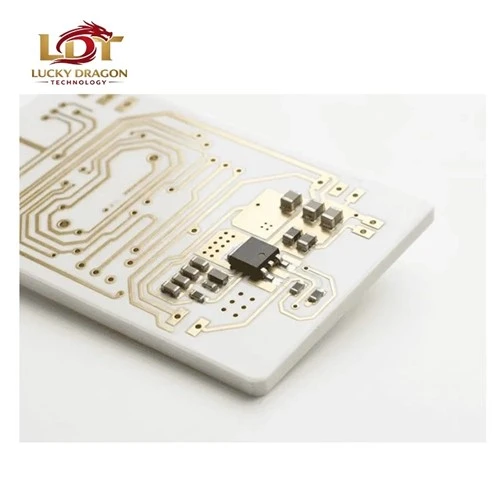
PCBA stands for Printed Circuit Board Assembly. Sounds pretty straightforward, right? But there’s a whole lot more to it than just those words.
First off, let’s break down what a Printed Circuit Board (PCB) is. A PCB is like the backbone of an electronic device. It’s a flat board made of insulating material, usually fiberglass, with thin copper traces on it. These traces act as wires, connecting different components on the board. Think of it as a roadmap for electrical signals. The PCB provides a stable platform for all the electronic parts to be mounted on, and it ensures that they can communicate with each other properly.
Now, the “A” in PCBA stands for Assembly. Once the PCB is manufactured, it’s time to turn it into a functional unit. That’s where the assembly process comes in. During assembly, various electronic components such as resistors, capacitors, integrated circuits (ICs), and connectors are soldered onto the PCB. This is a highly precise process that requires specialized equipment and skilled technicians.
There are two main methods for PCBA: through-hole assembly and surface mount technology (SMT). Through-hole assembly has been around for a long time. In this method, the leads of the components are inserted through holes in the PCB and then soldered on the other side. It’s a reliable method, especially for components that need to withstand high mechanical stress. However, it’s also more time-consuming and labor-intensive.
On the other hand, SMT has become the dominant method in modern PCBA. With SMT, components are placed directly on the surface of the PCB and soldered using a reflow soldering process. This allows for much smaller and more densely packed boards, which is crucial in today’s electronics where miniaturization is key. SMT also enables faster production speeds and better electrical performance.
As a PCBA supplier, I’ve seen firsthand how important a well-assembled PCB is. It can make or break the performance of an electronic device. A poorly assembled board can lead to issues such as electrical shorts, intermittent connections, or even complete failure. That’s why we take every step of the assembly process seriously.
We start by sourcing high-quality components. We work with trusted suppliers to ensure that the parts we use meet the highest standards. This includes thorough testing of the components before they’re used in the assembly process. We also use state-of-the-art equipment for the assembly itself. Our SMT machines can place components with incredible precision, and our reflow ovens are calibrated to ensure perfect soldering joints every time.
But it’s not just about the technology. We also have a team of experienced technicians and engineers who oversee the entire process. They’re constantly monitoring the production line, making sure that everything is running smoothly and that any issues are addressed immediately.
Another important aspect of our work as a PCBA supplier is prototyping. Many of our customers come to us with an idea for a new electronic device. They need a prototype to test their concept and make any necessary adjustments before mass production. We’re able to quickly turn their designs into working prototypes, allowing them to get their product to market faster.
We also offer a range of value-added services. This includes design for manufacturability (DFM) analysis. During the DFM process, we review the customer’s PCB design to ensure that it’s optimized for the assembly process. We can identify potential issues early on and make suggestions for improvements. This helps to reduce production costs and improve the overall quality of the final product.
In addition, we provide full testing and inspection services. Once the PCBA is complete, we subject it to a series of tests to ensure that it meets the customer’s specifications. This includes functional testing, in-circuit testing, and automated optical inspection (AOI). Any faulty boards are identified and repaired before they’re shipped to the customer.
So, you might be wondering why you should choose us as your PCBA supplier. Well, it’s simple. We have the experience, the technology, and the expertise to deliver high-quality PCBA solutions. We understand that every customer’s needs are different, and we’re committed to providing personalized service. Whether you’re a startup looking for a small batch of prototypes or a large corporation in need of high-volume production, we can handle it.
If you’re in the market for PCBA services, I’d love to hear from you. We can work together to develop a solution that meets your specific requirements. Whether you have a detailed design or just a rough idea, we’re here to help you bring your electronic project to life. Just reach out to your normal procurement channels and let’s start a conversation.

In conclusion, PCBA is a crucial part of the electronics industry. It’s what turns a bare PCB into a functional electronic device. As a PCBA supplier, we play a vital role in ensuring that the products you use every day work properly. If you have any questions or need more information about PCBA, don’t hesitate to ask. I’m always happy to share my knowledge and experience.
PCB References
- "Printed Circuit Board Technology and Design", McGraw-Hill Professional
- "Surface Mount Technology: Principles and Practice", Newnes
Lucky Dragon Technology Shenzhen Co., Ltd.
With abundant experience, we are one of the most professional PCBA manufacturers and suppliers in China. We warmly welcome you to buy bulk high quality PCBA for sale here from our factory. If you have any enquiry about cooperation, please feel free to email us.
Address: 5th Floor, Building 1, Jinshan Industrial Park, 375, Xixiang Section, Guangshen Road, Xixiang Street, Baoan District, Shenzhen City, Guangdong Province, China
E-mail: sales@Ldtac.com
WebSite: https://www.ldtac.com/
