Hey there! I’m a supplier of plastic bottle molds, and I often get asked about how to calculate the clamping force for a plastic bottle mold. It’s a crucial aspect of the injection molding process, and getting it right can make a huge difference in the quality of your plastic bottles. So, let’s dive into it! Plastic Bottle Mold
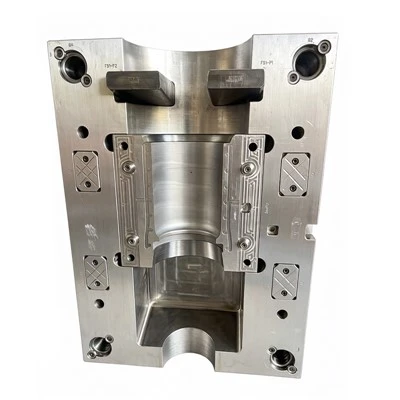
Why Clamping Force Matters
First off, why is clamping force so important? Well, when you’re injection molding plastic bottles, you’re essentially forcing molten plastic into a mold cavity under high pressure. The clamping force is what keeps the two halves of the mold tightly together during this process. If the clamping force is too low, the mold might open slightly, causing flash (excess plastic) to form around the edges of the bottle. On the other hand, if the clamping force is too high, it can damage the mold and increase energy consumption. So, finding the right clamping force is key to producing high – quality plastic bottles efficiently.
Factors Affecting Clamping Force
There are several factors that you need to consider when calculating the clamping force for a plastic bottle mold.
1. Projected Area of the Mold Cavity
The projected area of the mold cavity is one of the most significant factors. It’s basically the area of the mold cavity that’s perpendicular to the direction of the clamping force. The larger the projected area, the more clamping force you’ll need. To calculate the projected area, you can break the shape of the bottle in the mold into simple geometric shapes (like rectangles, circles, etc.) and then sum up their areas. For example, if the bottle in the mold has a rectangular cross – section with length (l) and width (w), the projected area (A = l\times w).
2. Injection Pressure
The injection pressure is another crucial factor. This is the pressure at which the molten plastic is injected into the mold cavity. Higher injection pressures require higher clamping forces to keep the mold closed. The injection pressure depends on various things, such as the type of plastic material you’re using, the thickness of the bottle walls, and the complexity of the bottle design. Generally, you can get an idea of the injection pressure from the plastic material manufacturer’s guidelines.
3. Material Properties of the Plastic
Different plastics have different flow characteristics and viscosities. For instance, plastics with high viscosity, like some engineering plastics, require higher injection pressures to flow into the mold cavity. As a result, you’ll need more clamping force to keep the mold closed when using these types of plastics compared to low – viscosity plastics.
How to Calculate the Clamping Force
Now that we know the factors, let’s talk about how to calculate the clamping force. The basic formula for calculating the clamping force (F) is:
(F=P\times A\times S)
where (P) is the injection pressure, (A) is the projected area of the mold cavity, and (S) is a safety factor.
Step 1: Calculate the Projected Area ((A))
As I mentioned earlier, break the shape of the bottle in the mold into simple geometric shapes and calculate their areas. Then add them up. For a more complex bottle shape, you might need to use some advanced CAD software to get an accurate projected area.
Step 2: Determine the Injection Pressure ((P))
Check the plastic material manufacturer’s data sheets. They usually provide a recommended injection pressure range based on the type of plastic and the application. You can also do some trial runs on a small – scale to fine – tune the injection pressure for your specific bottle design.
Step 3: Choose a Safety Factor ((S))
The safety factor is used to account for any unexpected variations in the process, such as fluctuations in injection pressure or minor misalignments in the mold. A common safety factor for plastic bottle molding is between 1.1 and 1.3. If you’re dealing with a more complex mold or a high – precision application, you might want to use a higher safety factor.
Let’s say you have a plastic bottle mold with a projected area (A = 200\space cm^{2}), the injection pressure (P = 100\space MPa), and you choose a safety factor (S = 1.2). First, convert the area to (m^{2}) (since (1\space m^{2}=10000\space cm^{2}), so (A = 0.02\space m^{2})). Then, use the formula:
(F=P\times A\times S)
(F = 100\times10^{6}\space Pa\times0.02\space m^{2}\times1.2)
(F = 240000\space N)
Tips for Accurate Clamping Force Calculation
- Use Real – World Data: Don’t just rely on theoretical calculations. Do some test runs with different clamping forces and injection pressures to see how the actual molding process behaves. You can then adjust your calculations based on the results.
- Consider Mold Design: A well – designed mold can reduce the required clamping force. For example, using a hot runner system can help distribute the molten plastic more evenly, reducing the pressure on the mold and potentially lowering the clamping force.
- Keep an Eye on Process Variables: Things like temperature and humidity can affect the flow of the plastic and the injection pressure. Make sure to monitor these variables and adjust your clamping force calculations accordingly.
Conclusion
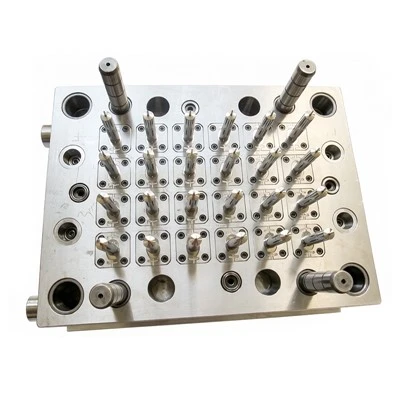
Calculating the clamping force for a plastic bottle mold is a combination of science and practical experience. By understanding the factors that affect clamping force and using the right calculation method, you can ensure that your plastic bottle molding process runs smoothly and produces high – quality bottles.
PET Preform Mold If you’re in the market for plastic bottle molds and want to make sure you’re getting the most out of your molding process, we’re here to help. As a plastic bottle mold supplier, we have the expertise and experience to provide you with the right molds and guidance on calculating the appropriate clamping force for your specific needs. Contact us to start a discussion about your requirements and let’s work together to create the perfect plastic bottles for your business.
References
- Plastics Technology Handbook: Covers general principles of plastic molding and material properties.
- Injection Molding Encyclopedia: Details injection molding processes, pressure, and clamping force.
Taizhou Koni Mould Co., Ltd.
As one of the most professional plastic bottle mold manufacturers and suppliers in China, we also support customized service. Please feel free to wholesale high quality plastic bottle mold made in China here from our factory. For pricelist, contact us now.
Address: No. 97 Jinju Road, Chengjiang Subdistrict, Huangyan District, Taizhou City, Zhejiang Province
E-mail: kn@kenimould.com
WebSite: https://www.kenimouid.com/
