If you’ve ever driven past a fuel station that looks deceptively standard—same bright signage, same pump islands, same concrete forecourt—but noticed a few small, easy-to-miss details: a layer of thick, fire-resistant coating on the pump bases, a series of grounded metal conduits snaking across the undercroft, and a technician in non-static coveralls testing pipe seals instead of topping off your tank’s gas cap—you might have stumbled on one of the explosion-proof fuel stations we supply for our clients. For years, I’ve worked directly with fleet operators, independent fuel station owners, and industrial facility managers who thought “explosion-proof” was just a marketing buzzword or a label slapped on random equipment to justify a higher price. Let me tell you: it’s not. Every feature of a properly designed explosion-proof fuel station is built on strict electrical engineering principles, global safety codes, and real-world data from sites that’ve faced everything from lightning strikes to faulty equipment malfunctions. After working as an explosion-proof fuel station supplier for over a decade, I can tell you the key features that set these sites apart, and why cutting corners on any one of them isn’t just risky—it’s illegal in most places with high-hazard fuel operations. Explosion-proof Fuel Station
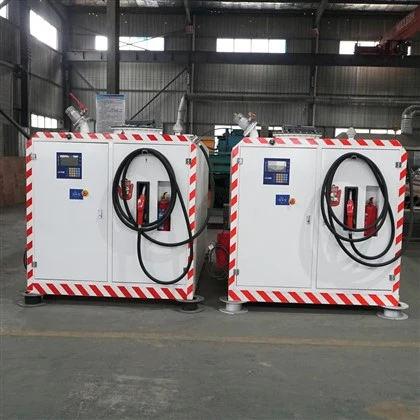
First, let’s talk about the core electrical system, because this is where 90% of potential ignition sources come from at any fuel station. Regular fuel stations use standard electrical fixtures—fluorescent lights, regular circuit breakers, even basic wiring that sits out in the open. But an explosion-proof fuel station doesn’t just upgrade these parts; it designs them to eliminate sparks, even in the event of a malfunction. For context, the National Electrical Code (NEC) classifies fuel stations as Class I, Division 1 or 2 locations, meaning explosive fuel vapors are present regularly (Division 1) or only under abnormal conditions (Division 2). Our entire supply of electrical equipment is rated specifically for these classifications: all pump controls, LED lighting, and junction boxes are “explosion-proof-rated,” which means they’re sealed in heavy-gauge metal housings that contain any internal spark or explosion inside, preventing it from igniting vapors outside the fixture. I once worked with a small fleet operator in rural Texas who tried to save $12,000 by installing non-rated circuit breakers in his new station; six months later, a faulty wire sparked, ignited gasoline vapors, and he lost three pumps and a storage tank before the local fire department could arrive. That’s not a story I tell to scare people—it’s a real example of how skipping this non-negotiable feature leads to avoidable disaster. We also equip all electrical components with grounding straps that connect every part of the system to a centralized ground rod driven at least 8 feet deep. Static electricity is another major ignition source, especially in dry climates; when a plastic nozzle touches a metal gas cap, or a person steps out of a car and touches a pump, the static can spark if the system isn’t grounded. Our stations include static dissipation mats at each pump island, too—rubber mats loaded with conductive carbon that bleed off static before anyone reaches for the nozzle.
Next on the list: the fuel storage and piping system. Regular above-ground or underground storage tanks (USTs) rely on basic steel walls and occasional leak tests, but explosion-proof stations use double-walled storage tanks. The inner tank holds the fuel, and the outer tank is a secondary containment barrier designed to catch any leaks from the inner tank before they reach the soil or, critically, seep out to create a vapor hazard. The space between the two walls is filled with a non-conductive, fire-resistant material and regularly monitored by a leak detection system that triggers an alarm if even a quarter-inch of fuel seeps through. Our piping systems are equally robust: all transfer lines from tank to pump are made of welded steel (no threaded joints, which can loosen over time and create gaps) and coated with a multi-layer anti-corrosive material to prevent pinhole leaks. We also install vapor recovery lines that connect every pump back to the storage tank, capturing fuel vapors that escape when you fill your car’s tank. These lines aren’t just eco-friendly—they eliminate a huge source of flammable vapors that would otherwise linger in the air around the pump. A few years ago, I worked with a logistics company that operates a station for 50 delivery trucks a day; they were having recurring issues with vapor buildup near their pumps because their old station didn’t have vapor recovery. After switching to our double-walled tanks and vapor lines, their monthly leak test results dropped from 12 minor incidents to zero, and their local fire marshal even praised the site for reducing vapor-related risks in the surrounding area.
Then there’s the site-specific safety infrastructure, which is often the most underrated part of an explosion-proof fuel station. This isn’t just fire extinguishers mounted on the walls—though we do supply only Class B (flammable liquid) fire extinguishers rated for at least 10-B, as required by code. The site layout itself is engineered to prevent vapors from pooling. Our stations are designed with a slight grade (about 2% slope) away from pump islands and storage tanks, so any spilled fuel or vapor can’t settle in low-lying areas. We also install vapor detection sensors at key points: within 10 feet of each pump, near the storage tank access hatch, and at the perimeter of the fuel island. These sensors are calibrated to trigger a loud alarm when vapor levels reach 20% of the lower explosive limit (LEL)—the point at which a spark could ignite the mixture. The alarm is tied to a automatic shutoff valve that stops all fuel flow to the pumps within 10 seconds, before any human even has time to react. We also equip our stations with emergency stop (E-stop) buttons within arm’s reach at every pump island, as well as a central E-stop panel at the main entrance, so a single press can shut down the entire fuel system in an emergency. Another feature we include is non-sparking hand tools for all on-site maintenance. Unlike regular metal wrenches or screwdrivers, these tools are made of a combination of aluminum and bronze, so they won’t spark if someone drops them on a metal surface or uses them on a tight fitting. I’ve seen maintenance workers at standard stations accidentally spark a pump valve with a regular wrench—fortunately, no vapor was present that day, but it’s a close call that no one needs to repeat.
One of the most important, and often overlooked, features of an explosion-proof fuel station is the ventilation system. Fuel vapors are heavier than air, so they tend to settle near the ground, around pump bases, and under canopies. Our ventilation systems are designed specifically to move these vapors away from high-risk areas without creating sparks. We use explosion-proof exhaust fans that are mounted low on the walls or under the canopy overhang, pulling air (and any trapped vapors) upward and out of the area. The intake vents are placed high on the station walls, drawing in fresh air from above, where vapors aren’t pooling. This creates a constant, low-velocity airflow that prevents vapors from accumulating. I’ve had clients tell me they didn’t think ventilation was a big deal—until a thunderstorm rolled through, and rain seeped into a small crack in their old canopy, creating a pocket of trapped air with fuel vapors. Their regular ventilation system used a non-rated fan, which sparked when it turned on, just as a worker was refueling a truck. Thankfully, that site had a backup E-stop that shut off fuel flow, but it was a wake-up call. All our ventilation systems are tested during the installation process to ensure they meet air exchange rates required by OSHA and the National Fire Protection Association (NFPA), so there’s no risk of trapped vapors, even during extreme weather.
Training is another key feature that goes hand-in-hand with the physical infrastructure, and it’s something we include in every station supply package. No amount of explosion-proof equipment works if the people working at the site don’t know how to use it correctly. That’s why we provide hands-on training for all station operators, covering everything from how to respond to a vapor alarm, how to inspect E-stops and sensors monthly, and how to handle a small fuel spill. We also share clear, printed safety guidelines posted at every pump island and near the E-stop panel. I can’t stress enough how important this is. A few years ago, we installed a system for a large retail chain, and their first-year training covered only basic pump operation. A new employee accidentally knocked over a plastic container of gasoline near a pump, and didn’t trigger the E-stop immediately because she didn’t know where it was. Luckily, their fire department was nearby, and no one was hurt, but the incident made the chain change their entire training protocol, which we now support with monthly refreshers and online modules. When you work with us, training isn’t an afterthought—it’s a required part of making sure the explosion-proof features do their job.
At the end of the day, an explosion-proof fuel station isn’t just a regular station with a few fancy parts. It’s a complete, integrated system designed to eliminate every possible ignition source, contain any hazard that does occur, and keep people, property, and the surrounding area safe. We’ve worked with clients across industries—from mining operations that need fuel stations for heavy machinery, to municipal fleets that run buses and garbage trucks, to independent operators who want to comply with strict local safety codes. Each project is customized to the site’s specific needs: a rural station in Wyoming will have different ventilation requirements than a urban station in Los Angeles, and we adjust our supply accordingly. If you’re a fleet manager looking to upgrade your facility, a station owner facing new safety regulations, or a municipal official responsible for public safety, don’t settle for a “standard” station that cuts corners on safety. The features we’ve outlined—explosion-rated electrical systems, double-walled fuel storage, vapor detection and ventilation, and comprehensive training—are non-negotiable for a station that will operate safely for years to come.

To learn more about how our explosion-proof fuel station solutions can work for your operation, connect with our team today for a consultation tailored to your site’s needs. We’ll walk you through every feature, answer your questions about compliance and cost, and help you build a station that meets all safety standards without overcomplicating the process. Whether you’re building a new station or retrofitting an existing one, we have the expertise and products to get it done right.
Explosion-proof Fuel Station References
National Fire Protection Association (NFPA) 30: Flammable and Combustible Liquids Code
National Electrical Code (NEC) Article 500: Hazardous (Classified) Locations
Occupational Safety and Health Administration (OSHA) 29 CFR 1910: General Industry Standards
Underwriters Laboratories (UL) 842: Standard for Safety for Explosion-Proof and Dust-Ignition-Proof Electrical Equipment for Use in Hazardous (Classified) Locations
Shandong Jingcai Industry and Trade Co., Ltd.
As one of the most professional explosion-proof fuel station manufacturers and suppliers in China, we also support customized service. With abundant experience, we warmly welcome you to wholesale high quality explosion-proof fuel station in stock here from our factory. Contact us for free sample.
Address: Caojiazhuang Village Industrial Park, Lingcheng Town, Qufu City, Jining City, Shandong Province.
E-mail: shandongjingcai888@gmail.com
WebSite: https://www.sdjingcaicn.com/
