What’s the Hardness of Carbon Steel Coil, Anyway? (For Anyone Who’s Actually Buying It) Carbon Steel Coil
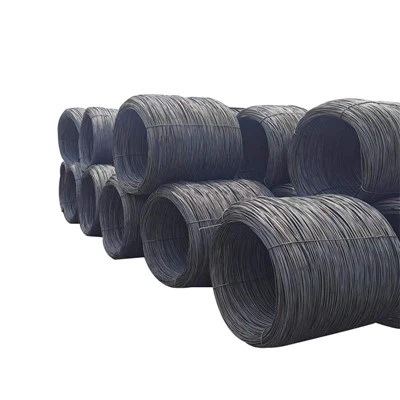
If you’ve ever ordered carbon steel coil, you’ve probably heard someone throw around words like “hardness” like it’s a magic number—too soft and it bends like cheap plastic, too hard and it shatters like a broken phone screen. But here’s the thing: most suppliers (and even some folks on construction sites) will tell you a random number and call it a day. As a carbon steel coil supplier who’s been in this game for 12 years, I’m here to cut the B.S. and break down what hardness actually means for your order, no textbook jargon required.
First, let’s get one thing straight: carbon steel coil isn’t a one-size-fits-all product. I’ve had small business owners come to me panicking because they ordered a coil labeled “1018” and it was way too soft for their custom metal brackets, and factory managers call me at 2 a.m. because their supplier sent a coil too hard to punch without breaking their $5,000 tool. Hardness is what ties all that together—it’s not just a test number; it’s the whole reason your coil will work (or fail) for your specific job.
So, what is hardness, exactly? For our industry, it’s basically how resistant the steel is to being dented, scratched, or indented when something presses on it. But here’s the secret no one tells you: there are two main ways we test it for carbon steel coil, and mixing them up is how you end up with a bad part. The first is Rockwell hardness—most commonly Rockwell B (for softer stuff) and Rockwell C (for harder, stronger grades). The second is Brinell hardness, which uses a heavy ball pressed into the steel to measure how much it sinks in. I see so many people mix these up: if a coil is Rockwell C 30, don’t go looking for a Brinell number that matches it directly—they’re different scales, like comparing pounds to kilograms. My team always clarifies which test we used because it’s non-negotiable for your project.
Now, let’s get to the actual numbers that matter for carbon steel coil. Let’s stick to the grades I supply most often—1018, 1045, and A36—since those make up 90% of what my customers order.
1018 is the workhorse grade. It’s low-carbon, super versatile, and probably what you’ve been ordering if you’re doing brackets, small machinery parts, or general fabrication. Its hardness? Usually Rockwell B 70 to 85, which translates to Brinell 130 to 160. This is soft enough to bend, punch, or weld easily, but hard enough that it won’t get scuffed if you’re moving it around a job site. I once had a customer build a bunch of 1018 racks for storing heavy garden tools—they texted me a pic a week later saying no dents, no bends, and they’d saved 20% compared to a higher-grade coil. The key here is they didn’t ask for “hard”; they asked for “not flimsy enough to drop and break.”
Next up is 1045, the mid-carbon workhorse. This one’s tougher—great if you need something that takes a beating, like axles, gears, or structural parts that hold heavy loads. Its hardness is where it starts getting specific: as-rolled, it’s usually Rockwell B 85 to 105 (Brinell 160 to 207), but if you need it harder, we can heat-treat it to Rockwell C 35 to 45 (Brinell 320 to 415). I always warn people here: 1045 heat-treated to Rockwell C 45 is way harder, but it’s also trickier to weld. You can’t just throw it on any welder like you can 1018. Last quarter, a local machine shop bought 1045 and skipped my note about heat-treating for their gears—they cracked two parts before calling me to fix it. That’s the kind of mistake hardness numbers prevent, if you ask.
Then there’s A36, the structural grade. This is the go-to for construction, bridge parts, framing—stuff that needs to hold weight but isn’t super high-stress. A36 carbon steel coil has a hardness of Rockwell B 70 to 85, same as 1018, but here’s the difference: A36 has better yield strength for structural load, while 1018 is easier to machine. I get calls all the time where someone mixes these two up for their framing project—don’t be that guy. Hardness here tells you it’s strong enough for 2×4-sized framing, not a custom machine part.
Wait, but what about things that affect hardness before it leaves my warehouse? A lot of people don’t know that how we process the coil changes its hardness. When we roll it (the main step for coil), cold rolling vs. hot rolling makes a huge difference. Hot-rolled carbon steel coil is softer—usually Rockwell B 70 to 90—because it’s rolled at high temps, so it’s more malleable, perfect if you need to bend it into shapes on-site. Cold-rolled coil is rolled at room temp, which makes it way harder: Rockwell B 85 to 105, sometimes higher. That’s why I always ask customers if they need hot or cold rolled—if you order cold rolled for a project that needs bending, you’re fighting the material, not working with it. I once had a guy order cold rolled 1018 for custom metal signs and came back yelling that he couldn’t bend it. Turns out he wanted hot rolled for the curve, and I’d asked, but he’d forgotten—easy fix, but a reminder that processing = hardness.
Another big one: alloying elements. Carbon steel is mostly iron and carbon, but a little extra stuff like manganese, sulfur, or phosphorus tweaks hardness. For example, higher manganese in 1018 boosts its hardness just enough to make it more wear-resistant than regular low-carbon steel. But if we add too much sulfur, it makes the steel brittle (more like Rockwell B 80 but prone to cracking), which is bad if you’re punching holes. My team checks every coil batch for these elements because I refuse to send out something that’s technically “within spec” but will break on your job. I’ve turned down a supplier’s batch of 1045 before because the manganese was off—its hardness was all over the place, and I wouldn’t risk my customers getting stuck with bad parts.
Now, let’s talk about what hardness doesn’t mean, because that’s where most people get confused. Hardness doesn’t equal strength. A steel can be hard but weak—wait, no, let me explain: if you have a super hard, brittle steel, it won’t bend, it’ll snap. That’s why heat-treated 1045 is hard, but you have to pre-heat it before welding so it doesn’t crack. Hardness also doesn’t mean it’s the right choice for your project. If you need to drill a bunch of small holes in thin metal for tiny brackets, a softer coil is easier to machine and won’t dull your drill bits. A harder coil would make the drill bits burn out in an hour. I’ve had customers waste hundreds on drill bits because they ordered a harder coil than they needed—hardness is a tool, not a flex.
Here’s the other thing: as a carbon steel coil supplier, I don’t just give you a hardness number and ship. I verify every batch. We have a handheld Rockwell tester in my warehouse, so when a new load comes in, I test 5 random coils to make sure their hardness matches the specs on the paperwork. Last month, a shipment of 1045 came in with Rockwell numbers all over the place—one coil was Rockwell B 95, another was Rockwell C 30, which is way off. I sent it back, even though the supplier offered it at a 10% discount. I’d rather lose a quick sale than have a customer call me saying their parts broke because my coil was bad. That’s the kind of reliability you don’t get from random online suppliers who never touch their stock.
Wait, what about when people ask for “the hardest carbon steel coil”? I get that all the time. The hardest carbon steel coil I supply is heat-treated 1045, Rockwell C 45, and even that’s not unbreakable. If you need something harder than that, you’re looking at alloy steel, not carbon steel—don’t waste your time. Carbon steel’s hardness tops out around Rockwell C 50 before it becomes too brittle for coil use. I’ve had a few construction guys ask for “max hardness” for their support beams, and I tell them to check steel specs, not just hardness numbers—structural strength is more important for something holding a building up.
Let me wrap this up with something practical: if you’re ordering carbon steel coil, don’t just ask “what’s the hardness.” Tell me what you’re using it for. Are you bending it? Punching holes? Building a frame? Making gears? I’ll tell you exactly what hardness grade you need. If you’re not sure, I can send you a sample strip so you can test it yourself (scratch it with a screwdriver—softer steel will scratch, harder steel won’t). That’s how I do business, no fine print, no hidden costs.
At the end of the day, hardness is the most important spec for carbon steel coil because it’s the difference between a part that works for a year and a part that breaks before you even get it installed. I’ve been in this long enough to know that a good customer is someone who knows what they need, and I’m here to make sure you get exactly that—no guessing, no sales tricks.

If you’re looking to order carbon steel coil, or even just have a question about what hardness you need for your next project, hit me up. No pressure, no jargon, just straight talk and the right product for your job. Let’s figure it out together.
Section Steel References:
- ASTM A108: Standard Specification for Carbon Steel Bars
- ASM International: Hardness Testing of Metals
- Steel Tube Institute: Carbon Steel Coil Processing and Properties
- Machining Data Handbook: Carbon Steel Grades and Machinability
Shanxi Midas Industrial Co., Ltd.
We’re known as one of the most professional carbon steel coil manufacturers and suppliers in China. With abundant experience, we warmly welcome you to buy cheap carbon steel coil made in China here from our factory. For price consultation, contact us.
Address: 28th, Huanqiu Jinrong Zhongxin, Xieyuan Road, Changfeng Business District, Taiyuan City, Shanxi Province, China
E-mail: midassteel@163.com
WebSite: https://www.midassteel.com/
