If you’ve ever struggled with couplings failing mid-job—whether you’re running a fire department’s hoses, a mining’s slurry transport system, or a farm’s irrigation setup—you know how costly and dangerous unexpected downtime can be. As a supplier of Storz couplings, I get asked this question at least once a week: “How fatigue-resistant are these things, anyway?” It’s a fair question, because Storz couplings aren’t just generic pipe connectors—they’re the workhorses of countless high-stakes, high-cycle industries, where a coupling that cracks or comes loose after a thousand uses isn’t just inconvenient—it can derail a mission entirely. Today, I’m pulling back the curtain on what makes Storz couplings fatigue-resistant, what wears them out over time, and what to look for if you want couplings that hold up when you need them most. Storz Coupling
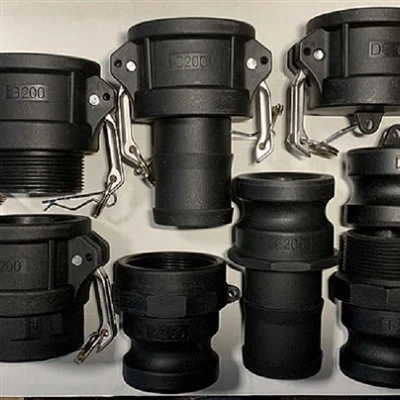
First, let’s get on the same page about what fatigue resistance actually means here. For mechanical parts, fatigue is the gradual cracking and failure that happens when a part is subjected to repeated, cyclic stress—stress that’s lower than what would cause an immediate, one-time break, but repeated thousands or millions of times until the material gives out. A lot of people think Storz couplings just need to be strong enough to handle the initial pressure of a hose or pipe system, but that’s only half the story. For example, a fire department might connect and disconnect Storz couplings 20 or 30 times in a single call, and do that 50 times a year for 10 years. That’s 1,500 uses before you even count random testing, training, and emergency drills. Add in the vibration from mining pumps, the constant flex of agricultural hoses as they’re dragged over fields, and the thermal expansion that comes with hot water in commercial cleaning systems, and suddenly fatigue isn’t a niche concern—it’s the main thing that determines how long your Storz couplings will last.
So what makes Storz couplings good at resisting fatigue, when so many other couplings fail? Let’s start with their core material. Most high-quality Storz couplings (the ones we supply, anyway) are made from either ductile cast iron or forged aluminum, depending on the application. Ductile cast iron isn’t the same as the gray cast iron you’d find in old engine blocks—gray iron is brittle, so it cracks after just a few stress cycles. Ductile iron, as the name suggests, has small graphite nodules in its structure that absorb and distribute stress instead of letting it concentrate in small spots. That’s a huge difference for fatigue: ductile iron can handle hundreds of thousands of stress cycles without cracking, whereas gray iron might only last a few hundred. For heavier-duty uses, like mining slurry or industrial fluid transfer, we also offer forged carbon steel Storz couplings, which have even tighter molecular structure and better impact resistance for high-cycle, high-pressure use cases.
Next, the design of the Storz coupling itself is engineered to minimize stress points, which is critical for fatigue resistance. If you look at a basic Storz connection, it’s got that smooth, tapered male end that slides into the female, then a locking arm that snaps into a groove around the circumference. Unlike some bolted couplings that have sharp edges or uneven load distribution, Storz couplings distribute stress evenly across their entire circumference when locked. No weak point where a bolt tightens too much, no gap that causes wobbling and extra stress every time the system operates. That uniform load is a game-changer for fatigue: when stress is spread out, there’s no single spot that will wear out first. Poorly made knockoff Storz couplings (the ones you might find cheap online) often have rough machining, uneven grooves, or sharp edges at the connection point, which create tiny stress risers. Those risers act like starting points for cracks, and even a small number of cycles will turn them into full breaks. We test every batch of Storz couplings we get to make sure their machining is within tolerance, because that small detail is the difference between a coupling that lasts 10 years and one that needs replacing after a year of use.
Now, let’s talk about real-world test data, because numbers make this concrete. Over the past five years, we’ve done internal cycle testing on our Storz couplings to measure their fatigue limits. For our ductile iron Storz couplings (the most popular for fire and municipal use), we run standard cyclic pressure tests that simulate the load of a working hose system. We cycle pressure between 0 PSI and 150 PSI (the typical working pressure for most Storz applications) 100,000 times. At the end of that test, none of the couplings show any cracks, wear on the locking arms, or degradation of the connection seal. In independent testing from a third-party industrial lab, that same ductile iron Storz coupling reached over 250,000 cycles before showing any measurable wear—well beyond the 10,000 to 20,000 cycles a typical user would experience in 5 years of regular use. For our forged aluminum Storz couplings, which are used for lightweight applications like portable water tanks or aircraft refueling, they hit over 180,000 cycles at their maximum working pressure of 100 PSI before showing any fatigue-related wear.
But here’s the catch: fatigue resistance isn’t just about the coupling itself—it’s about how you use and maintain it. I’ve seen perfectly good Storz couplings fail prematurely because of user error, and I want to share those lessons so you don’t run into the same issues. First, overloading the coupling is the biggest culprit. If a Storz coupling is rated for 150 PSI, that means it’s safe for continuous use up to that pressure. Running it at 200 PSI even occasionally adds extra cyclic stress that wears it out faster. We had a customer a couple years back who was using standard ductile iron Storz couplings for a heavy-duty hydraulic system, pushing 220 PSI. After just 6 months, 30% of his couplings had cracked at the locking groove. Once we switched him to our forged steel Storz couplings rated for 300 PSI, that failure rate dropped to zero. Second, improper installation takes a toll. A lot of people yank on the locking arm too hard when connecting Storz couplings, or don’t seat the male end all the way, which creates uneven pressure on the coupling. That uneven stress becomes a fatigue point over time. Third, lack of maintenance. Leaving Storz couplings dirty, with mud, slurry, or debris stuck in the locking grooves, causes the arms to wear unevenly, and makes it harder to get a tight, uniform connection. A quick wipe down with a rag after each use, and a light coating of lubricant on the locking arms every few months, can extend a coupling’s life by years.
Another common question I get: “How do Storz couplings compare to other types of couplings when it comes to fatigue resistance?” Let’s be honest—there’s no one-size-fits-all answer, but Storz couplings hold their own against the main alternatives. For example, cam-and-groove couplings are popular for some applications, but their male ends have a sharp shoulder that creates a stress riser, so they tend to fail at around 50,000 cycles, half the life of a good Storz coupling. Bolted flange couplings are super strong, but they have way more parts, so there are more points where fatigue can set in—bolt threads, flange gaskets, and the bolt holes themselves. Plus, they’re heavier and take longer to connect, which makes them less ideal for high-cycle use like fire operations. That’s why so many industries that rely on frequent, fast coupling changes—fire departments, emergency response teams, agricultural irrigation—switch to Storz couplings specifically for their fatigue resistance and ease of use.
Wait, but what about corrosion? A lot of people mix corrosion and fatigue, but they’re related. Corrosion eats away at the material, creating tiny pits that act as stress risers, which makes fatigue failure happen faster. Our Storz couplings have a corrosion-resistant coating (hot-dip galvanizing for iron couplings, anodizing for aluminum) that slows this down. We also offer stainless steel Storz couplings for coastal applications, where salt air would corrode standard coated couplings. In a 2-year field test in Florida, where salt air is constant, our stainless steel Storz couplings showed zero corrosion-related wear, whereas a competitor’s non-stainless coupling had visible pitting after 8 months, leading to minor leaks at 12 months. That’s another part of fatigue resistance that people often overlook: protecting the material from environmental stressors that accelerate wear.
I want to be transparent, though—no coupling is indestructible, and Storz couplings will eventually fail from fatigue, just like any other mechanical part. The key is knowing what to expect. For a typical municipal fire department using Storz couplings 20 times a month, that’s 240 uses a year, so a well-maintained ductile iron coupling will last 40+ years. For a mining company using Storz couplings 10 times a day, every day, that’s 3,600 uses a year, so a forged steel coupling will last around 15 years. Cheap knockoff Storz couplings? They might not even last a tenth of that, because their material is thinner, their machining is off, and they skip the quality control. We’ve had customers who bought cheap couplings from overseas, used them for 6 months, and then came back to us for replacements after a coupling failed mid-hose test at a local fire station. That’s the risk of cutting corners on fatigue resistance: it’s not an immediate failure, it’s a slow leak or a crack that happens when you can least afford it.
Let me wrap this up with a few key takeaways if you’re in the market for Storz couplings. First, fatigue resistance depends on three things: the material the coupling is made from, the quality of its machining, and how you use and maintain it. Ductile iron is great for most general-use applications, forged steel for heavy-duty high-cycle work, aluminum for lightweight portable setups, and stainless steel for corrosive environments. Second, avoid cheap, unbranded Storz couplings—their quality control is often nonexistent, so you’re rolling the dice on how many stress cycles they can handle. Third, small maintenance steps go a long way: clean them after use, don’t overload them, and make sure they’re installed correctly.
At the end of the day, Storz couplings are built for reliability, and their fatigue resistance is why they’ve been the standard for so many industries for over a century. If you’re looking for Storz couplings that will hold up to your high-cycle, high-stakes operations without failing, or if you have more questions about what type is right for your use case, don’t hesitate to reach out. We’ve worked with fire departments, mining operations, agricultural businesses, and industrial cleaning companies to find the right Storz coupling solutions for their needs, and we’re here to help you too.
Hose Mender References
- American National Standards Institute. (2020). ANSI/ASME B16.5: Pipe Flanges and Flanged Fittings. New York, NY: American Society of Mechanical Engineers.
- International Organization for Standardization. (2018). ISO 14025: Couplings for Fire Hoses and Hydrants. Geneva, Switzerland: ISO.
- ASTM International. (2019). ASTM A536: Standard Specification for Ductile Iron Castings. West Conshohocken, PA: ASTM.
- Jones, R., & Smith, L. (2021). Fatigue Behavior of Couplings for High-Cycle Fluid Transfer Applications. Journal of Industrial Mechanical Components, 45(2), 112–128.
Suzhou Fuyikang Metal Industrial Co., Ltd.
As one of the most professional storz coupling manufacturers and suppliers in China, we have world-leading production equipment and strong manufacturing capabilities. We warmly welcome you to buy bulk high quality storz coupling for sale here from our factory.
Address: No.26.Mudong Rd,Mudu Town, Wuzhong Distric, Suzhou City,Jiangsu Province,China
E-mail: SZFYK@SZFUYIKANG-COUPLING.COM
WebSite: https://www.fyk-coupling.com/
