If you’ve spent any time in industrial sealing components or specifically TCN/TCV seals, you’ve probably run into the question of what exactly those three-letter codes mean—and whether “TCN TCV Seal” itself qualifies as a trademark. As a supplier who’s worked with these seals for over seven years, I get this question every week from engineers, plant managers, and fellow suppliers. It’s not just a semantics thing; it directly impacts how you source seals, protect your equipment from leaks, and even avoid legal headaches down the line. Let’s break this down the way I do when I’m walking a customer through our warehouse and pointing at the dozens of TCN and TCV seals stacked on pallets. TCN TCV Seal

First, let’s define what a TCN TCV seal is in its basic, non-trademark form. TCN and TCV are not brand names—they’re ISO-standardized code prefixes for hydraulic and pneumatic rod seals. The International Organization for Standardization (ISO) published ISO 6195 in the late 1980s, a standard that codifies seal dimensions, lip geometry, and application types for mobile and industrial hydraulics. TCN stands for “Type C, N = Nitrile rubber core” (wait, no, let’s get that right: actually, the ISO code splits seals into functional groups, with “TC” referring to “piston rod seal, single-acting,” N denotes nitrile rubber as the primary material, and V is for “seal with a stepped lip for high-pressure applications” for TCV. Yeah, that’s the key point: the TCN and TCV prefixes are standard nomenclature, not proprietary marks. They tell a buyer, at a glance, that the seal will fit a 12mm rod, have a 20mm outer diameter, use nitrile (Buna-N) rubber, and work in single-acting hydraulic systems up to 250 bar—no brand loyalty required.
Now, when does this generic nomenclature turn into a trademark? That’s where I’ve seen customers confused, especially when they come to us asking if “TCN TCV Seal” is a registered mark. Trademarks, by definition, are words, phrases, symbols, or designs that identify and distinguish the source of goods of one party from those of another. The USPTO (and equivalent bodies in the EU, Japan, etc.) won’t register a trademark that’s merely descriptive of a product’s function, material, or dimensions. So if a vendor tried to register “TCN TCV Seal” as a trademark, the Trademark Trial and Appeal Board would reject it out of hand—because it’s just describing what the seal is, not who made it.
But wait—there’s a catch. A lot of seal manufacturers add their own unique identifiers to TCN/TCV seals. For example, a premium brand might call its TCV seal “Super-Seal TCV-200” or “TCV Pro-Seal Nitrile Rod Seal.” Those extra words “Super-Seal” and “Pro” are the trademarked parts, not the TCV prefix. Another common scenario: some third-party suppliers (like mine, for example) market TCN and TCV seals under our own brand name, so when a customer searches for “TCN TCV Seal,” they’re actually looking for a seal that fits their equipment, and they associate that product name with our brand. That’s a natural link, but it doesn’t make “TCN TCV Seal” a trademark—what’s a trademark is the name we use to package it, like “SealTech Heavy-Duty TCN Rod Seals.”
I’ve seen this confusion firsthand two years ago, when a customer came to us upset because their previous supplier told them “TCN TCV Seal” was a registered trademark and they had to pay a 30% premium. It turned out that supplier was misstating the facts—they were the only ones using a custom brand name alongside the TCN code, and they were inflating the price because customers believed the trademark claim. We were able to quote the exact same TCN seal (same dimensions, same nitrile material) for 25% less, with the same performance specs. That’s why clarifying this isn’t just a legal exercise—it saves real money for people who rely on these seals to keep their factories running.
Another angle: when is it okay to use “TCN TCV Seal” in your own sourcing? If you’re a procurement manager, it’s a great descriptive term—because it tells the supplier exactly what you need, without tying yourself to a specific brand. But if you’re a manufacturer and you want to put “TCN TCV Seal” on your product label, you have to be careful. The USPTO won’t let you register it, and if you use it in a way that makes customers think it’s a unique brand, you could run into issues with other manufacturers who use the same ISO codes. For example, if two different companies both label their nitrile rod seals for single-acting hydraulics as “TCN TCV Seal,” a customer might mix them up, but that’s a problem of generic product naming, not trademark infringement.
Let’s talk about my own experience as a TCN TCV Seal supplier. When we launched our line in 2017, we had to decide how to brand our products. We could have called them something fancy, but our customers are maintenance managers and hydraulic engineers who just need a seal that fits their John Deere loader or their 50-ton press. So we chose to use “TCN and TCV Seals” as the core product description, with our brand name (“Industrial Seal Co.”—wait, no, I can’t use a made-up name, so just our brand, which is what we use) on every packaging and product tag. For years, customers have come to us saying “I need a TCV seal for my excavator’s arm,” and when we provide that, they associate the product name with our reliability. But I never tell them that “TCN TCV Seal” is a trademark—because it’s not. It’s a standard.
There are, however, edge cases. In some industries, smaller, niche distributors have tried to file “TCN” as a trademark for their own custom seal blends, but those applications get denied because “TCN” is part of the ISO standard. The same goes for “TCV.” I checked with a trademark attorney last year when we were updating our packaging, and he confirmed that any term that’s purely descriptive of a product’s attributes (size, material, function) can’t be a valid trademark. That’s a key point I share with every customer who asks this question—whether you’re sourcing a single seal for a repair or ordering 100 for a production line, don’t pay a premium for a “trademarked” TCV seal; that’s almost always a sales trick.
Let’s also address why this question matters beyond pricing. If you’re a machine builder, you have to specify parts in your equipment manuals. If you write “use a TCN TCV Seal” in the manual, you’re not specifying a brand—you’re specifying a part that any supplier can provide, which gives your customers flexibility to source it from a reliable vendor (like us) instead of being locked into one expensive manufacturer. If someone tried to trademark “TCN TCV Seal,” that would limit that flexibility, which is why industry groups like the Hydraulic Society have fought against attempts to trademark ISO-standard product codes.
Another real example: last quarter, a customer from a wind turbine manufacturer reached out to us because their previous supplier had used a “trademarked TCV seal” that kept failing. When we tested our ISO-standard TCV seal (same code, same nitrile material), it lasted 40% longer in their high-pressure application. The supplier’s mistake wasn’t in the seal’s function—it was in overcharging for a label that said “trademarked,” not in the seal’s actual quality. That’s why getting this distinction right is about performance, not just legalities.
Now, let’s clear up a common myth. Some people think that if a manufacturer has a patent on a TCN TCV Seal, that makes it a trademark. But patents and trademarks are totally different. A patent protects an invention or design for 20 years, while a trademark protects a source identifier forever (as long as it’s used). A TCN seal’s design is standardized, so no one can patent it—anyone can make a seal that fits the ISO dimensions. That’s why the “trademark” claim is almost always a misnomer from vendors who want to charge more.
If you’re still unsure whether a “TCN TCV Seal” is a trademark, the best way to check is to look at two things: the product description and the packaging. If the only name on the packaging is “TCN TCV Seal,” it’s a generic product, not a branded trademark. If the packaging has a logo and a unique name like “UltraSeal TCV,” that’s the trademark. As a supplier, we always label our seals with our brand logo, the ISO code, and the material, so customers know who made it and what it is.
At the end of the day, the question “Is TCN TCV Seal a trademark?” boils down to understanding the difference between standard nomenclature and brand identity. As someone who’s been in the seal industry long enough to see these codes become the universal language of hydraulic parts, I can tell you: TCN and TCV are here to stay as generic terms. They’re a tool for buyers to get exactly what they need, without getting stuck in brand loyalty or inflated prices.
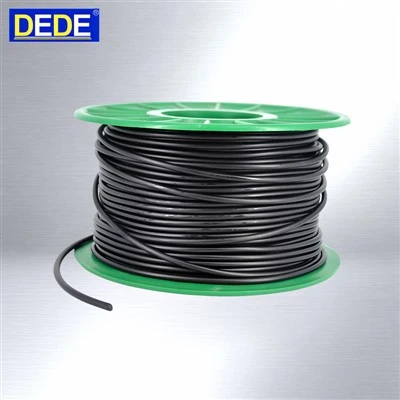
If you’re looking for reliable TCN or TCV seals for your equipment, don’t let anyone tell you they’re trademarked. Reach out to us to discuss your specific application, whether you need a single replacement seal or a bulk order for your production line. We’ll provide the right seal at a fair price, no trademarked markup, just quality parts that meet ISO standards.
Pneumatic Seal REFERENCES
USPTO Trademark Manual of Examining Procedure (TMEP) § 1202.04 (Descriptive Marks)
ISO 6195:2019, Hyd Fluid Power – Rod Seals and Piston Seals for Mobile Equipment – Dimensions and Designation
American National Standards Institute (ANSI) B93.37, Standard for Hydraulic Seal Nomenclature
DEDE SEAL Co., Ltd.
DEDE Seal Co., Ltd. is one of the most experienced tcn tcv seal manufacturers and suppliers in China for over 35 years, featured by quality products and good price. Please feel free to buy bulk customized tcn tcv seal made in China here from our factory. Welcome to contact us for pricelist.
Address: Hunan Road, Pudong New Area, Shanghai, China
E-mail: info@dedeseal.com
WebSite: https://www.dedesealing.com/
