If you’ve ever stood near a power plant, cement factory, or even a large industrial boiler, you might’ve felt that blast of hot, sometimes smoky air rushing out of a stack. That’s waste heat, and it’s not just going unused—it’s costing operators a ton of money, both in fuel to heat whatever process they’re running and in fines for excess emissions. Here’s where air preheater seals come in, and why ignoring them is one of the most costly, avoidable mistakes in industrial operations. Air Preheater Seal
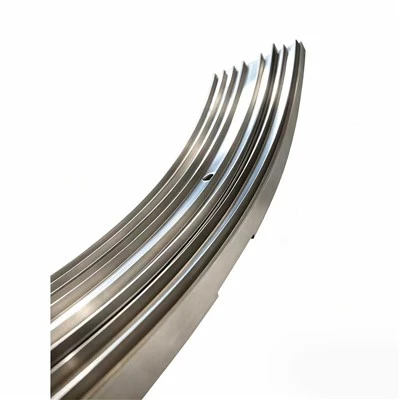
I’ve been supplying air preheater (APH) seals for 12 years now, and I can’t count how many times a plant manager has walked into my shop, frustrated, because their APH was tanking their efficiency numbers or getting them flagged for too much NOx or CO in their exhaust. Most of them start with, “Wait, seals? They’re just little gaskets, right?” Nope. Air preheaters are these big, rotating (or sometimes stationary) heat exchangers that swap heat from the hot exhaust gases leaving the boiler with the cold air going into the combustion chamber. That cold air is what you burn fuel with—if it’s not preheated, you have to burn way more fuel to get the same heat output.
The problem is, these big units have gaps. The rotor spins inside a casing, right? So there’s a tiny space between the spinning rotor blades and the stationary casing, plus gaps where the shaft comes through, and between the hot and cold air sections. If those gaps are too big, the hot exhaust air leaks back into the cold incoming air stream. That’s called “in-leakage” and “cross-leakage,” and it’s the silent killer of APH performance. Seals are the only thing stopping that from happening.
Let me break this down like I do with my new clients, no super fancy engineering jargon. First, efficiency. A typical large coal-fired power plant runs an APH at around 90% thermal efficiency. If your seals are worn out, that efficiency can drop to 80% or lower—sometimes even 75% if you wait too long. For a plant with a 500MW generator, that 10% drop means they’re burning an extra 180,000 tons of coal every single year. At current prices, that’s nearly $30 million in fuel costs alone. I had a client in Ohio last year whose seals were 30% worn, and they were paying an extra $24,000 a day in fuel. We swapped their seals out, and three months later, their fuel bill dropped by $720,000. That’s not a number you can ignore.
Then there’s emissions. Environmental regulations are tighter than ever, right? If your APH is leaking, you’re not just wasting fuel—you’re releasing more pollutants. Let’s take NOx, for example. When you burn cold air, you have to crank up the combustion temperature to get the same power, which creates way more nitrogen oxides. APH preheats the air so combustion runs at the right temp, cutting NOx by up to 60%. But if your seals are bad, you’re letting cold air mix back in, so you’re burning too hot, too much NOx. That’s not just bad for the planet—your EPA inspector will be knocking on your door if your readings are off. I had a cement plant in Texas that got a $150,000 fine because their NOx levels spiked; turns out their APH seals had worn so thin, cross-leakage was 25%. We replaced them, and their emissions were back within limits in a week, and they saved another $120,000 a month on fuel. It’s a double win, but only if you fix the seals.
Wait, what about maintenance costs? A lot of plant managers think, “Seals are cheap, I’ll just wait until something breaks.” But here’s the thing: worn seals don’t just cause efficiency loss—they damage the APH itself. If hot exhaust is leaking into the rotor gaps unevenly, it can cause warping, or if the leakage gets bad enough, the rotor can rub against the casing. That destroys blades, casings, bearings—stuff that costs 100 times more to fix than seals. I saw a plant in Pennsylvania that skipped seal replacement for two years; their rotor seized up, and they had to replace the entire APH for $1.2 million. If they’d just swapped the $12,000 worth of seals every year, they would’ve saved over a million bucks. Seals aren’t a quick expense—they’re a preventative investment that protects your whole unit.
Now, you might be thinking, “Can’t I just patch the old seals?” Here’s where most people mess up. APH seals aren’t one-size-fits-all. There are different types: flexible graphite seals, spring-loaded steel seals, carbon composite seals, even air-mounted seals for high-temperature environments. If you use the wrong seal for your unit, it’ll wear out in a few months instead of two years, and you’ll be back to square one. I once sold a set of graphite seals to a plant that ran their APH at 850°F—graphite works fine up to 1,200°F, but their air leakage rate was still high because they didn’t adjust the spring tension right. We swapped them for spring-loaded steel seals, and their leakage dropped 90% immediately. It’s not just about buying a seal; it’s about matching the seal to your APH’s specs, size, operating temp, and rotation speed. That’s what we specialize in—we don’t just sell parts, we work with you to pick the right seal for your exact setup.
Another point: uptime. Industrial plants run 24/7, right? A forced shutdown because your APH failed costs thousands of dollars an hour in lost production. If your seals are working, your APH runs smoothly, no unexpected shutdowns. I have clients that schedule seal replacements during their annual maintenance shutdown, which takes a few hours instead of days, and they’re back online without any interruptions. Last year, a paper mill in Wisconsin had a seal fail mid-shift; their production line shut down, costing them $45,000 an hour. We were able to custom-make a set of seals overnight, and our team was on site first thing the next morning, had them installed in 6 hours, and they were back up running. Uptime is everything, and good seals keep you online.
Wait, let’s talk about another angle: energy costs for the plant itself. APHs require fans to move the air through—both the induced draft fans that pull exhaust out, and forced draft fans that push cold air in. If your APH is leaking, those fans have to work way harder to move enough air through the system. That means more electricity for the fans, which adds to your utility bill. Bad seals can increase fan power use by up to 15%—for a large plant, that’s another $200,000 a year in electricity costs. Seals cut that extra load, so your fans run more efficiently too. It’s not just fuel; it’s every little cost that adds up when you ignore those small parts.
I get it, when you’re running a plant, you have a million things to fix every day. Seals are probably the last thing on your mind—until you get that fuel bill, or that fine, or get a call that your APH is acting up. But here’s the thing: air preheater seals are one of the highest ROI investments you can make. We’ve had clients who recoup their seal cost in 2-3 months, some even faster. And it’s not just about the money—you’re also reducing your carbon footprint, since you’re burning less fuel. That’s a big deal for companies that are targeting net-zero goals; better seals mean lower emissions without having to spend millions on new equipment.
So why do so many plants overlook them? A lot of it is that seals are inside the APH, so you don’t see them every day. It’s easy to forget they’re there, until something goes wrong. Or they buy cheap, off-the-shelf seals that don’t fit right, and they blame the seals instead of realizing they picked the wrong product. That’s where we come in. We don’t push the cheapest seals—we work with you to assess your APH, figure out what type of seal will work best for your operating conditions, install it right, and even offer maintenance checks to make sure it’s lasting as long as it should.

If you’re reading this and thinking, “My APH has been running fine, but I haven’t checked the seals in a year,” or “I just got a fuel bill spike that I can’t explain,” let’s connect. I’ve been in this game long enough to know exactly what to look for, and I can help you figure out if your seals are the problem. You don’t have to do this alone—we’re here to answer questions, walk you through the process, and make sure you get the right seals that will save you money, reduce emissions, and keep your plant running smoothly. Don’t wait until a small problem becomes a huge, costly headache. Reach out today to start a conversation about how we can help your operation perform better.
Ash Blower Seal References
- International Energy Agency. (2022). Industrial Heat Recovery: Air Preheaters and System Efficiency. IEA Publications.
- U.S. Environmental Protection Agency. (2021). Stationary Combustion Emissions Guidelines: NOx Reduction Through Combustion Optimization. EPA.
- Global Power Plant Database. (2023). Efficiency Losses in Rotary Air Preheaters. World Bank Group.
- National Association of Manufacturers. (2022). Preventive Maintenance for Industrial Heat Exchangers. NAM Engineering Report.
- Journal of Energy Engineering. (2021). Impact of Air Preheater Seal Leakage on Industrial Fuel Consumption. American Society of Civil Engineers.
Jiangsu Turbine Electric Power Technology Co., Ltd.
As one of the most professional air preheater seal manufacturers and suppliers in China, we have world-leading production equipment and strong manufacturing capabilities. Please feel free to buy advanced air preheater seal for sale here and get pricelist from our factory. Customized orders are welcome.
Address: Building 8, Huaqi Yungu Xuzhou Lingang Industry Accelerator, Jiawang District, Xuzhou City, Jiangsu Province
E-mail: zjh800@163.com
WebSite: https://www.cnturbine.com/
