If you’re planning to go off-grid—whether that’s a tiny home in the woods, a van down a remote forest road, or a cabin with no utility hookups—you already know how stressful it can be to keep your fridge cold, your phone charged, and your lights on without relying on grid power. After all, nobody wants to be stuck in the dark after dusk or miss an urgent text from a family member because their dead laptop won’t turn on. As someone who’s spent years helping folks pick the right portable power station for their off-grid setups, I get it: there’s no one-size-fits-all answer here. But let’s break this down like we’re chatting over a cup of coffee, not reading a sales manual. Portable Power Station
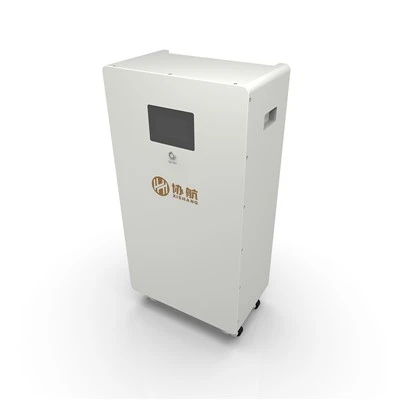
First, let’s cut through the marketing fluff. A lot of brands claim their power station is the “best for off-grid,” but they’re usually talking about a weekend camping trip, not living off-grid full-time. Weekend campers might only need to power a mini-fridge, a phone, and a laptop for 24 hours. Full-time off-gridders? You might need to run a chest freezer for meat storage, a small space heater in winter, a well pump for water, and multiple devices 24/7—sometimes even on cloudy days for weeks. That’s a totally different ballgame.
So what actually matters when you’re choosing for off-grid living, not just a quick adventure? Let’s start with battery capacity, but not just any number. A 500Wh unit sounds nice, but if your well pump pulls 700Wh an hour, that’s barely enough for a pump run before you’re dead in the water. We’ve had customers come back confused because they bought a 1,000Wh station and it couldn’t keep up, but they forgot their space heater alone uses 1,500Wh on cold nights. The sweet spot for most full-time off-grid setups? We recommend at least 2,000Wh, and ideally 3,000Wh if you have multiple high-draw appliances. Wait, but don’t just look at the listed capacity—make sure it’s usable. Some brands mark total capacity but only let you pull 80% of it to keep the battery healthy long-term. That’s a dirty trick, and it’s a big deal for off-grid folks who can’t just run to a store to replace a dead battery.
Next, power output, and this is where most people mess up. There are two main numbers here: continuous output and surge output. Continuous is what your appliance uses steady, like when your fridge runs every few hours. Surge is the extra jolt an appliance needs to turn on—think a freezer or a space heater, which can pull 2x to 3x their regular power when starting. If you get a station with 1,000W continuous output but only 1,500W surge, you’re going to get an error when your freezer kicks on, and that’s a hassle you don’t want. For off-grid, aim for at least 2,000W continuous output with 4,000W surge—most of your common appliances will run fine with that. And another thing: look for both 120V AC outlets (for standard stuff like your TV or blender) and DC outlets (like 12V for your fridge or pump) because plugging a 12V fridge into an AC inverter wastes a lot of power. That’s lost energy you could use for something else, so matching outlets to your gear saves you battery life.
Then there’s charging—because if you’re off-grid, you can’t just plug into a wall outlet to top up. The main ways to charge a portable power station off-grid are solar, generator, and sometimes even a car charger. Generators work, but they’re loud, smelly, and use gas you have to stock up on (which is a pain if you’re in a remote area). Solar is way better for off-grid because it’s quiet, free once you buy the panels, and no fuel. But here’s the thing: not all stations are compatible with large solar arrays. Look for a station that supports at least 500W of solar input—some smaller ones only do 100W, which would take all day to top up if the weather’s cloudy. Also, if you’re planning for winter (which means shorter days), you want a station that can handle multiple panels and has a built-in MPPT charge controller. Wait, what’s an MPPT? That’s a fancy way of saying it’s a component that maximizes the power coming from your solar panels, especially when the light is dim. Without it, you might be wasting 20-30% of your solar power, which is a big hit when you can’t get more sun. We’ve seen customers skip the MPPT and end up needing 2 extra panels just to keep the station charged, so don’t cut that corner.
Now, let’s talk about build quality—because off-grid is rough. You’re going to be moving this thing, maybe dropping it a little, leaving it in dust or rain (even if you have it in a shed). A cheap plastic shell is not going to hold up. Look for a unit with a heavy-duty aluminum frame, at least an IP65 rating (that means it’s dust-tight and can handle low-pressure water jets, like a light rain), and a battery that’s lithium iron phosphate (LFP), not lithium-ion. LFP batteries are way more durable—they can handle thousands of charge cycles (we’re talking 3,000-5,000 vs. 1,000 for standard lithium-ion) and they’re less likely to catch fire if something goes wrong. For off-grid, where replacing a battery is a big investment and a hassle, LFP is non-negotiable in our book.
Wait, let’s throw in a real example to make this concrete. A customer last year was running a small cabin in the Appalachians—no grid, 3 miles from the nearest road. They had a chest freezer (uses ~150Wh a day), a LED light set, a small fridge, a phone, and a laptop. They initially bought a 1,000Wh lithium-ion station, and it died every two days. They were running a generator twice a week to top up, which was loud and ate through gas. When they switched to a 2,500Wh LFP station with 1,200W continuous output and added 2 100W solar panels, they haven’t needed to run the generator at all in over a year. That’s the difference between a weekend gadget and a real off-grid workhorse.
But wait, what if your off-grid setup is different? Like, if you’re van-living, not a full-time cabin? Van lifters usually don’t run as many high-draw appliances, so you might not need that 2,500Wh. A 1,500Wh unit would be enough for a mini-fridge, two phones, a laptop, and a small TV, and it’s lighter to move around. That’s why it’s not just about the specs—it’s about your actual usage. Let’s do a quick test to figure out your needs: add up the watt-hours of every device you run in a day, then add 20% extra for surges and any unexpected use. If that number is under 1,500Wh, go with a smaller LFP unit. If it’s 1,500-3,000Wh, go mid-range. Over 3,000Wh, you’ll want a high-capacity model that can handle multiple appliances.
Another thing: expandability. A lot of off-grid folks start small and add more stuff later—like a washing machine, a projector, or extra lights. If you buy a station that can’t connect to extra battery packs, you’re stuck later. Look for a station that has expandable capacity—some brands let you add up to 2 more battery packs, doubling your total capacity without buying a whole new unit. That saves you money in the long run, because you can upgrade gradually instead of dropping a ton all at once.
Now, let’s get real about the mistakes people make when picking a power station for off-grid. First, buying too small. We’ve had people come in saying “I only need a little power, so I’ll get a 500Wh”—but then they’re upset when their freezer dies overnight. Freezers can use a lot of power when it’s warm, so if yours is working extra hard, a 500Wh won’t last. Second, buying for peak use instead of average. Some folks pick a station that can run their space heater for 10 hours straight, but they only use it that much on 2 cold nights a year. That’s overkill, and you’re paying for capacity you’ll never use. Third, skipping the solar compatibility. If you’re off-grid, solar is your main power source, so make sure the station works with standard solar panels—no weird proprietary connectors that you can’t find replacement parts for.
Wait, what about generators? Some people swear by them, and they have their place. But if you’re going full-time off-grid, solar is way more reliable. Generators break down, you have to maintain them (change oil, replace spark plugs), and the gas goes bad after a few months. Solar panels? Once they’re installed, they basically last 25 years with almost no maintenance. You can even add a small generator as a backup if you live in an area with weeks of cloudy winter, but your main power should be from solar.
Now, let’s talk about a few specific options we recommend (no brand names, just what to look for in our line). For small off-grid setups (van life, tiny homes with minimal appliances): a 1,500Wh LFP station with 1,500W continuous output, 3,000W surge, and 500W solar input. It’s lightweight, can be charged via solar or car, and has expandable capacity if you want to add more later. For mid-size setups (cabin with a fridge, lights, a well pump): 2,500Wh LFP station, 2,000W continuous, 4,000W surge, and 800W solar input. It can handle your well pump’s surge, and charges fast on sunnier days. For large setups (multiple freezers, space heaters, a small TV, even a washer): 3,000Wh+ LFP station, 3,000W continuous, 6,000W surge, and supports up to 1,500W solar input. It can power all your big appliances without breaking a sweat.
Wait, but what about price? I know that’s a big factor. A good LFP station isn’t cheap—you’re looking at $800 to $2,000, depending on capacity. But compare that to a cheap lithium-ion station that dies in 2 years, or having to run a generator every other week (which costs you money in gas and maintenance). The LFP station will last 5-10 years, so it’s a better long-term investment. We also offer payment plans, so you don’t have to drop a big lump sum all at once—we know off-grid living is a big financial commitment, so we try to make it as easy as possible.
One last thing: what about maintenance? A lot of people think a power station is a set-it-and-forget-it thing, but it’s not. For off-grid, you should check the connections every few months to make sure they’re tight, keep the battery charged (even if you’re not using it—charge it to 50% every 3 months if it’s in storage), and keep it clean. Dirt and dust can get into the ports and cause issues, so a quick wipe down once a month goes a long way.

At the end of the day, the “best” portable power station for off-grid living isn’t the most expensive one or the one with the coolest marketing. It’s the one that matches your actual needs: how much power you use, what appliances you run, and how you plan to charge it (mostly solar, mostly generator, or a mix). If you’re still not sure what’s right for your setup, don’t guess—we’ve helped hundreds of off-grid folks pick the perfect station, and we can help you too. Just reach out to our team to chat through your needs, and we’ll walk you through all the specs, compatibility, and even add-on panels if you need them. Going off-grid should be freeing, not stressful, and the right power station is the key to making that happen—no dark nights or dead devices required.
Solar Energy Storage System It’s time to stop settling for power stations designed for weekends, and get one that works as hard as you do. Reach out to our team to learn more about finding the right portable power station for your off-grid setup.
- Off-Grid Power: A Practical Guide for Remote Living, Renewable Energy Association, 2022
- Lithium Iron Phosphate vs. Lithium-Ion Batteries for Portable Power, Battery University, 2023
- Solar Charging for Portable Power Stations: Efficiency & Compatibility, International Solar Energy Society, 2021
- Van Life & Tiny Home Power Requirements, Nomad Power Collective, 2024
Zhejiang Xiehang New Energy Equipment Co., Ltd.
As one of the most professional portable power station manufacturers and suppliers in China, our products have good reputation in the market. Please erst assured to wholesale custom made portable power station from our factory. If you have any enquiry about cooperation, please feel free to email us.
Address: No.5 Hechen Road, Zhouwangmiao Town, Haining, Jiaxing City, Zhejiang Province, China
E-mail: dan.wu@xiehang.net
WebSite: https://www.shineonpower.com/
