If you’re running a metal stamping, coil processing, or packaging production line, you know slitting lines are the unsung heroes of your operation. They turn big, unwieldy coils into precise, useable widths for everything from car body panels to soda cans. But let’s be real—most operators get stuck with slow setup, unplanned downtime, and constant adjustments that eat into throughput. As a slitting line supplier who’s worked with 100+ shops over the last decade, I’ve seen both the pain points and the fixes that actually move the needle on productivity, not just theoretical hacks that look good on a spec sheet. Let’s break this down. Slitting Lines
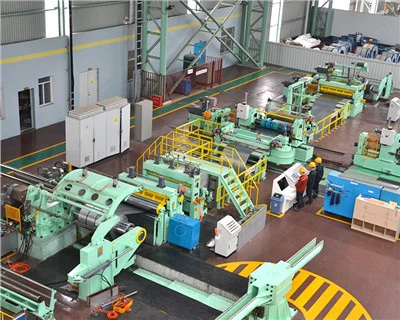
First, the easiest wins that almost every shop overlooks. I recently worked with a mid-sized steel distributor in Ohio that was putting 2 hours of setup time per coil on its 16-gauge stainless steel stock. They thought the slitter setup was non-negotiable, until we looked at their process: they’d manually measure and mark every slit position, then shim and tighten each slitting disc one by one, even for repeat orders of the same width runs. We swapped their manual shim system for a quick-change mechanical arbor—no more stacking tiny shims, no more guessing where each disc goes. For repeat jobs (which make up 60% of most slitting line work), you can pre-program the exact disc positioning, gap, and overlap into the line’s HMI and pull it up with one tap. That Ohio shop cut their setup time per coil from 2 hours to 22 minutes. The kicker? They only paid for the new arbor, no line overhaul needed. That’s the first big takeaway: if your setup process still relies on manual, trial-and-error for standard jobs, you’re leaving half your productivity on the table.
Now, let’s talk about unplanned downtime—this is the real productivity killer for slitting lines. I’ve had customers tell me they’re lucky to run 70% of their scheduled shift, and most of that downtime comes from two avoidable issues: disc wear and coil snaking. Disc wear is obvious, but the mistake I see is waiting for the edge to get so ragged that you have to shut down and replace the whole set. Instead, use a predictive wear gauge. Modern slitting line discs have a hard chrome or tungsten carbide coating that wears evenly, not just on one edge. We add a simple optical sensor to our lines that tracks the edge quality of every slit run. If the sensor flags that the edge roughness is creeping above your 0.001” tolerance, you can swap out one or two discs on the fly during a scheduled break, not in the middle of a 10-hour coil run. That Ohio shop we talked about? They used to swap entire disc sets every 5 coils, now they only do it every 22, cutting downtime related to disc changes by 70%.
Coil snaking is another big one. When a coil shifts sideways mid-run, you get uneven slits, scrap material, and emergency stops. Most shops rely on manual edge guides, which require an operator to hover by the line and make tiny adjustments every few minutes. We installed an auto-edge guide system on a line for a aluminum packaging manufacturer in Texas that was throwing away 8% of every coil due to snaking-related scrap. The auto-edge guide uses two load cells and a high-speed camera to track the coil’s edge in real time, adjusting the guide arms within milliseconds of a shift. That shop’s scrap rate dropped to 1.8% instantly, and their line speed went from 800 FPM to 1,200 FPM—without upgrading the line’s motor or any major parts. The auto-adjust feature also means one operator can run two lines instead of one, saving labor costs on top of the productivity gains.
Next, let’s level up your line for high-mix, low-volume jobs. A lot of shops think quick-change setups only work for repeat runs, but if you run a lot of custom jobs (like automotive prototype parts or specialty coil sizes), you can still squeeze more out of your line. The trick is modular tooling. Instead of a fixed arbor that only fits one disc size, we make slitting lines with interchangeable arbors, so you can switch from slitting 0.5” wide 2-gauge steel to 12” wide 20-gauge aluminum in under 10 minutes, no special tools required. I worked with a job shop in Michigan that does a lot of short-run work for construction equipment makers; before modular arbors, they’d spend 4 hours switching arbors for each custom job, now it’s 45 minutes. They used to turn down 15% of small orders because they couldn’t justify the setup time, now they take every order and have seen their overall line utilization jump by 25%.
Wait, but let’s not forget about the basics that operators often skip. Line speed is a big one, but you can’t just crank up the speed without accounting for material properties. For example, soft aluminum can run at 1,500 FPM, but hard steel (12-gauge or thicker) tops out around 900 FPM without causing disc damage or snaking. The mistake here is that most line operators run at a “safe” speed that’s 20-30% below the maximum for their material, just to avoid mistakes. We train our customers’ operators on how to adjust speed gradually—start at 70% of max, check edge quality for 50 feet of coil, then bump up 100 FPM at a time until you hit the point where the edge starts to tear. That small adjustment, paired with the predictive wear and auto-edge guides we talked about, can add 10-15% more output without any new equipment.
Another basic that’s easy to overlook: coil preparation. A lot of downtime comes from coils that are badly wound, have kinks, or are coated with rust or oil. We advise all our customers to invest in a coil flattener and a degreaser module if their line doesn’t already have them. A coil flattener removes any set from the coil during manufacturing, so it doesn’t snake when it hits the slitter. The degreaser cleans off rust or residual oil that can make the material slippery, leading to misalignment and uneven slits. I had a customer in Pennsylvania that was buying coils from a overseas supplier that had a lot of surface oil; after adding a small, low-cost degreaser module upstream, their scrap from slit edge inconsistency dropped by 10% and they could run their line at a higher speed.
Now, let’s talk about software and data, because you can’t fix what you don’t measure. Most slitting line operators keep a mental log of downtime, but we’ve found that when we add a simple line monitoring system, even a basic one, shops start finding hidden gaps. For example, a customer in Illinois was complaining that their line ran “most of the time” but couldn’t hit their production targets. The monitoring system showed that they had 45 minutes of unaccounted downtime every shift, which they wrote off as “operator breaks” or “small adjustments.” When we looked at the data, it turned out their operators were waiting for the crane to move new coils into place. We installed an automated coil loading system that can switch coils in 2 minutes, instead of 15, and that 45 minutes of wasted time disappeared. Suddenly, their line productivity jumped by 12% with no other changes. The key here is to not just collect data, but act on it—look for patterns: is downtime happening every Tuesday morning? That’s probably a maintenance gap. Is scrap higher on 16-gauge steel runs? That’s a disc gap adjustment issue.
Wait, but let’s get real—there’s no one-size-fits-all solution. A slitting line that works for a steel distributor will be totally different from one that runs thin aluminum for packaging. The biggest mistake I see shops make is trying to force a generic productivity hack on their line without understanding their specific workflow. For example, a job shop with lots of short runs doesn’t need a 100’ long coil storage rack, they need a quick-change disc system. A high-volume line that runs the same steel coil all day doesn’t need modular tooling, they need automated disc changing and predictive maintenance.
Speaking of maintenance, that’s another big one that’s often pushed to the side. I’ve seen shops run their slitting line until a disc breaks, a bearing seizes, or a gear strips—all of which lead to hours of downtime. Instead, a scheduled maintenance check every 2 weeks (instead of every 2 months) can catch small issues before they become big ones. We provide our customers with a simple maintenance checklist, and we also offer remote diagnostics—our techs can log into your line’s system and check for wear on bearings, motor health, and alignment without sending someone on-site. That reduces unplanned downtime by another 10-15% for most shops.
Let’s recap the stuff that actually moves the needle, no fancy, overpriced line overhauls required: first, optimize your setup process with quick-change tooling, especially for repeat jobs. Second, cut unplanned downtime with predictive disc wear and auto-edge guides. Third, reduce scrap by fixing coil alignment issues and investing in basic prep equipment like flatteners and degreasers. Fourth, use data to spot hidden waste and adjust line speed to match your material specs. Fifth, don’t skip scheduled maintenance.

At the end of the day, slitting line productivity isn’t about buying the most expensive, biggest line on the market. It’s about making small, targeted changes that fit your specific operation. If you’re tired of missing production targets, dealing with constant scrap, or watching your operators waste time on manual tasks, there’s a way to fix it—no need to wait for a full line upgrade. If you want to chat through what’s holding your line back, we’re here to help walk through solutions that work for your specific workflow.
Slitting Lines References
- Metal Slitting Line Productivity: Operational Best Practices. Industrial Metal Processing Association, 2022.
- Predictive Maintenance for Slitting Operations. Journal of Metalworking Technology, Vol. 47, No. 3, 2021.
- Quick-Change Tooling for Slitting Lines: Cost-Benefit Analysis. Manufacturing Engineering Society Conference Proceedings, 2023.
- Edge Quality Monitoring in Precision Slitting. International Journal of Machine Tools and Manufacture, Vol. 128, 2018.
Shanghai HOYO Industries Co., Ltd.
Shanghai HOYO Industries Co., Ltd. is one of the most professional slitting lines manufacturers and suppliers in China, featured by quality products and competitive price. Please rest assured to buy cheap slitting lines for sale here from our factory. Contact us for customized service.
Address: No.9, Jianding Road, Fengjing Town, Jinshan District, Shanghai, China
E-mail: info@hoyomachinery.com
WebSite: https://www.hoyomachinery.com/
