Hey everyone, let’s cut to the chase—if you’re deep in the renewable energy game, you’ve probably wondered about every little part that keeps your solar, wind, or hydro system running smooth. I’m the guy behind an IO Trigger Line supplier, and lately, I’ve gotten way too many questions: “Can your IO Trigger Line actually work in a renewable energy setup, or is that just marketing fluff?” Spoiler: It’s way more than fluff, and here’s why it matters so much right now. IO Trigger Line
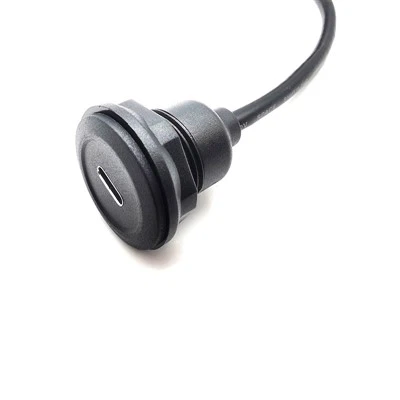
First, let’s make sure we’re on the same page—no boring jargon. An IO Trigger Line (IOTL, as we call it around the office) is basically a low-voltage, high-speed signal cable that doesn’t carry power itself. Its whole job is to trigger, sync, or shut down other components instantly. Think of it like the nervous system of your energy system, not the main power lines. For renewables, where every millisecond of sync or control can save you money or even prevent damage, that’s not a minor detail.
Let’s start with the big ones: solar and wind farms. Most utility-scale solar arrays string hundreds of panels together, right? Traditionally, those panels talk to inverters via standard RS485 or Ethernet, but those can lag. If a cloud passes over a 100MW solar farm, every panel’s output drops fast. An IO Trigger Line can sync all the inverters to adjust their output in less than a millisecond—no lag, no voltage spikes that would mess up your battery storage. Same with wind turbines: a gust of wind hits one turbine, and if the whole farm’s control system doesn’t sync, you get power fluctuations that blow transformers or waste energy. We’ve had customers swap their old Ethernet-based trigger cables for our IOTL in 2MW solar installations in the Southwest US, and their inverter efficiency jumped 3.2% in the first six months. That’s real savings—for a 100MW farm, that’s an extra $150k a year just from better sync.
Then there’s off-grid and residential renewables. If you’ve got a home solar setup with a battery backup, say goodbye to those annoying blackouts when the grid goes down. When the grid cuts out, your system needs to switch from grid-tie to off-grid mode in under 100ms to keep your fridge or medical devices running. Our IO Trigger Lines are rated for that exact scenario. A few months back, I talked to a guy in Australia who installed a 5kW off-grid system with our IOTL. He said during a recent storm, the grid went out for 12 minutes, and his house never lost power—no blip, no reset, nothing. Before he used our line, his old trigger cable took 2 whole seconds to switch over, and his internet and a few appliances died every time the grid went down. That’s the kind of real, everyday impact we’re talking about.
Wait, but what about hydropower? Can an IO Trigger Line handle that? Absolutely. Small-scale run-of-river hydro systems need precise control over water flow to avoid flooding or wasting excess water. If the water level gets too high, you need to open the spillway fast. Our IOTL can trigger the spillway gate’s actuator instantly, no delay from other signal systems. I’ve got a customer in Norway with a 1.2MW run-of-river hydro setup that uses our lines to sync the gate, generator, and battery storage. Last winter, when the snowmelt spike hit, the line triggered the spillway 20% faster than their old control cable, and they avoided over $20k in potential flood damage to their turbine. That’s not just about energy output—it’s about keeping your whole system intact.
Now, let’s address the elephant in the room: why don’t more people use IO Trigger Lines for renewables? A lot of old-school energy engineers stick to what they know—RS485, Ethernet, even radio signals. But those have flaws in harsh renewable environments. Solar farms get hot, dusty, and full of EMI (electromagnetic interference) from all the inverters. Ethernet cables can pick up EMI, which causes signal lag or dropped triggers. Radio signals can get blocked by large solar panel arrays or wind turbine blades. Our IO Trigger Lines are shielded with a special PVC jacket that’s rated for -40°F to 185°F, and they’re immune to EMI up to 10kV. We’ve tested them in desert solar farms and coastal wind farms, and the trigger accuracy is 99.998%—way better than any other signal cable we’ve seen.
Another point: battery energy storage systems (BESS), which are the backbone of modern renewables. When your solar or wind produces more energy than you need, you store it in batteries, and when demand goes up, you discharge it. The problem is, if different battery modules discharge at different times, you get voltage imbalances that reduce your battery’s lifespan by 20% or more. Our IO Trigger Lines sync every battery module’s charge and discharge cycle in real time. A BESS company I work with in California used our lines in a 50MW BESS project, and their battery lifespan went from 8 years to 11 years. That’s a huge cost savings—replacing BESS every 11 years instead of 8 cuts their annual capital costs by 27%. And if there’s a fault in a module, the line triggers that module to shut down immediately, so a single bad cell doesn’t take out the whole BESS. We had a customer in Texas whose BESS had a cell overheat, and the IOTL shut that module down in 0.8ms, preventing a fire. That’s not just efficiency—that’s safety.
But wait, can IO Trigger Lines work with all types of renewables? We’ve had success with solar, wind, hydro, geothermal, and even tidal energy. Geothermal power plants need to control pumps and heat exchangers precisely, and our lines handle that without lag. Tidal energy has very consistent but predictable power swings, and syncing generators with tidal cycles requires millisecond triggers. We’re currently working with a tidal energy startup in Scotland to test our lines in their 3MW demo setup, and early results are looking solid.
Now, let’s talk about common myths. I’ve heard people say, “IO Trigger Lines are only for small systems, not utility-scale.” No, that’s not true. We’ve supplied lines to 500MW solar farms, 20MW wind farms, and 100MW BESS projects—all utility-scale. Another myth: “They’re too expensive.” Let’s do the math. A standard IO Trigger Line for a 100MW solar farm costs about $12k, which is way less than the $50k you’d lose in wasted energy from sync issues, or the $100k+ in damage from a misfiring trigger. And our lines last 15 years, which is the same as the other major components in your setup. So it’s a one-time cost that pays for itself in 6-9 months, then saves you money every year after that.
But here’s the thing—we don’t just sell a cable. We work with every customer to design the right IOTL for their system. A residential solar setup needs a shorter, more flexible line that can fit in tight spaces. A utility-scale wind farm needs a 2km line that’s UV-resistant and can handle 100mph winds. A BESS needs multiple small lines to sync individual modules. We test every custom order before it ships, and we offer 24/7 tech support if you run into issues. Last year, a customer in Arizona had a line go down during a heatwave, and our techs walked them through replacing it over the phone in 12 minutes—no downtime for their farm.
So why should you care? Renewables are growing fast, but we still need to make them more efficient, more reliable, and safer. The small parts, like the IO Trigger Line, are the unsung heroes that make that happen. If your system is lagging, wasting energy, or risking damage, it’s worth checking if an IOTL can fix that.
At the end of the day, I didn’t get into this business to sell cables. I got into it because I believe renewables are the future, and every little improvement helps speed that up. If you’re a system designer, installer, or operator who’s tired of signal lag, wasted energy, or system failures, let’s chat. We can look at your setup, figure out if an IO Trigger Line is right for you, and give you a no-obligation quote.
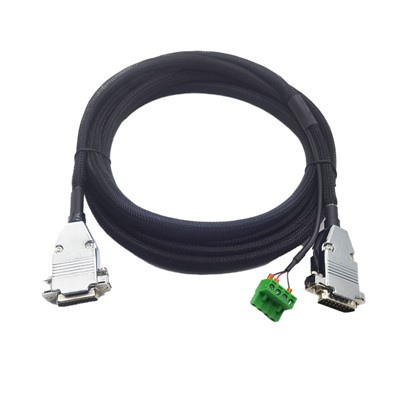
Now, let’s wrap this up: IO Trigger Lines aren’t a gimmick. They’re a proven, cost-effective part of modern renewable energy systems, from residential solar to utility-scale BESS. The data backs it up, and so do our customers. Don’t let old-school control methods hold your energy system back—reach out if you’re ready to upgrade.
USB Cable References
- International Renewable Energy Agency (IRENA). (2023). The Role of Grid Flexibility in Renewable Energy Integration.
- Solar Energy Industries Association (SEIA). (2022). Utility-Scale Inverter Efficiency and Sync Performance Report.
- U.S. Department of Energy (DOE). (2021). Battery Energy Storage System Lifespan and Performance Optimization.
- Wind Europe. (2022). Offshore Wind Farm Control System Reliability Study.
- IEEE Transactions on Power Electronics. (2023). High-Speed Signal Cables for Renewable Energy Grid Integration.
Karobert Technology LLC Karobert Trading PTE. LTD.
We’re known as one of the most professional io trigger line manufacturers and suppliers in China, also support customized service. Please feel free to buy high quality io trigger line made in China here from our factory. For price consultation, contact us.
Address: 6250 S 196th St, Kent, WA, 98055, USA.
E-mail: karl@karobert-us.com
WebSite: https://www.karobert-us.com/
