If you’ve ever run your fingers across a crisp, metallic wine label that shimmers just right, or noticed the sharp, raised gold initials on a luxury skincare box, you’ve experienced rotary hot stamping—even if you didn’t know the name. As a hot stamping supplier who’s walked the production floor of print shops, packaging plants, and brand studios for over a decade, I’ve spent countless hours troubleshooting misaligned foils, adjusting temperature for delicate substrates, and explaining to clients why rotary hot stamping isn’t just a “fancy printing trick”—it’s a precision process that turns ordinary packaging and branded materials into memorable, shelf-stopping products. Today, I want to break down what rotary hot stamping actually is, how it works, when it’s worth using, and why it’s become a go-to choice for brands that prioritize both quality and scale. Hot Stamping
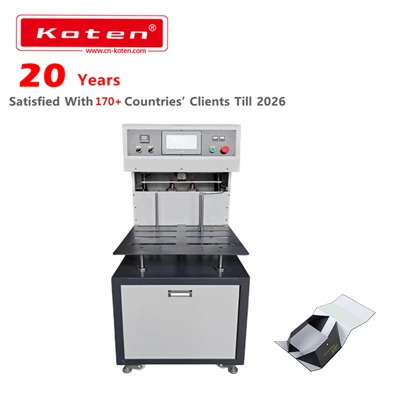
First, let’s get the basics straight: rotary hot stamping is a high-speed, roll-to-roll (R2R) decorative finishing process that transfers a thin layer of foil (usually metallic, but also available in matte, holographic, pearlescent, or textured finishes) to a substrate—think paper, cardboard, plastic film, fabric, or even leather—using heat, pressure, and a rotating cylindrical die. Unlike flatbed hot stamping, which uses a flat, stationary die pressed against a single sheet of material, rotary hot stamping runs on a continuous roll system, making it 5 to 10 times faster for large-volume runs, with far more consistent results. That speed is why it’s the workhorse of industries that need thousands (or millions) of identical foiled elements: food and beverage packaging, beauty and personal care, apparel tags, consumer electronics branding, and even promotional items like custom stickers or vinyl decals.
Let’s dive into the mechanics, because understanding how it works is what separates a basic hot stamping job from a flawless one. The core system has four main components: the unwinder, the foil supply roll, the rotary die cylinder, and the rewinder. When a job starts, the substrate roll is fed through the machine, moving at a steady, controlled speed parallel to the foil roll. The foil is a multi-layer film, usually made of a polyester base, a release layer, a color or pigment layer, and the final top layer of foil (like gold, silver, or copper). As both the substrate and foil pass between the rotary die and a pressure cylinder, the die—etched with the exact design you want (think a brand logo, a product line name, or a decorative border)—heats up to a precise temperature, typically between 100°C and 180°C, depending on the substrate and foil type.
Here’s where the magic happens: the heat from the die melts the release layer on the foil, and the pressure from the two cylinders presses the foil’s pigment and metal layers onto the substrate. The polyester base of the foil continues moving through the machine, while the foil’s decorative layer is left perfectly adhered to the substrate in the exact shape of the die. Once the foil is transferred, the substrate moves to the rewinder, which spools it up for the next step in production—whether that’s die-cutting, folding, labeling, or whatever comes next for the brand. The rotary design is key here: because the die is curved around a cylinder, it can run 24/7 for days on end without wearing out the design, unlike a flat die that would degrade after just a few thousand impressions.
Now, I’ve spent years fielding questions from clients who are trying to figure out if rotary hot stamping is the right choice for their project, and the biggest mistake I see is people lumping all hot stamping together. Let’s clarify the key scenarios where rotary hot stamping shines, and when a different process might be better. First, if you need a large volume—say, 10,000 units or more—rotary is the obvious pick. We once had a skincare client who needed 500,000 foil-embellished eye cream boxes for a holiday launch; a flatbed process would have taken weeks and cost twice as much as rotary hot stamping, which turned the order around in 10 days with zero alignment errors. That speed doesn’t sacrifice quality, either: the continuous roll system keeps tension consistent across the entire run, so every logo is the same size, same shine, same position, even on the outermost roll vs. the first box.
Another big use case is substrates that work best with continuous processing. Flexible packaging—like snack bags, coffee pouches, or frozen food wrappers—can’t be run through a flatbed die, because they’re too thin and prone to wrinkling when handled sheet by sheet. Rotary hot stamping is designed for roll-form materials, so it moves smoothly through the machine, no creases, no misalignments. We also do a lot of work with fabric tags for apparel brands; rotary hot stamping can transfer foil to nylon or polyester tags without melting the fabric, which is critical for clothing that will go through washes.
But rotary hot stamping isn’t one-size-fits-all, and I always tell clients to ask themselves three questions before committing: Do I need a design that’s too small or too complex for rotary? Is my order volume low? Do I need custom shapes that can’t be created with a rotary die? For example, if you want a single foil design for a 100-unit wedding invitation suite, rotary hot stamping isn’t cost-effective—flatbed or even digital foil printing would be cheaper. Similarly, very intricate, tiny designs (like a 1mm logo that requires micro-etching) might work better with a flatbed die, since some rotary machines have limits on how fine a die can be without tearing the foil. I always encourage clients to send a sample or a detailed design brief before making a decision; sometimes what sounds like a perfect fit on paper doesn’t translate to the production floor.
One of the most common misconceptions about rotary hot stamping is that it’s only for metallic foil. That’s just not true. Foil manufacturers now make a huge range of specialty foil types that work seamlessly with rotary systems, opening up creative possibilities for brands. I’ve helped clients use matte black foil for a minimalist luxury candle box, holographic rainbow foil for a teen skincare line, pearlescent silver foil for a premium wine bottle neck label, and even textured velvet foil for high-end apparel hang tags. The key is matching the foil type to both the substrate and the design intent: for example, glossy metallic foil works great on glossy cardboard, while matte foil pairs better with uncoated, textured paper to avoid a “cheap” look. We also work with clear foil for a see-through plastic water bottle labels, which gives a subtle, premium shine without obscuring the bottle’s design.
Quality control is another area where rotary hot stamping outperforms other processes, especially for large runs. Because everything is automated, we can set the temperature, pressure, and speed once at the start of a job, and the machine repeats the exact same settings for every impression. That eliminates human error—no more misaligned logos because an operator forgot to adjust the flatbed die, no more uneven foil transfer because pressure was applied inconsistently. We do run random spot checks every 10,000 units, of course, to make sure everything is on spec, but the consistent, automated nature of rotary hot stamping means the defect rate is usually less than 1% for large runs. For brands, that means less waste, fewer returns, and a final product that looks exactly like the design they approved in the proof.
I also want to talk about sustainability, because that’s a topic every brand is asking about now, and rotary hot stamping has a lot to offer here. Unlike digital printing, which produces excess ink waste and toner cartridges, rotary hot stamping only uses exactly the amount of foil needed for the design—there’s no unused ink or dye left over. Foil rolls are recyclable, and many manufacturers now offer foil made with 100% post-consumer recycled polyester base, which reduces the environmental footprint of the process. We’ve even switched to water-based release layers for some of our jobs, which cuts down on volatile organic compounds (VOCs) compared to traditional solvent-based releases. I know sustainability is non-negotiable for most brands these days, and rotary hot stamping delivers high quality without the waste that comes with many other decorative processes.
After 12 years as a hot stamping supplier, I’ve seen the industry evolve a lot, but rotary hot stamping remains the backbone of custom decorative finishing, and for good reason. It balances speed, quality, versatility, and cost in a way no other process does, especially for large-volume projects. Whether a brand is launching a new line of craft beer bottles, a premium skincare set, or a line of sustainable apparel, rotary hot stamping can turn their vision into a tangible, high-end product that stands out on shelves.

If you’re thinking about adding rotary hot stamping to your next project—whether you’re a small brand testing a new line or a large corporation ramping up production—don’t hesitate to reach out. We work with clients across industries, from startups to Fortune 500 companies, and can help you figure out if rotary hot stamping is the right fit for your design, volume, and budget. Send us your design brief, a sample of your substrate, or just give us a call to talk through your needs—we’re here to turn your ideas into foiled, high-quality products that your customers will notice.
Rigid Box Solutions References
- Society of Manufacturing Engineers. (2019). Hot Stamping Technology: A Guide to Industrial Applications. SME Press.
- Printwear & Promotion Association. (2021). Decorative Finishing Processes for Apparel and Packaging. PP A Publications.
- Foil Manufacturers Association. (2022. Rotary Roll-to-Roll Hot Stamping: Sustainability and Quality Standards. FMA Technical Bulletin No. 07.
Ruian Koten Machinery Co., Ltd.
Ruian Koten Machinery Co., Ltd. is one of the most professional hot stamping manufacturers and suppliers in China, featured by quality products and good price. Please rest assured to buy CE approved hot stamping made in China from our factory. Welcome to contact us for quotation.
Address: Room 2201, No. 2 Building, Rui Xiang Yi Hao, Ruixiang New Area, Ruian City, Wenzhou, Zhejiang, China.
E-mail: manager@cn-koten.com
WebSite: https://www.kotenmachinery.com/
