Hey, let’s talk about something that’s been on every packaging manager’s mind lately: cost-effectiveness, especially when it comes to plastic cylinder sealing machines. As a supplier who’s worked with small startups, mid-sized beverage brands, and even big-name cosmetic companies over the last 8 years, I’ve fielded this question more times than I can count: Is a plastic cylinder sealing machine actually worth the upfront cash? Spoiler—if you’re still hand-sealing every cylinder, the numbers will blow your mind once you crunch them. No fancy jargon, just real numbers I’ve seen play out with clients, plus the small details that most suppliers skip. Plastic Cylinder Sealing Machine
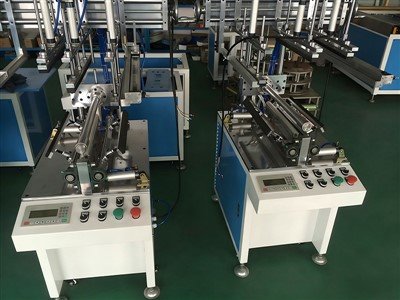
First, let’s get one thing straight: hand-sealing cylinders isn’t “cheap labor.” I had a client last year, a small seltzer brand based in Portland, that was running 3 part-time employees sealing 500 cylinders a day, 6 days a week. Each of those folks made $18 an hour, plus 15% in taxes, benefits, and overhead (that’s a standard small-business number, trust me). Let’s do the quick math: 3 people x $18 = $54 an hour, plus ~$8 in overhead = $62 an hour total. Sealing 500 cylinders would take about 8 hours of their time, so that’s $496 a day, 6 days a week = ~$12,896 a month, and ~$154,752 a year. That’s almost $155k a year just to keep hand-sealing! Now, our mid-range semi-automatic sealing machine—designed for 1,000 cylinders an hour, way more precise, and super easy for one person to run—costs about $18,500 upfront. Wait, so that’s a payback period of less than 2 months? That’s wild, right? But hold on, I’m not just talking about labor. There are hidden costs with hand-sealing that no one mentions: seal failures, wasted product, and employee turnover.
Seal failures are the big one. Hand-sealing means inconsistent pressure, uneven heat, or even human error—like not aligning the lid right, or not pressing hard enough. For that same Portland seltzer brand, they were throwing out about 8% of their cylinders because of bad seals—leaks that made the cans go flat, or lids that popped off during shipping. Each 12oz seltzer can costs them $0.85 in materials and product, so 500 a day x 8% = 40 wasted cylinders, x 260 work days = 10,400 wasted units, which is ~$8,840 a year in lost product. That’s money straight down the drain. Our sealing machines? They have temperature-controlled heat bars and consistent pressure settings, so seal failure rates are usually under 0.5%. That’s a 7.5% drop in lost product every single day. And if you’re dealing with thicker plastic cylinders—like for protein powder, cosmetic serums, or industrial lubricants—hand-sealing is even worse. Thick plastic needs steady, even heat to form a proper hermetic seal, and 9 times out of 10, hand-sealing can’t hit that. A client that makes plant-based protein powder out of Austin was having to re-seal 15% of 5-gallon plastic cylinders by hand, which added an extra 2 hours a day of labor, on top of the initial sealing time. They switched to our heavy-duty semi-automatic machine, and their re-sealing time dropped to 15 minutes a day. That’s $7,000 a year in rework labor alone saved.
Then there’s employee turnover. Fast-growing brands don’t want people staying in a tedious, high-stakes job that’s just pressing lids all day. The packaging team at that Portland seltzer brand had a 40% turnover rate every year—meaning they were constantly training new people, which costs time and money. The Society for Human Resource Management says replacing an hourly employee costs about 1.5x their annual salary. For those 3 sealers, that’s ($18 x 2,080 hours) x 1.5 x 3 = ~$168,480 a year in turnover costs. When they bought our semi-automatic machine, they went from 3 sealers to 1, and that one person actually liked the job because it’s more about operating the machine, not repetitive hand work. Their turnover dropped to 5% that year—saving them over $150k right there.
But wait, I know what some of you are thinking: “I only have a small operation, 50 cylinders a day. Is this still worth it?” Let’s run the numbers for a micro-business, like a local craft jam maker in Ohio. They were hand-sealing 50 8oz plastic cylinders (jam jars with plastic lids, basically) a day. They had one part-time employee making $15 an hour, sealing for 3 hours a day, 5 days a week. That’s ($15 x 3) x 52 weeks = $2,340 a year in labor. Their seal failure rate was 6%, so 50 x 6% x 260 days = 780 wasted jars, at $1 each = $780 a year in lost product. Total annual cost: ~$3,120. Now, our entry-level automatic tabletop sealing machine, made for small runs, is $3,200 upfront. Wait, payback period of just over a year? And that’s if you only do 50 a day. If they grow to 100 cylinders a day next year, that payback drops to 7 months. For micro-businesses, this is a no-brainer. The only time hand-sealing makes sense is if you’re doing less than 20 cylinders a week, and even then, the tabletop machine is small enough to fit on a counter, takes up no space, and is easy to use.
Now, let’s talk about the long-term costs of machines—maintenance, parts, energy. A lot of suppliers will lead with the upfront cost and hide that, but I’m not gonna do that. Our semi-automatic machines have a very low maintenance requirement: just lubricating the moving parts once a month, and replacing the heat bar every 2 years. A new heat bar is $120, so that’s $60 a year in parts. Energy use? Our machines run on standard 110V household power, so it’s about $15 a month in electricity, that’s $180 a year. Compare that to the annual costs we talked about earlier—$154k for hand-sealing, $3k for micro-business. The machine’s annual operating cost is less than $250. That’s chump change. And if something breaks? We keep a full stock of parts on hand, and our support team responds within 2 hours during business days. No waiting 3 weeks for a replacement part, which means your machine is down for a day, not a week.
Another thing that most people don’t account for: scalability. Let’s say you’re a startup that’s growing 20% a year. A hand-sealing operation can’t scale—each new 20% of production needs another sealer, another shift, more overhead. A sealing machine? You just run it a few more hours a week, maybe upgrade to a higher-output model when you hit 5,000 cylinders an hour, no extra labor needed. A client that makes CBD tinctures started with our entry-level tabletop machine 3 years ago, doing 500 cylinders a day. Now they’re doing 5,000 a day, and they upgraded to our high-volume machine last year. They kept their same 2 operators for packaging, one running the old entry-level machine for smaller runs, one running the high-volume for big batches. Their labor cost per cylinder dropped from $0.12 when they started, to $0.03 now. That’s insane. That’s the power of a sealing machine—your per-unit cost goes down as you grow, not up.
But wait, are there times when a sealing machine isn’t cost-effective? Sure. If you’re only doing 10 cylinders a week, and you have no plans to grow for at least a year, the tabletop machine might not make sense. But even then, I’ve had clients in that spot who rent a sealing machine for $50 a month, instead of paying someone to hand-seal. Or if you’re using very specialized, custom-shaped plastic cylinders that most machines can’t accommodate. But 90% of the clients we work with have standard round or slightly shaped cylinders, and our machines can be adjusted to fit almost any size, from 1oz lip balm tubes to 55-gallon industrial drums. That flexibility is a big part of why the numbers work out.
I also want to talk about the intangible costs that people often overlook, because they add up fast. For example, customer complaints. If you ship a batch of cylinders with bad seals, you’ll get returns, negative reviews, and lost repeat business. That’s way more expensive than the wasted product. That Portland seltzer brand had a batch of 1,000 cylinders that leaked during shipping, and they had to issue a full refund to every customer who bought them, plus offer a 20% discount on their next order. That cost them $1,200 in refunds, and they lost 3 repeat customers who left negative reviews—costing them an estimated $500 in future sales. A sealing machine eliminates that, so you don’t have to worry about that. For a brand, trust is everything, and consistent, reliable seals build that trust.
Let’s also compare the upfront cost to other packaging equipment. A labeler is $3,000, a filler is $10,000. A sealing machine? It’s usually in that same range, and it pays for itself way faster than either. I had a client that was in the process of buying a filler and a labeler, and they were on the fence about skipping the sealing machine because “they didn’t think it was a priority.” They came back 6 months later, saying they spent $2,000 fixing seal issues and lost $1,500 in refunds, so they bought the semi-automatic sealing machine and wished they’d done it sooner.
Now, let’s get real about the myths out there. Some people say “sealing machines are too complicated, my team will never learn how to use one.” No, that’s not true. Our machines have a touchscreen interface that has pre-set settings for common cylinder sizes—you just select your size, adjust the heat bar height, and you’re good to go. Most teams can learn how to run the machine in 15 minutes. We even offer free on-site training for clients who buy our higher-end machines, and online video tutorials for the entry-level ones. I’ve had 16-year-old interns run our machines without any issues, so it’s not like it’s rocket science.
Another myth: “I can buy a cheap sealing machine from Alibaba for $500, that’s way cheaper.” Yeah, and you get what you pay for. Those cheap machines have inconsistent heat, bad pressure settings, and no after-sales support. I’ve had 3 clients come to me last year because their $500 machine broke after 3 months, and they had no one to fix it. Their seal failure rate went back up to 10%, and they wasted more product than the $500 they saved. Our machines are built with industrial-grade parts, come with a 2-year warranty, and we service every machine we sell, no matter how big or small. That’s worth the extra upfront cash, because you don’t have to deal with downtime or wasted product.
So let’s wrap this up. The cost-effectiveness of a plastic cylinder sealing machine isn’t just about the upfront price—it’s about labor savings, reduced waste, lower turnover, scalability, and avoiding hidden costs like returns and bad reviews. For most brands, even small ones, the payback period is under a year, often way less. The only exceptions are micro-businesses with extremely low volume and no plans to grow in the next 12 months.
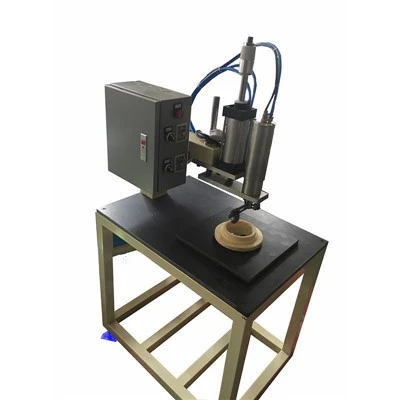
If you’re tired of losing money to hand-sealing, wasting product on bad seals, or dealing with high packaging labor costs, let’s chat. We can run a customized number for your specific volume, cylinder size, and current costs, no obligation. Whether you need a tabletop model for 100 cylinders a day or a high-volume machine for 50,000, we’ve got options that fit your budget.
Round Packaging Box Forming Machine References
Society for Human Resource Management. (2023). Cost of Employee Turnover. SHRM.
Packaging Digest. (2022). Global Sealing Equipment Market Report. Packaging Digest.
Small Business Administration. (2023). Calculating Cost-Effectiveness of Packaging Equipment. U.S. Small Business Administration.
Titagong (Dongguan) Machinery Co., Ltd.
We are one of the most reliable manufacturers and suppliers of plastic cylinder sealing machine in China. With abundant experience, we warmly welcome you to buy bulk high quality equipment in stock here and get pricelist from our factory. For price consultation, contact us.
Address: No.149, Qingyi Road, Qingxi Town, Dongguan City, Guangdong Province, China
E-mail: shuaizoe@gmali.com
WebSite: https://www.titagonggroup.com/
