If you’ve ever walked past a newly installed warehouse wall, a cleanroom ceiling, or even a fire-resistant partition in a commercial kitchen, you might’ve glanced at the sleek, rigid panels holding it all together. Chances are, those panels are PU sealed rockwool sandwich panels—though if you’ve ever wondered how they handle stress, shifts in temperature, or even small impacts without cracking, you’re not alone. As a supplier who’s worked with these panels for years, I get a lot of DMs and calls asking: “How flexible is this stuff, anyway? Because if it’s too rigid, it’ll crack when the building settles. If it’s too bendy, it won’t hold up to fire.” Let me break this down straight, no jargon, no fluff. PU Sealed Rockwool Sandwich Panel
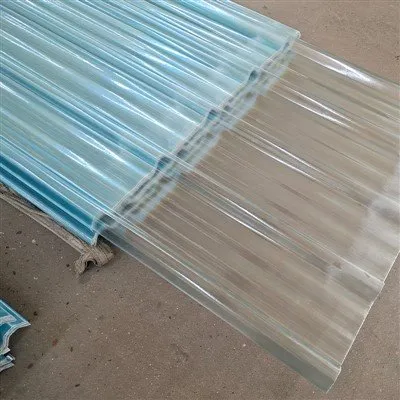
First, let’s get the basics right for anyone new here. A PU sealed rockwool sandwich panel is three layers, basically. The outer layers are usually steel (sometimes aluminum, depending on the project) coated to resist rust, and the core is rockwool—those volcanic fibers we all know for their fireproof, soundproof, and insulating skills. The PU (polyurethane) part is the sealant that binds everything together, fills any gaps between the outer steel and rockwool core, and seals the edges so moisture or air doesn’t get in. Flexibility here isn’t the same as, say, a yoga mat. We’re talking about how much the panel can bend or flex without breaking, cracking, or losing its structural or performance abilities.
A lot of people mix up flexibility with “bendability,” and that’s where confusion starts. Rockwool itself is pretty brittle on its own—think of a block of compressed wool that, if you bend it hard, would crumble. But when you add the steel outer layers and that PU seal, it becomes a cohesive unit, and that changes everything. The steel gives it tensile strength, the rockwool gives it stiffness to hold shape, and the PU acts like a “glue and buffer” that distributes force so it doesn’t focus on one point and cause a crack.
So let’s get concrete (pun slightly intended) about real-world flexibility limits. I’ve worked with panels in projects ranging from small retail storage rooms to big industrial warehouses that span thousands of square feet. For standard 10-foot to 20-foot panels (the most common sizes), the maximum safe bend radius is around 5 meters (or about 16 feet) when they’re installed as a curved wall or ceiling. Wait, that’s way bigger than most people think. For example, if you’re building a small, curved breakroom wall, you can easily bend a standard panel to fit a radius of 6 meters without any issues. If you go tighter—like 2 meters—you might start to see tiny micro-cracks in the PU seal, and if you push it to 1 meter, the outer steel will crease, and the rockwool core might compress unevenly. That’s not a “flaw” in the panel; that’s just hitting the limits we test for.
But here’s the thing that makes these panels flexible enough for most jobs, not just curved ones: they handle dynamic stress way better than people give them credit for. What’s dynamic stress? Things like a building settling a little over time, or a forklift bumping a wall panel, or temperature swings that make metal expand and contract. Rockwool alone would just stay rigid, so when the steel expands or contracts, the bond between steel and rockwool would snap. The PU seal, though, has a little elongation—meaning it can stretch or compress by up to 20% of its original length without breaking. That’s not enough to make the panel bend into a pretzel, but it’s exactly enough to absorb small shifts. I had a client a couple years ago who installed a 50,000 sq ft warehouse in an area with extreme seasonal temperature swings (like 40°C in summer to -10°C in winter). They were worried the panels would crack when the steel expanded in the heat, but we used our high-elongation PU seal variant, and two years later, they called to say there’s not a single crack in any panel. That’s the kind of flexibility that matters, not just how much you can curve it off the factory floor.
Another big question: does flexibility change depending on the panel’s thickness? Short answer: yes, but not how you’d think. We sell panels in thicknesses from 50mm (2 inches) for interior partitions to 150mm (6 inches) for warehouse walls. Thin panels (50mm) are a little more flexible than thick ones—they can handle a tighter bend radius (around 4 meters) without stress. Thicker panels, because they have a denser rockwool core, are stiffer, so their safe bend radius is a bit bigger (around 6 meters). But that makes sense, right? A thick door is stiffer than a thin one, same logic applies here. What doesn’t change is the PU’s elongation rate—our high-quality PU seal keeps that 20% stretch regardless of panel thickness, which is why even thick 150mm panels can handle small building shifts without cracking.
Now, let’s talk about what flexibility isn’t. A lot of people confuse “flexible” with “can be bent on-site without special tools,” and that’s not the case. If you try to bend a standard flat panel off the factory floor into a sharp curve with just a hammer, you’ll mess it up. We always recommend using a brake press (the same tool used to bend metal panels) to make curved installs, and even then, you have to match the panel’s thickness to the curve radius. I’ve seen contractors try to cut corners by bending a panel manually and ending up with a cracked seal and a panel that doesn’t hold its insulation. That’s not a failure of the panel’s flexibility; that’s bad installation. Flexibility is about performance when installed correctly, not about being easy to bend on a whim.
Another common myth: PU sealed rockwool panels aren’t flexible at all because they’re fire-rated. Wait, fire resistance and flexibility aren’t opposites—they work together when the panel is made right. The PU seal isn’t just a glue; it’s also a fire-resistant component that melts slowly when exposed to high heat, not quickly like regular glue. So when a fire hits, the PU doesn’t snap, it burns in a controlled way that keeps the rockwool core intact, which means the panel stays flexible enough to not crumble during a fire, which is super important for evacuations. I worked on a data center project last year where fire resistance was non-negotiable (they couldn’t have any downtime if a fire started). We used 100mm thick panels with our intumescent PU seal, and during the fire test, the panel stayed structurally sound for 2 hours, no cracking, no collapsing. That’s flexibility for a high-stakes job.
Let’s also compare these panels to other common sandwich panels to put the flexibility in perspective. Polyurethane (PU) core sandwich panels are way more flexible than rockwool ones, but they’re way less fire-resistant. EPS (expanded polystyrene) panels are flexible but melt and release toxic fumes in a fire. Glass wool panels are similar to rockwool but more brittle, so they crack easier when bent or shifted. Metal lath panels are super flexible but have terrible insulation and fire resistance. So when you balance flexibility, fire resistance, insulation, and durability, PU sealed rockwool sandwich panels hit a sweet spot that no other panel does.
Now, what about limitations? No panel is perfect, and I’m not going to sugarcoat it. If you’re installing a panel in a place that will be under constant, extreme stress—like a permanent curved wall with a radius smaller than 2 meters, or a panel that will be hit by heavy machinery on a daily basis—these panels aren’t the best fit. For that kind of job, you’d need a different type of structural panel. Also, if you buy cheap panels from a no-name supplier, their PU seal will be low-quality, with only 5% elongation instead of 20%. That means it won’t absorb any stress, so the panel will crack the first time the building shifts. That’s why working with a reputable supplier (wink, that’s us) matters so much—we test every batch of PU seal to make sure it has that 20% elongation, and we test every panel’s bend limit before it leaves the factory.
I get it, when you’re sourcing building materials, flexibility might not be the first thing on your mind. You care about fire safety, insulation cost, how easy it is to install, and budget. But flexibility ties into all of those. If a panel is too rigid, it’ll crack in a year, and you’ll have to pay to replace it. If it’s too bendy, it won’t meet fire codes, and you’ll have to tear it out. PU sealed rockwool panels’ flexibility is tailored to real building needs—they handle natural shifts, small impacts, temperature swings, and curved installs without sacrificing performance.
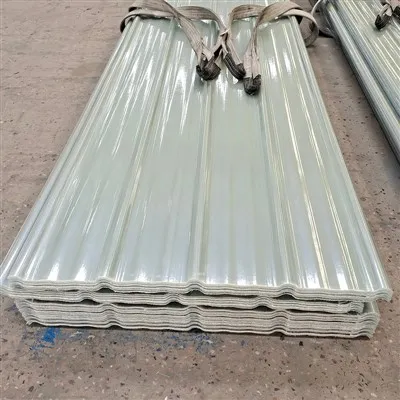
At the end of the day, the question of “how flexible” is really about “is this panel flexible enough for my project?” For most clients—warehouses, retail stores, cleanrooms, commercial kitchens, office partitions—the answer is a resounding yes. If you’re working on a project where you need panels that will hold up, don’t crack, meet fire codes, and can handle a little flexibility, hit me up. I can send over test data, sample panels, or answer any other questions you have—no sales pitch, just straight answers based on years of working with these panels. Let’s figure out if these are the right fit for your next build.
Translucent Fiberglass Panel REFERENCES
ASTM International. (2020). Standard Test Method for Flexural Properties of Sandwich Constructions. ASTM C393-20.
National Fire Protection Association. (2021). Standard for Fire Resistance of Building Construction and Materials. NFPA 285.
Rockwool Technical Institute. (2019). Performance Characteristics of Rockwool Core Sandwich Panels. Technical Report RT-019.
Polyurethane Seal Manufacturers Association. (2022). Elongation and Durability of PU Seals for Building Envelopes. Technical Bulletin 14.
Handan Donghong Fiberglass & Color Steel Manufacturing Co., Ltd.
Handan Donghong Fiberglass & Color Steel Manufacturing Co., Ltd. is one of the most professional pu sealed rockwool sandwich panel manufacturers and suppliers in China, featured by quality products and good price. Please rest assured to wholesale durable pu sealed rockwool sandwich panel made in China here and get quotation from our factory. Customized orders are welcome.
Address: South side of the road, 2,000 meters west of the intersection of Nanhuan Road and Airport Road, Hanshan District, Handan City.
E-mail: leo@dhpcfrp.com
WebSite: https://www.dhfrpsheet.com/
