Alright, let’s cut to the chase—if you’ve ever worked with vacuum pumps, you know how often we fixate on the gauges, the hoses, or the replacement filters, and forget the unsung hero holding it all together: the vacuum pump motor. I’m not here to geek out with a bunch of textbook jargon, but if you’re running a shop, manufacturing line, or even a small lab, skipping over what this motor actually does is like trying to drive a car without checking the engine. Let’s break it down straight. Vacuum Pump Parts and Consumables
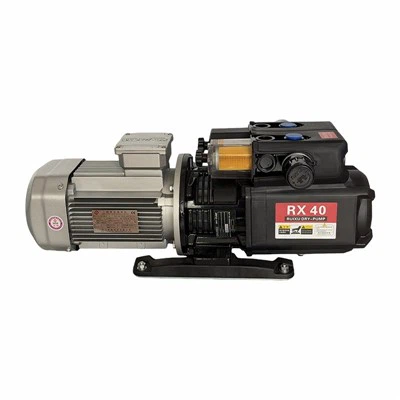
First off, let’s get the basics right: a vacuum pump’s whole job is to remove gas molecules from a sealed chamber, right? That’s what creates the “vacuum.” The motor isn’t just a fancy power switch—it’s the muscle that makes that gas removal happen. Think of it like a big fan, but instead of moving air around your living room, it’s pulling gas out. But not all motors are created equal. If you’re in the market for parts (which, hey, that’s my gig—we sell vacuum pump motors, gears, vanes, all the consumables you wear out day-to-day), you’ve probably seen different types: single-stage, two-stage, oil-lubricated, dry screw. Each motor’s job shifts a little, but the core function stays the same.
Let’s dive into the day-to-day, because that’s what matters most. Take a small lab using a rotary vane vacuum pump for distillation. When the motor kicks on, it spins the vanes inside the pump housing. The vanes push gas molecules from the chamber into the pump’s outlet, which then vents them outside. If the motor cuts out mid-run, you’re not just stuck with no vacuum—you could lose a whole batch of chemicals, which is a huge waste. For larger operations, like food packaging plants that vacuum-seal bags of nuts, the motor has to keep pulling hard for hours to make sure every last bit of air is out. If it’s weak, the bags get wrinkly, the food goes bad faster, and that’s a hit to your bottom line.
Here’s a thing most people miss: the motor doesn’t just pull—It also maintains the vacuum pressure. A lot of folks think once the pump reaches its target pressure, it just stops working. No way. The second gas leaks back into the chamber, the motor has to kick in again to flush it out. That’s why old or worn motors are such a pain. If your motor’s bearings are shot, or the windings are frayed, it can’t keep that consistent pull. You’ll see pressure gauges fluctuating, your cycle times slowing down, and you’ll be swapping out parts way more often than you should. That’s where our parts come in—we stock replacement motors and the little bits that keep them running, like belt drives (for belt-driven motors, which are way more common than direct-drive for most industrial use) and capacitor starters.
Wait, let’s talk about the different jobs for different pump types, because that’s where specificity matters. Dry screw vacuum pumps, used in semiconductor manufacturing (super high-stakes, by the way), have motors that spin the screw rotors at really high speeds—sometimes up to 3,000 RPM or more. They don’t use oil, so the motor has to handle a lot of friction from the metal screws rubbing against each other. If the motor’s thermal protection is shot, it’ll overheat, the screws will seize, and you’re looking at a $10,000 repair, easy. Oil-sealed rotary vane pumps? Their motors do double duty: they spin the vanes, and also help circulate the oil that seals the pump chamber. If the motor’s not running at the right voltage, the oil doesn’t flow, the vanes wear out faster, and you’re buying more oil and vanes than you need to. We see this all the time—customers come in complaining about “weird vacuum loss” and we end up replacing a worn motor belt before anything else.
Another big one: motor efficiency. Back in the day, motors were big and clunky, wasting a lot of energy just to turn the pump. Now, with energy costs through the roof, a lot of operators are switching to high-efficiency motors. But here’s the catch—you can’t just slap any high-efficiency motor on your old pump. It has to match the pump’s cubic feet per minute (CFM) rating. If you put a too-big motor on a small pump, it’ll burn out the windings because it’s drawing more current than it needs. Too small, and it’ll struggle to pull the required vacuum, leading to higher energy bills and part failures. We get questions about this all the time—“will this motor work with my 5 CFM pump?”—and we always tell them to check the pump’s model number, because compatibility is everything.
Let’s talk about the wear and tear, because that’s where our customers live. Vacuum pump motors don’t just break overnight—they give signs. If you hear a loud grinding noise coming from the pump, that’s usually worn motor bearings. If it takes longer than usual for the pump to reach its target vacuum, that’s a motor with reduced power. If it trips the circuit breaker every time you turn it on, that’s a bad capacitor (part we stock, fyi) or shorted windings. Ignoring these signs doesn’t just mean a new motor— it can ruin the pump itself, because a weak motor puts extra strain on the impellers, vanes, or screws. We’ve had customers come to us after a $500 motor replacement led to a $2,000 pump repair, just because they skipped changing a $15 motor belt on time.
Wait, let’s not forget niche uses. If you’re a woodworker using a vacuum press to hold pieces together for custom furniture, your motor is running 8 hours a day, 5 days a week. If it dies mid-press, your glued pieces come apart, and you’ve got to sand and re-glue—lost time and materials. For medical labs, using vacuum pumps to aspirate liquid from samples, a motor failure can ruin patient samples, leading to incorrect test results. That’s why picking the right motor, and replacing parts when they’re worn, isn’t just a maintenance thing—it’s a quality and reliability thing.
Now, let’s clear up a common myth: some people think the vacuum pump and its motor are the same thing. No way— the pump is the assembly (vanes, housing, screws), the motor is the power source. They work together, but one can’t do the job without the other. If your motor goes, your pump is just a hunk of metal that doesn’t move. If your pump goes, a good motor can work with a replacement pump, but that’s a whole other cost.
Here’s the part you came for if you’re dealing with parts: when you need a replacement motor, don’t just google “vacuum pump motor” and pick the first one. Match the model number of your existing motor to the pump’s model. If you’re not sure, send us a photo of the motor’s nameplate—we’ve got a team that can help you find the exact part, no guesswork. We also stock consumables that go with motors: belts, capacitors, bearing kits, even motor oil for oil-lubricated pumps. We don’t just sell parts—we’ve been in this space long enough to know what actually works, not what some catalog says.
A quick note on troubleshooting a bad motor before you replace it: if your pump isn’t running, first check the power source—outlet, circuit breaker, cord. Then check the motor’s starter capacitor (that’s the little can on the side of most small motors)—if it’s bulging or leaking, swap that first, it’s way cheaper than a whole motor. If that doesn’t work, check the motor’s bearings—if you can turn the motor shaft by hand and it’s grinding or stuck, bearings are shot. That’s when you need a replacement.

At the end of the day, the vacuum pump motor is the reason your pump does its job—whether that’s packaging food, manufacturing semiconductors, testing aerospace parts, or making craft furniture. It’s not the flashiest part on the pump, but it’s the one that keeps the whole operation running. If you’re dealing with a motor that’s acting up, or you just need to stock up on spare parts so you don’t get caught off guard, reach out to us to talk through your needs. We’ll help you find the right part, no jargon, no upselling, just stuff that works for your setup.
General-purpose Vacuum Pump References:
- Dushman, S. (1962). Scientific Foundations of Vacuum Technique. John Wiley & Sons.
- “Vacuum Pump Motor Selection Guide.” Machinery Lubrication Magazine, 2021.
- “Rotary Vane Vacuum Pump Maintenance Best Practices.” Plant Engineering, 2022.
- Dry Vacuum Technology: Principles and Applications. Elsevier, 2019.
Wenzhou Ruixu Vacuum Equipment Co., Ltd.
As one of the most professional vacuum pump parts and consumables manufacturers and suppliers in China, we’re featured by quality products and low price. Please rest assured to wholesale cheap vacuum pump parts and consumables made in China here and get quotation from our factory. Customized orders are welcome.
Address: No. 8 Xingyang Road, Wanquan Industrial Park, Pingyang County, Wenzhou City, Zhejiang Province
E-mail: rx668@163.com
WebSite: https://www.ruixupump.com/
