As a clutch plate supplier who’s spent the last 12 years on factory floors and customer service lines, I’ve lost count of how many times I’ve heard the same mistake: a customer installs a brand-new clutch plate, slams the car into gear, and revs the engine hard to test it—only to blow the plate within 500 miles. That frustration isn’t just theirs; it’s mine, because I know a brand-new clutch plate’s friction surfaces are like a fresh pair of work boots: they need a break-in period to seat properly, not just a quick “test run.” Over the years, I’ve worked with mechanics and do-it-yourselfers to refine a break-in process that’s rooted in material science, not old truck drivers’ tales, and today I’m sharing it with you. Clutch Plate
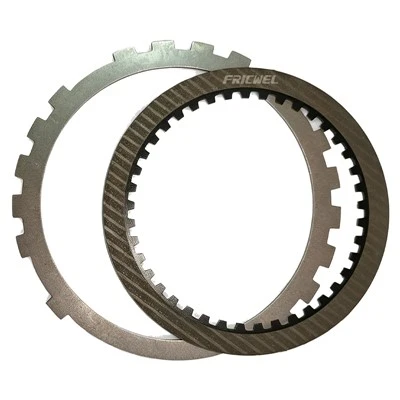
First, let’s get one thing straight: why does a clutch plate need breaking in in the first place? A new clutch plate’s friction material—usually organic fibers, semi-metallic blends, or ceramic compounds—isn’t perfectly smooth right off the production line. The manufacturing process leaves tiny burrs, microscopic uneven peaks, and a thin layer of release agent to keep the plate from sticking to its mold during curing. If you skip break-in, those high peaks wear down too fast, often unevenly, and that release agent burns into the flywheel or pressure plate, creating a slippery barrier that makes the clutch slip, chatter, or even fail prematurely. I’ve seen semi-metallic clutch plates slip so badly after a hard initial drive that the customer had to replace them twice in a month—all because they thought “faster is better” for the break-in.
The process is simple, but it’s not passive. You can’t just drive to the grocery store and call that break-in. It needs intentional, controlled stops where you use the clutch gently to transfer power, letting the friction surfaces mate at a molecular level. Let’s break it down step by step, tailored to the clutch plates we supply, because organic, semi-metallic, and ceramic plates each have slightly different break-in needs.
For the first 100 miles, this is non-negotiable: no full-throttle launches, no riding the clutch excessively, no towing heavy loads. Every time you start from a stop, engage the clutch slowly, no matter how much traffic is behind you. If you’re on a hill, don’t rev the engine to climb quickly—let the clutch engage gradually to pull the load. For highway driving, keep your speed steady between 45 and 55 mph, and avoid sudden acceleration or deceleration. The goal here is to let the tiny peaks of the friction material wear down evenly across the entire contact surface, not just the center or edges.
Around mile 100 to 250, you can ease up a little, but still avoid extreme maneuvers. You can do light towing (under 2,000 lbs for most passenger vehicle plates) and occasional moderate acceleration, but still no hard launches or clutch slipping. This phase is about finishing the mating process—your clutch’s friction surfaces should feel smooth now, no more grabbing or slipping at low speeds.
Wait, though—what about different clutch types? Our organic clutch plates, which are most common for sedans and light-duty trucks, need a slightly gentler break-in than semi-metallic ones, because organic material is softer. If you break an organic plate too hard too fast, you’ll get glazed friction surfaces, which are like a thin, slippery layer on the plate that ruins grip. Semi-metallic plates are more durable, so you can push a little harder in the mid-break-in phase, but even then, no sudden jerks. Ceramic plates, which are for high-performance vehicles, actually need a bit of heat buildup early on, but still in controlled bursts—just not the kind of hard launches that make them crack or slide on the flywheel.
I know what some of you are thinking: “I don’t have time for a 250-mile break-in. My car’s my only transport.” That’s a fair point, and I’ve got workarounds, but they don’t cut corners. If you need to get around sooner, stick to the first 100 miles’ rules, and avoid any clutch work that would require high load. For example, don’t drive more than 20 miles on the first stop-and-go commute—instead, alternate between short, gentle stops and steady highway stretches, so the clutch isn’t under constant pressure.
Another common mistake: riding the clutch during break-in. I see this all the time when people stop at lights. A light press of the clutch at a stop is one thing, but keeping it half-depressed while waiting wastes the friction material and creates excessive heat, which can warp the pressure plate or glaze the clutch. If you’re at a stop for more than 10 seconds, put the car in neutral and take your foot off the clutch. Simple, but it makes a huge difference.
Now, let’s talk about what happens if you don’t break your clutch in properly. Last year, a customer brought in a 2018 Ford F-150 with a semi-metallic clutch we’d supplied, complaining of slipping when he accelerated from a stop. He’d installed it, then hauled a 5,000-lb trailer 100 miles immediately, with constant clutch slipping on hills. When we inspected the plate, the friction material was worn unevenly—half the contact area was smooth, the other half was still rough—because the heavy load and constant slipping had worn the peaks down too fast in some places, and not at all in others. He had to buy a new clutch plate, and we gave him the break-in guide for free, but I’d rather he didn’t have that hassle.
What about signs that your break-in is working? After the first 100 miles, your clutch should engage smoothly, no jerking when you shift from first to second gear. If it’s still grabbing, that means the friction peaks are still uneven—you might need to do a few gentle stop-and-go drives to seat them properly, or if it persists, you might have a faulty plate (though that’s rare with our production process). By mile 250, you shouldn’t notice any slipping when you accelerate hard on a flat road—if you do, that’s a sign you missed the break-in step, and you need to adjust your driving before it causes permanent damage.
Let me also address a myth I hear constantly: “New clutches need to be burnished by slipping them at high speeds.” That’s outdated advice from the days of asbestos-lined clutch plates, where a quick burn-in would remove mold release agents. Today’s clutch plates use non-asbestos, organic, semi-metallic, or ceramic materials that don’t need that kind of high-heat burnish. Slipping the clutch at 3,000 RPM early on will only create excessive heat, which can warp the flywheel, damage the pressure plate diaphragm spring, or glaze the friction surface. Our supplier specs explicitly warn against that, so don’t fall for old tricks.
So, putting this all together, here’s a quick, easy checklist for breaking in your new clutch plate:
- First 100 miles: No full-throttle launches, no towing, no riding the clutch at stops. Engage slowly from every stop, keep speeds steady around 50 mph for highway stretches.
- Miles 100–250: Moderate acceleration, light towing (under 2,000 lbs), still avoid sudden maneuvers. Check that shifts are smooth and there’s no slipping.
- After 250 miles: You’re good to drive normally, but for the life of the plate, avoid constant heavy clutch slipping—this will wear it down faster, no matter how good the break-in was.
If you’re installing a clutch plate yourself, make sure you also follow the installation best practices that pair with break-in. Align the pressure plate correctly (misalignment can cause uneven wear even if you break it in right), resurface the flywheel if it’s worn or warped, and use the right amount of clutch lubricant on the pilot bearing and input shaft splines. A bad installation can negate all your break-in work, so don’t skip those steps.

As a clutch plate supplier, my job isn’t just to sell plates—it’s to help them last as long as possible. I’ve seen a clutch from our brand last 150,000 miles with proper break-in, and another last only 30,000 miles because the customer skipped the break-in. That’s why I make sure every order I send out includes a printed copy of this break-in guide, and why I’m sharing it here. If you’re in the market for a new clutch plate for your car, truck, or equipment, you want one that’s built to last, and you want to know how to care for it so it does.
Button Rivets Every year, we work with hundreds of mechanics who trust our clutch plates for their customers, and we help thousands of DIYers get their vehicles back on the road without costly failures. If you’ve got questions about break-in, clutch selection, or maintenance, or if you’re looking to place a bulk order for your business, don’t hesitate to reach out. We’re here to support you every step of the way, from installation to long-term care.
References
- Society of Automotive Engineers. “Friction Material Performance Requirements for Manual Transmission Clutches.” SAE International Standard J2998, 2021.
- Automotive Aftermarket Industry Association. “Clutch System Installation and Break-In Guidelines.” AAIA Technical Bulletin, 2022.
- Clutch Plate Manufacturers Association. “Material Science for Light-Duty Vehicle Friction Components.” CMCA Industry White Paper, 2020.
Fricwel Automotive Limited
Fricwel Automotive Limited is one of the most experienced clutch plate manufacturers and suppliers in China, also supports customized service with low price. We warmly welcome you to buy advanced clutch plate made in China here from our factory. Also, free sample is available.
Address: No. 819 Shixin Zhong Rd, Xiaoshan, Hangzhou 311203, China.
E-mail: sales@fricwelauto.com
WebSite: https://www.fricwelfriction.com/
