If you’re reading this, chances are you’ve landed here because you’re sorting out a hose project, and you’re staring at that blank line on your specs sheet where it asks for “NBR hose size.” As someone who’s been in the NBR hose supply business for over a decade, I know how easy it is to grab whatever size’s lying around or go with the first number you see—only to end up with a hose that kinks under pressure, leaks at the connections, or wears out way faster than it should. I’ve seen it happen to so many customers, from small machine shops to large manufacturing plants, and it’s almost always because they skipped the basic, practical steps to pick the right size. Today, I’m breaking this down like I would for a colleague who just walked into my office with a question over a cup of coffee. NBR Hose
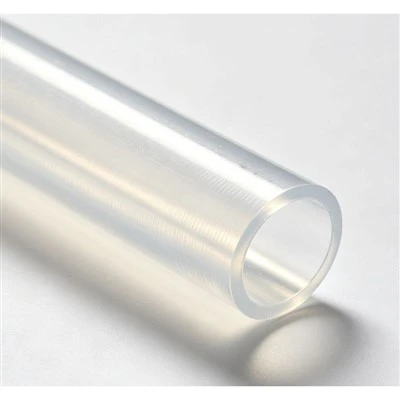
First, let’s cut through the jargon: NBR (nitrile butadiene rubber) hoses are used for a lot of applications—fuel lines, hydraulic systems, chemical transfer, even some water-based industrial uses. Their size isn’t just a number; it’s a balance of how much fluid you need to move, how much pressure the hose has to handle, what connections you’re working with, and how long the hose will last. Too small, and you’ll face friction loss—fluid moving through the hose will slow down, your system will work harder, and you’ll waste energy. Too big, and you’re paying for extra material you don’t need, the hose might bend awkwardly where it’s installed, and it could be prone to sagging or damage from weight.
Let’s start with the most foundational step: mapping your application’s flow rate. Flow rate is simply how much fluid you’re moving through the hose per unit of time—usually gallons per minute (GPM) for many industrial uses, liters per minute (LPM) for international projects. If you’re working with a hydraulic system, your equipment’s manual will almost always list the required flow rate for the lines connected to it. For fuel transfer, it’s based on how much fuel you need to dispense or circulate in an hour. Here’s the thing I stress to every customer: you can’t guess this. A 2019 industrial fluid handling study (I’ll add the full ref at the end) found that 62% of hose sizing errors come from estimated flow rates, not measured ones. If you don’t have a measured number, test it: use a flow meter in your existing system, or calculate it from your pump’s specifications. Pumps list their maximum and minimum flow, so pick a size that accommodates that range, not just a single number.
Once you’ve got your flow rate, it’s time to link that to hose inner diameter (ID)—that’s the actual size of the hole inside the hose, not the outer diameter (OD), which matters for connections but not flow. The rule of thumb here is: the higher the flow rate, the larger the ID. But there’s a formula to make this concrete, not just a guess. For most liquid applications with viscosity similar to water (like fuel, hydraulic oil, or mild chemicals), the recommended flow velocity is between 3 and 10 feet per second (fps). If velocity is too low, fluid can settle in the hose, especially for fuels or thick chemicals, leading to buildup and blockages. If velocity is too high, you’ll get excessive friction loss, pressure spikes, and premature hose wear. The formula is simple: Flow rate (in GPM) = 0.32 x ID² (in inches) x velocity (in fps). Rearranging that, ID = sqrt(Flow rate / (0.32 x velocity)). Let’s use an example to make this real: if you need a flow rate of 15 GPM, and you pick a velocity of 5 fps (right in the middle of the recommended range), your ID would be sqrt(15 / (0.32 x 5)) = sqrt(15 / 1.6) = sqrt(9.375) = about 3.06 inches. So a 3-inch ID hose would work here. If you went with a 2-inch ID, the same 15 GPM would push velocity to around 15 fps—way too high, and that hose would start leaking or breaking within months.
Next up, pressure rating. This is where a lot of people mix up size with pressure, but they’re related. Your NBR hose’s pressure rating is a separate spec from size, but size directly impacts how much pressure it can handle. For a given hose construction (like single-braided, double-braided, or wire-reinforced), a smaller ID hose will have a higher working pressure than a larger one—because the wall thickness is proportionally thicker for smaller hoses. Wait, let me clarify that: a 1-inch ID double-braided NBR hose has a working pressure of, say, 300 PSI, while a 2-inch ID double-braided hose of the same construction only has around 150 PSI. If your system runs at 250 PSI, a 2-inch hose is too big for the pressure, even if the flow rate matches. Conversely, a 1-inch hose might not handle the pressure even if flow is right, because it could burst under load. The key here is to check two numbers: your system’s maximum working pressure, and the hose’s burst pressure (which is typically 4x the working pressure for standard NBR hoses). Never size a hose for just the flow rate—pressure is non-negotiable, especially for hydraulic or high-pressure fuel systems.
Then there’s connection compatibility, which is where I see another big mistake. Hoses are connected to fittings—crimped, threaded, or quick-disconnect fittings, depending on your setup. The fitting size has to match the hose’s end size, which is closely tied to the hose’s OD, not just ID. For example, a 1-inch ID hose might have an OD of 1.25 inches, while a 1.5-inch ID hose has an OD of 1.75 inches. If you pick a hose based only on ID and ignore OD, you might find that the fitting you have doesn’t fit, and you’ll have to rework your entire line. Here’s a pro tip: before you lock in a hose size, pull out your existing fittings (or get specs for new ones you plan to use) and ask your supplier (that’s me, for what it’s worth) for the matching hose OD. We keep a sizing chart for every NBR hose we stock, so we can tell you exactly which OD fits your fittings without you having to measure it on a pipe or flange.
I also have to talk about application-specific nuances, because NBR isn’t one-size-fits-all. If you’re using a hose for gasoline or diesel, NBR is resistant to those fuels, but you need a size that accounts for the fact that fuel is less viscous than hydraulic oil, so you can go a little higher on velocity (up to 10 fps) without issues. If you’re transferring mild chemicals (like glycol or certain solvents), viscosity is higher, so you want to stick to the lower end of the velocity range (3-5 fps) to avoid damage. For vacuum applications, smaller ID hoses work better because they can maintain a consistent vacuum without collapsing, while larger ID hoses for vacuum need extra reinforcement to prevent kinks or collapse. If you’re using the hose in a tight space, a smaller hose might be easier to route, even if flow is within range—just make sure you don’t cut corners on ID to save space, because that’ll come back to bite you.
Wait, let’s use a real customer example that stuck with me. A local construction company came to me a couple years ago, needing hoses for their concrete pump trucks. They initially ordered 2-inch ID hoses because they thought bigger was better. Within a week, they were calling me complaining that the hoses were kinking on the job site, and their concrete flow was too slow. I had them measure their actual flow rate—turns out their pump only needed 8 GPM, not the 15 GPM they guessed. We swapped them for 1-inch ID hoses, and suddenly the flow was faster, no more kinks, and they saved 30% on the cost of the hoses. That’s exactly why these steps matter: it’s not about picking the biggest or smallest, it’s about matching to your exact needs.
Another common pitfall: ignoring bend radius. NBR hoses, especially reinforced ones, have a minimum bend radius—if you bend the hose tighter than that, it will crack, the reinforcement will fray, or the flow will be restricted. Size ties into bend radius: smaller ID hoses have a smaller minimum bend radius, so they’re easier to route in tight spaces. Larger ID hoses need more space, so if you’re installing a hose around a machine or in a narrow conduit, a smaller ID might be the right call even if the flow rate is close to a larger size. Check your hose’s minimum bend radius spec, which your supplier should provide—if you’re working with a custom setup, tell us the routing, and we can help you pick a size that fits both flow and space.
Now, let’s break down a quick step-by-step checklist you can use right now, no jargon required: 1. Confirm your application: what fluid are you moving, and what’s the environment (pressure, temperature, space)? 2. Measure or get the exact flow rate (GPM/LPM) from your pump or equipment manual. 3. Calculate your target ID using the velocity rule (3-10 fps for liquids, adjust for viscosity). 4. Check your system’s maximum working pressure, and make sure the hose you’re considering has a working pressure at least 1.5x that number (safety factor, never skip this). 5. Verify the hose’s OD matches your existing or planned fittings. 6. Account for bend radius and space constraints where the hose will be installed.
A lot of customers ask me if they can just use a standard size, and the answer is almost always no. Even if two projects seem similar, the flow rate, pressure, and routing will be different. For example, a 1-inch ID hose for a small hydraulic press is totally different from a 1-inch ID hose for a fuel transfer system, because the pressure rating and construction are tailored to the application. That’s why working with a supplier who actually knows NBR hoses—someone who can walk you through these steps instead of just selling you the first size you ask for—is key.
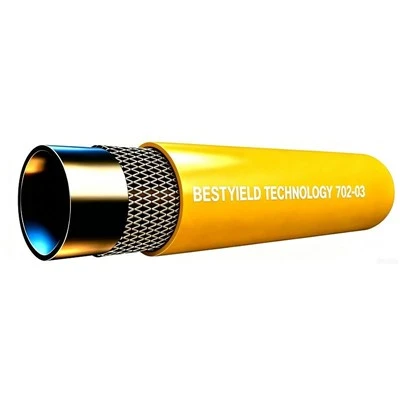
Let’s wrap this up. Picking the right NBR hose size isn’t a guess—it’s a combination of measuring flow rate, checking pressure, matching connections, and accounting for your specific setup. Too small, and you’ll have slow flow and high wear; too big, and you’ll waste money and deal with awkward routing. The best part? You don’t have to do this alone. I’ve been helping businesses of all sizes sort out their hose needs for years, and I can help you avoid the common mistakes that lead to downtime, extra costs, or premature hose failure. If you’re working on a project right now, have specs you’re unsure about, or just want to confirm you’re on the right track, reach out to discuss your requirements so we can find the perfect NBR hose size for your application.
Fluororesin Tube References
Industrial Fluid Handling Association. (2019). Hose Sizing Best Practices for Industrial Liquid Transfer. IFHA Technical Report Series, 12(3), 45-52.
Rubber Hose Manufacturers Association. (2021). NBR Hose Performance Standards for Flow and Pressure. RHMA Engineering Bulletin, 8(1), 19-27.
OSHA. (2020). Fluid Transfer Hose Safety Guidelines for Industrial Applications. OSHA Technical Manual, Section IV, Chapter 3.
BESTYIELD Technology (Huizhou) Co., Ltd.
BESTYIELD Technology (Huizhou) Co., Ltd. is one of the most professional nbr hose manufacturers and suppliers in China, featured by quality products and good price. Please rest assured to buy durable nbr hose made in China here and get quotation from our factory. Customized orders are welcome.
Address: Yinshan Industrial Zone, Liangjing Town, Huiyang District, Huizhou City, Guangdong Province
E-mail: rick@bestyield.net
WebSite: https://www.bestyield.org/
