If you’ve ever held a perfectly made metal gear for a bike, a custom metal bracket for a garage door opener, or even a small aluminum part inside a power tool, there’s a good chance that part was made on a CNC lathe. As a CNC machining supplier, I get asked this question all the time—new customers who need custom parts, hobbyists who want to level up their small projects, even folks who just heard the term and want to know what it actually means beyond the buzzwords. Let me break this down like I would over a coffee, no fancy jargon to trip you up. CNC Machining

First, let’s start with the basics. “CNC” stands for Computer Numerical Control, right? And a lathe is a machine that spins a workpiece around an axis while you cut it. Put those together, and a CNC lathe is a machine that uses a computer to control cutting tools to shape solid materials—usually metal, but sometimes plastic, wood, or even foam. The big difference between a regular manual lathe and a CNC one? No more cranking handwheels yourself to move the tool back and forth or adjust spin speed. The computer does all that work, which means you get way more precision, way faster, and less room for human error. That’s a huge win for anyone needing parts that fit exactly how they’re supposed to, whether it’s a 1/8 inch bolt for a motorcycle engine or a custom roller for a packaging machine.
Let me walk you through how it works step by step, just to make it real. When a customer comes to us with a part they need, first we take their design—usually a CAD file, which is just a digital blueprint. We plug that into our CNC lathe’s software, and the computer translates that blueprint into a set of numbers and commands. Those commands tell the lathe three main things: how fast to spin the material, where to move the cutting tool, and how deep to make each cut. Then, we load the raw material—like a rod of aluminum, steel, or brass—into the lathe’s chuck (that’s the clamp that holds the workpiece tight while it spins), hit “run,” and the machine does its thing.
Wait, what kinds of cuts does a CNC lathe make, anyway? Let’s name a few common ones you might recognize. Turning is the big one: spinning the rod and cutting away the outside to make it smaller, like shaping a cylinder. Facing is when you cut flat ends on the workpiece, so it’s perfectly smooth and level. Boring is drilling a hole from the inside of a part, and threading is cutting those spiral grooves you see on bolts and nuts. There’s also grooving, which makes little rings or slots in the material—like the groove that holds a rubber O-ring on a water pump. All of these cuts are repeatable, too. If you need 100 identical parts, the CNC lathe can run the same program over and over, and every single one will be within a thousandth of an inch of the last. That’s precision you just can’t get with a manual lathe, especially for large runs.
Now, let’s talk about why this matters for folks like me, and why a CNC lathe is the workhorse of so many industries. Back in the day, before CNC, machinists had to do all the math and all the cranking by hand. If you had a tricky part, it might take hours to set up, and if you messed up a cut, you ruined the whole piece. Now? A good machinist can set up a CNC lathe in minutes, run a dozen parts, and make adjustments on the fly if needed. That cuts down lead times a ton, which is why our shop can get parts out to customers fast—some even in a day or two for simple jobs.
Also, CNC lathes aren’t just for big factories. A lot of small businesses, hobbyist shops, and even custom builders use them too. If you’re a motorcycle builder needing a custom sprocket, a furniture maker needing metal legs, or a robotics engineer needing a custom gear, a CNC lathe can make that part without having to outsource to a big company. Of course, that’s where we come in: as a CNC machining supplier, we have the equipment and the experience to handle jobs big and small, from one-off prototypes to 10,000 part runs.
Wait, should I clear up a common mix-up? A lot of people confuse CNC lathes with CNC mills. Let’s keep that straight: a lathe spins the workpiece, so it’s great for making round, cylindrical parts—pipes, shafts, bolts, rollers. A mill holds the workpiece still and moves the tool around, so it’s for flat, irregular shapes, like a bracket with multiple holes on different sides. They’re both CNC machines, but they do totally different jobs, kind of like a saw vs. a drill for woodworking. That’s a question we get all the time, so I thought I’d slip that in here.
Another thing: modern CNC lathes can do more than just basic cuts. A lot of them are “live tooling” lathes, which means they can add tools that spin too—drills, end mills, even taps. That means you can make a part that has both cylindrical shapes and flat, drilled holes all on one machine, no need to move the part to a different machine halfway through. That saves time, cuts down on setup errors, and keeps the cost lower for you.
Let me give you a real example of a job we did last month to make this concrete. A customer came to us with a prototype for a custom water pump for a vintage race car. The part they needed was a small steel impeller—round, with three curved blades, a central shaft hole, and grooves to fit seals. First, we took their CAD file, input it into our CNC lathe. We loaded a steel rod, set the chuck, and ran the program. The lathe first faced the ends, turned the outside to the right diameter, bored the central hole, then cut the grooves for the seals. For the curved blades? The live tooling attachment let us mill those right into the spinning part, all in one setup. We made five prototypes first, checked each one for fit, adjusted the program a tiny bit, then ran 50 more for the production run. The customer got parts that fit their exact design, and they were done in a week instead of the two weeks they would’ve spent with a manual machinist. That’s the value of a CNC lathe right there.
Now, why does this matter to you if you’re looking for a CNC machining supplier? A lot of shops say they do CNC lathe work, but not all of them have the right equipment or experience. Cheap, old CNC lathes might not have the precision you need, or they might not be able to handle materials like stainless steel or titanium that are common in industrial parts. At our shop, we invest in up-to-date machines, and our machinists know how to program them to get the best results for any job, no matter how small or complex.
I also want to mention a common misconception: some people think CNC lathes only make simple parts. Nope, we’ve made everything from tiny medical implants (like small bone screws) to large industrial rollers 2 feet long. The software can handle super complex designs, too—if your part has custom shapes, internal grooves, or tight tolerances, a CNC lathe can make it as long as you have a clear design.
Another big plus: consistency. If you’re ordering parts for a product you’re making, every part has to be the same. A CNC lathe runs the same program every time, so even after a thousand parts, the 1000th one is exactly the same as the first. That’s impossible with manual lathes, where even the best machinist might make a tiny change after a few runs. For businesses, that consistency means fewer returns, less waste, and a better end product for their customers.
Now, if you’re reading this, chances are you might have a part you need made, or you’re just curious about how CNC machining works. Either way, feel free to reach out to talk through your project. We can handle one-off prototypes, small production runs, even big bulk orders. No job is too small or too complex for our team. We’ll ask you a few questions about your design, material, and how fast you need it, and give you a clear, fair quote right away.
As with any manufacturing process, a CNC lathe isn’t the right choice for every single part—some jobs are better suited for other machines, like mills or 3D printers. But when you need a round, precision-made part that’s consistent, fast, and cost-effective, a CNC lathe is the go-to machine. And as a supplier, we’ve seen first-hand how it can turn a good idea into a real, working part that gets used in everything from race cars to medical devices to household appliances.
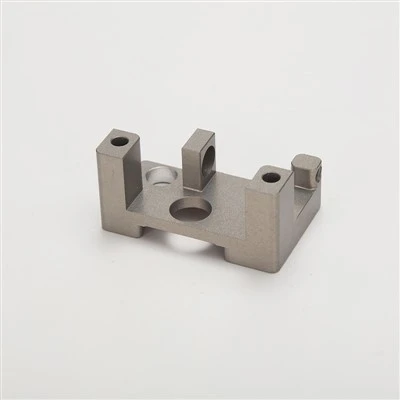
If you have a custom part project, or even just questions about what we can make, get in touch to chat. We’re here to help get your parts made right, on time, and without the hassle of dealing with a shop that doesn’t know their stuff.
Precision Metal Parts References
Machinery’s Handbook, 31st Edition, Industrial Press, 2020
Modern CNC Machining: Fundamentals and Applications, Springer, 2019
American Machine Tool Distributors’ Association, “CNC Lathe Capabilities and Uses,” 2022
Zhejiang Hayi Technology Co., Ltd.
With abundant experience, we are one of the most professional CNC machining manufacturers in China. We warmly welcome you to wholesale bulk CNC machining in stock here and get quotation from our factory. All customized products are with high quality and competitive price.
Address: Room 112, 1st Floor, No. 103, Siwangdai, Pingzhai Village, Renhe Subdistrict, Yuhang District, Hangzhou City, Zhejiang Province
E-mail: 18368133797@163.com
WebSite: https://www.zhejianghayi.com/
