If you’ve ever shopped around for industrial or commercial mixers, you’ve probably stared at a price tag and thought, “Wait, why is this $200 and that’s $20,000?” As someone who’s been selling mixers for over a decade, I get it—there’s a lot more to the price than just “bigger = more expensive.” Let me break down the mix price range in plain English, no corporate jargon, and give you the real picture of what you’re paying for. Mixer
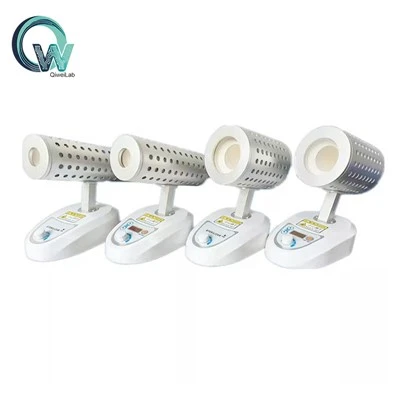
First off, let’s start with what a mixer actually does. I’m not just talking about the countertop stand mixer you use to bake cookies—we’re covering everything from small lab blenders to huge industrial mixers that turn tons of material a day. That range is where the price gap comes from.
On the low end, you’ll find “entry-level” or “light-duty” mixers. These are usually for small, occasional use: a café baking once a week, a small craft brewery mixing brews, or a hobbyist making soap at home. A lot of these are imported from places with lower manufacturing costs, and they’re built for light, non-continuous use. What’s the price here? We’re talking anywhere from $150 to $1,500. Wait, that’s a big gap—what’s the difference between $150 and $1,500 here? A $150 mixer might be plastic, has a 1-2 horsepower (HP) motor, and can only run for 10-15 minutes straight before it overheats. A $1,500 entry-level commercial mixer is metal, has a 3-5 HP motor, can run for hours on end, and has features like variable speed controls and a safety interlock so it won’t turn on if the bowl isn’t locked. We see a lot of buyers go for the super cheap one, but six months later it’s broken because they used it more than it was designed for. I’ve had so many customers come back saying, “I bought the $200 one and it died in a month—next time I got the $1,200 one and it’s still working after three years.” That’s the kind of tradeoff no sales rep will usually tell you straight.
Next up is the mid-range, where most of our commercial customers fall. This is for businesses that use their mixer every single day: a bakery that makes hundreds of loaves a day, a chemical plant that mixes batches of cleaners, a food processing facility that combines ingredients. Mid-range mixers here go from $1,500 to $15,000. What makes this range different from the light stuff? First, build quality. These are usually made with stainless steel (super important if you’re working with food or pharmaceuticals, because it doesn’t rust or harbor bacteria easily), industrial-grade motors that can run 8-12 hour shifts without breaking, and customizable features. Like, you can get a mixer with a tilting head so it’s easy to empty, or a planetary mixing action that’s better for thick doughs, or a control panel that lets you program exact mixing times for consistency. A lot of people think all mid-range mixers are the same, but not—if you’re mixing something really thick, like cookie dough or plaster, you’ll need a mid-range model with a higher torque motor, which can bump the price up. I had a customer last year who tried to use a basic mid-range mixer for mixing concrete additives, and it burned out the motor in two weeks because he didn’t spring for the heavy-duty mid-range option. That’s another thing: what you’re mixing matters as much as the mixer itself. If it’s just water and a light liquid, you can go cheaper. If it’s dense, abrasive material (like cement, paint pigments, or certain chemicals), you need the extra strength, and that adds cost.
Then we get into the heavy-duty industrial mixers, which is where prices get way steeper—$15,000 up to $100,000, and sometimes more if you’re custom. These are for factories that run 24/7, big pharmaceutical companies making batches of drugs, mining operations mixing minerals, or food companies that produce thousands of units an hour. What makes these so expensive? They’re built to last 10, 20 years, not just a few. The motors can be 20 HP or higher, sometimes with explosion-proof designs if you’re working with flammable materials (that’s a big safety feature that adds cost, but if you don’t have it, you’re looking at a huge OSHA fine or worse). These also come with automation—you can hook them up to your production line, so they automatically add ingredients, adjust speed, and stop when the mix is done. Customization is another big one. If you have a weird-sized vat, or you need a special mixing blade for a unique product, we’ll build it to fit your exact needs, and that pushes the price up. I once sold a custom mixer to a snack company that mixes caramel and nuts—they needed a blade that wouldn’t scratch the pans, so we had to machine a custom stainless steel blade, which added $8,000 to the total price. It was worth it for them, though, because it cut their mixing time in half.
Wait, there’s also another category: lab and small specialty mixers, which are a separate thing. These are for universities, research labs, or small startups testing a new product. They’re way smaller than commercial mixers, but they can still range from $500 to $5,000, depending on how precise you need to be. If you’re just testing a new recipe, you can get a basic one for $500, but if you need to measure exact quantities, control temperature, or mix under vacuum (to get rid of bubbles), that’s when the price jumps. A lot of startup founders come to me saying they need a mixer for their tiny kitchen test space, and I have to be honest: you don’t need the $5,000 lab model until you’re scaling up. It’s easy to overbuy when you’re in the early stages, but it’s also a mistake to buy something too cheap that can’t handle the precision you need for testing.
Now, let’s talk about the hidden costs that people don’t factor in, because that’s where a lot of the “cheap mixer” turns into a bad deal. First, installation. Some small mixers you can plug in and set up, but mid-range and industrial ones need electrical work, maybe a foundation to mount them on, or plumbing if you’re washing them in place. That can add $500 to $5,000, depending on the size. Then there’s maintenance. A cheap entry-level mixer might have parts that are impossible to find, so when something breaks, you have to throw the whole thing away. A mid-range mixer has common parts (motors, blades, belts) that cost $20-$100 to replace, and we can ship them fast. Industrial mixers have more complex maintenance, but we usually offer service plans so you don’t have downtime. And downtime is a big one—if your mixer breaks, that’s your whole production line stopping. For a bakery, an hour of downtime might mean $1,000 in lost revenue. So spending an extra $2,000 on a mixer that won’t break saves you way more in the long run.
I’ve had customers come to me after they’ve bought a mixer online from a big box store, and they’re shocked at how fast it fails. They think “mixer is mixer” but that’s not true. At my company, we test every mixer before it leaves the warehouse—we run it for 24 hours straight to make sure the motor doesn’t overheat, we check the blades for balance, and we make sure the safety features work. That’s why our prices are a bit higher than the random online ones, but we stand behind our products. Last week, a customer had a mixer issue at 2 a.m. because their production line went down—we had a tech there by 8 a.m. fixed it in an hour. That’s the kind of support you don’t get with a $200 mixer from Amazon.
Another thing that affects price: material of the mixing bowl and parts. If you’re mixing food, you need stainless steel, but even that has grades. 304 stainless steel is standard, it’s affordable, and works for most food. 316 stainless steel is more corrosion-resistant, so if you’re mixing salty food or chemicals, it’s worth the extra cost, but it can add 20-30% to the price. Plastic bowls are cheaper, but they’re not good for heavy use or harsh materials, so they’re only for entry-level.
Let me give you a quick cheat sheet to make this easier:
- Light-duty (hobby, occasional small use): $150 – $1,500. Don’t use this for daily business, it will break.
- Mid-range (commercial, daily use): $1,500 – $15,000. The sweet spot for most small to medium businesses, balances cost and durability.
- Heavy-duty industrial (24/7 use, large production): $15,000 – $100,000+. Custom, specialized ones can be more.
- Lab/small specialty: $500 – $5,000, based on precision needs.
I know it’s easy to fixate on the upfront price, but when you’re running a business, total cost of ownership is way more important. I’ve seen a customer who bought a $1,000 entry-level mixer for his pizza shop, it broke every 3 months, so over two years he spent $8,000 on replacements and repairs. Then he bought a $4,000 mid-range mixer from me, and it’s still working 5 years later. That’s the math no one tells you about when you’re staring at a low price tag.
If you’re not sure which range you fall into, or what kind of mixer you need, don’t guess. A lot of suppliers will push you to buy the most expensive one, but we take the time to listen. Tell us what you’re mixing, how often, how big your batches are, and what your production needs are. We’ll point you to the mixer that fits your budget, not just the one that makes the most money for us. If you’re ready to stop guessing and get a mixer that works for your business, hit us up to chat about your requirements—we’re here to help you find the right fit, not just sell you something.
Water Quality Test Equipment References:
- National Association of Food Equipment Manufacturers (NAFEM). (2022). Commercial Mixer Specifications and Cost Analysis.
- Industrial Motor and Machinery Association (IMMA). (2023). Heavy-Duty Mixer Durability and Price Benchmarks.
- Small Business Administration (SBA). (2021). Total Cost of Ownership Guide for Commercial Kitchen and Industrial Equipment.
- Journal of Manufacturing Processes. (2022). Cost Factors in Custom Industrial Mixer Design and Production.
Hangzhou Qiwei Instrument Co., Ltd.
Hangzhou Qiwei Instrument Co., Ltd. is one of the most reliable manufacturers and suppliers of mixer in China, featured by quality products and good service. Please rest assured to buy bulk durable mixer in stock here from our factory. We also accept customized orders.
Address: Room 101, Building 25, No. 488-1, Donghu North Road, Linping District, Hangzhou City, Zhejiang Province, China
E-mail: info@qiweilab.com
WebSite: https://www.qiweilab.com/
