If you’ve ever been deep in the world of industrial piping, pressure vessels, or metal fabrication, you’ve probably stared at a shelf full of metal caps and wondered: are these just two versions of the same thing? Or is there a real, actual difference between an end cap and a weld cap? Let’s cut through the confusion because this is the kind of detail that can make or break a job—whether you’re a piping foreman grabbing parts for a refinery project, a fabricator troubleshooting a leaky vessel, or someone new to the trade trying not to ask a “stupid” question (we’ve all been there). Weld End Caps
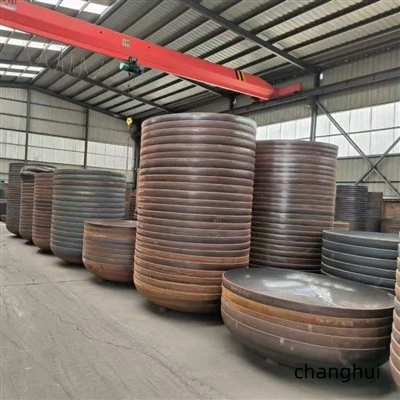
First, let’s get one thing out of the way: I sell weld end caps, so I’m biased, but this isn’t a sales pitch that ignores the facts. I’ve been talking to clients about this stuff every day for the last 12 years, and the number of times someone’s mixed these two up is wild. Let’s start with the basics so even a total newbie can follow.
An end cap is a super broad term—think of it like a “fastener” or “tool.” It’s a general label for any cap that seals off the open end of a pipe, tube, or vessel, right? The word “end cap” gets thrown around for all kinds of sealing caps: the plastic caps you throw over garden hose ends to keep dirt out, the threaded metal caps you twist onto pipe nipples for a quick temporary seal, even the rubber caps on the ends of scaffolding poles. The key here is “general purpose.” End caps don’t always require welding, because their main job is just to seal something—no matter the method. Some get bolted on, some twist, some are just pressed in. That breadth is why it’s so often confused with weld caps, which are a specific subset of end caps, but with way stricter rules for industrial use.
Now, weld cap—wait, that’s the one I actually specialize in, so let’s get into the gritty details here. A weld cap is a purpose-built, metal sealing cap designed exclusively to be permanently fused to the end of a pipe or vessel via welding. These aren’t the cheap stamped caps you use to cap off a garden hose. They’re precision-made to meet specific standards—like ASME B16.9 for carbon steel, stainless steel, or alloy steel, or B16.28 for smaller-diameter specialty ones. What makes them different from just any end cap? Two big things: their design and their integrity.
Let’s break down design first. A weld cap isn’t a flat disk or a simple half-sphere. It’s shaped specifically to match the outside diameter (OD) and wall thickness of the pipe it’s connecting to. There are two common shapes: elliptical (like a stretched football end) and hemispherical (perfect half-sphere). The edge—called the “skirt” or “collar”—is beveled, usually a 30 or 37.5 degree angle, so when you line it up with the pipe’s end, it creates a proper groove for welding. No gaps, no uneven edges, no guesswork. Threaded end caps, on the other hand, have internal threads that screw onto the pipe—no bevel, no need to weld. That’s a huge design difference right there.
Then there’s the job they’re meant for. Weld caps aren’t for temporary use. They’re for systems that hold pressure—think oil and gas pipelines, chemical processing vessels, power plant boilers, even water treatment lines that need to handle high psi. The weld between a weld cap and pipe has to be a continuous, seamless joint that’s as strong as the pipe itself, because if it’s not, you’ve got a leak, a rupture, or even a safety hazard. Threaded end caps? They’re for low-pressure, non-critical uses—like capping off a ½ inch pipe under your sink to cap a disconnected faucet, or sealing a small drain line. You don’t use a threaded cap for a pipeline carrying crude oil at 1,500 psi. That’s a quick way to get in a lot of trouble.
Wait, but let’s test this with a real scenario to make it concrete. Last year, I got a call from a piping foreman working on a refinery turnaround. He’d ordered 8 inch threaded end caps to seal off the ends of a new high-pressure gas line. When he showed up, his welder looked at the caps and said, “These won’t work—they’re threaded, I need to weld them on.” The foreman had mixed up the labels, because someone at his supply house had written “end cap” on the order, and he just assumed it was the same as a weld cap. That mistake could have cost the refinery hundreds of thousands in downtime if they’d tried to install them—threaded caps can’t handle the pressure, and a leak would have been a huge safety risk. We had to drop everything to get him the right weld caps, and he still sends me a Christmas card every year for saving his skin. That’s the kind of thing that makes this distinction matter way more than just terminology.
Another big difference: manufacturing standards and testing. Weld caps have to meet strict industry codes because their failure is catastrophic. ASME, API, and other governing bodies test them for burst pressure, material consistency, and dimensional accuracy. If a weld cap is labeled “ASME B16.9,” that means it’s been inspected to work with pipe of a specific grade and pressure rating. End caps, though? No such rules. A random end cap you pick up at a hardware store could be made of flimsy stamped steel, no testing, no consistency. It might work for your garden hose, but not for a pressure vessel.
Wait, but what about end caps that are welded? Aren’t those the same as weld caps? No, that’s the confusion. If someone says “weld end cap,” that’s a type of end cap that’s welded, but “end cap” is still the broader term. If you say “weld cap,” you’re specifically talking about that precision, industrial-grade cap made for pressure systems with the right design and standards. Let’s also clarify a myth I hear all the time: some people think weld caps are only round, but no—they can be elliptical, flat, even custom-shaped for special vessels. The key is that they’re designed to be welded into a permanent, pressure-rated joint, not just any cap that gets welded on.
Let’s go back to that earlier definition of end cap to make it stick. End cap = any device that seals the end of a pipe, tube, or open structure, regardless of how it’s installed or what it’s made of. Weld cap = a specific type of metal end cap engineered for permanent welding to pipe/vessels, built to pressure codes, with a precision beveled edge for consistent welds. That’s the core difference, plain and simple.
I’ve also noticed people mix these up when they’re shopping for parts, which is why I make sure to spell it out for every client. Last month, a small fabricator emailed me asking for “cheap end caps for a 4 inch pipe.” I told him if he needs them for a low-pressure drain line, a standard threaded end cap would work, but if he’s using them for a heating system that holds hot water at 100 psi, he needs weld caps. He came back and said he’d tried the cheap end caps he got from his local hardware store, and they leaked after a week—because they weren’t built to handle the thermal expansion of hot water, and the weld (that he tried to do himself on the cheap caps) was uneven. We ended up selling him the right weld caps, and he’s been a repeat customer ever since.
Another example: when you’re building a pressure vessel, the end caps are always weld caps. The American Society of Mechanical Engineers (ASME) code requires that the end joint be a full penetration weld, which means both parts have to be shaped to fit perfectly, no gaps. A standard end cap—even if you try to weld it—doesn’t have the precision bevel or dimensional consistency to make that full penetration weld, so it won’t pass inspection. That’s not just a technical detail; it’s a legal and safety requirement. You can’t put a weld on a regular end cap and call it a weld cap—they’re made differently.
Let’s also talk about cost, because that’s a real-world factor. Weld caps aren’t cheap. They’re made from solid bar stock (for higher pressure) or heavy plate, precision-cut and machined to exact dimensions, tested, and labeled. A standard 4 inch carbon steel weld cap can be 2-3 times more expensive than a generic threaded end cap. Is that worth it? For critical applications, absolutely. The cheap end caps might save you a few bucks upfront, but if they fail, you’re looking at downtime, repair costs, maybe even worker injury. I’ve seen too many jobs where a cheap generic end cap led to a rupture, and the cost of fixing that was 100 times more than the extra you would have spent on the right weld caps.
Wait, let’s make sure we’re not leaving any other angles out. What about when someone refers to a “cap” in general terms? Like, a cap on a pipe could be a weld cap, a threaded cap, a blind flange, a plastic end cap—all different. The blind flange is another thing people mix up too, but that’s a whole separate conversation. The key here is that end cap is the umbrella term, and weld cap is a specific, industrial-grade, pressure-rated type of end cap that’s designed to be welded permanently.
I think the biggest takeaway here is that terminology isn’t just semantics. When you’re working on a job that has to meet codes, hold pressure, or keep people safe, getting this right isn’t just about ordering the right part—it’s about doing the job right. I’ve had clients come to me after a mistake because they thought “end cap” and “weld cap” were interchangeable, and it’s always a hassle to fix. That’s why I now make a point to explain this difference to every new client, even if they say they “know what they need.”
If you’re reading this and you’re not sure which one you need—whether you’re a seasoned pro or just starting out—here’s a quick cheat sheet:
- If your part is for a low-pressure, non-critical, temporary seal (like capping a garden hose, a small drain, or a low-stakes residential pipe job), a standard end cap (threaded or pressed) will work.
- If your part is for a pressure system, industrial piping, pressure vessels, code-compliant projects, or permanent installations, you need a weld cap. No exceptions.
That’s the line. It’s simple once you break it down, right?
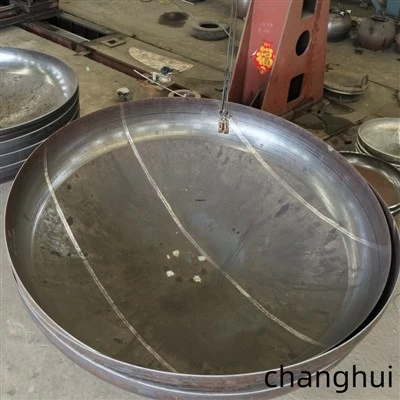
Now, if you’re working on a project and need the right part—don’t make the mistake of mixing these up. I carry a full line of weld end caps in all sizes, materials, and pressure ratings, and I can help you figure out exactly what you need, no jargon, no hassle. Just send over the details of your project, and I’ll walk you through it.
Tank Heads References
ASME B16.9, Factory-Made Wrought Steel Buttwelding Fittings
API 5L, Specification for Line Pipe
ASME Boiler and Pressure Vessel Code, Section VIII, Pressure Vessels
Cangzhou Changhui Head Manufacturing Co., Ltd.
We are one of the most professional weld end caps manufacturers and suppliers in China, featured by quality products and good price. Please rest assured to wholesale durable weld end caps for sale here from our factory. Welcome to view our website for more information.
Address: South Industrial Zone, Yanshan County, Cangzhou City, Hebei Province, China.
E-mail: chunle.zhang@changhuitankhead.com
WebSite: https://www.changhuitankhead.com/
