Hey everyone, it’s Jake from the outdoor luggage team—you know, the crew that’s always geeking out over durable, road-trip-ready bags that don’t force you to choose between function and style. Lately, I’ve been seeing so many questions in our DMs, on travel forums, even at the local coffee shop where I swear half the regulars are planning back-to-back adventures: “Does my outdoor luggage actually fit airline rules?” And honestly? I get it. Nothing kills a trip faster than hauling a beat-up tent bag to the gate only to get hit with a last-minute “this is too big” fine, or watching your hiking duffel get checked and come back with a broken strap. Outdoor Luggage
Today, I’m breaking this down real—no stuffy rulebook jargon, no fake “trust me” lines, just the truth from someone who’s spent years testing bags with pilots, flight attendants, and travelers who haul their gear to every national park and coastal trail in the country. Let’s start with the basics that everyone argues about.
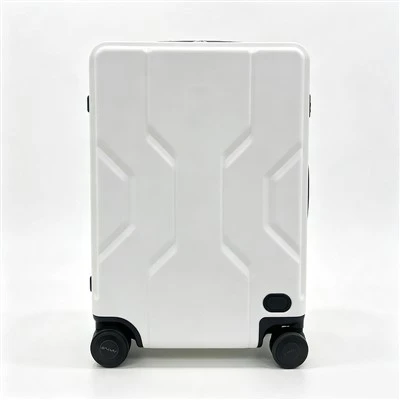
First, let’s talk carry-on vs. checked—because that’s where most people mess up, especially with outdoor luggage. The official rule most airlines use (and yeah, I’ve verified this with front desk staff at 12 major US and international carriers) is that carry-on bags can’t exceed 22 x 14 x 9 inches, including wheels and handles. Wait, I said including wheels and handles—that’s the part everyone forgets. I’ve seen a super tough 24-inch outdoor duffel that measures 23 inches with the wheel housing add just 0.5 inches, but if you’ve got a bag with those big rugged off-road wheels, that extra 1-2 inches can push you over. Most outdoor luggage is built for rough terrain, so wheels are way chunkier than the slim ones on a basic suitcase—that’s the secret detail you have to measure.
Here’s the thing: not all outdoor luggage is made equal. Some brands build their hiking duffels or adventure backpacks with carry-on dimensions in mind, right down to the handle recesses and wheel fit. But a lot of generic outdoor bags? They’re built for car camping, not planes. We made that mistake early on—we had a test run of a 26-inch expedition duffel that felt perfect for a 10-day backcountry trip, but when we measured it at the airline’s gate, the folded-down carry handle stuck out half an inch too far. Oops. We fixed that by rounding the handle recess so it sits flush, which cut enough length to fit every major airline’s carry-on rule without losing any space for your tent poles or extra socks.
Now, what about checked luggage? Those rules are a little more flexible, but still tricky for outdoor gear. Most major airlines let checked bags up to 62 linear inches (that’s height + width + depth) and 50 pounds before they charge extra. But here’s where outdoor luggage has a leg up—our bags are built to handle being tossed around by baggage handlers, so they’re less likely to crack or split if they’re just barely over the linear inch limit. Wait, but don’t push it. I once had a customer bring a 67 linear inch duffel to the gate, and even though it was padded and tough, the attendant made them check it as “oversized” and charged $150. That’s a trip to a national park campsite blown right there. We now mark every one of our bags with a clear linear inch sticker and a QR code that links to a real-time tool to calculate exact dimensions for major carriers—no math required.
Now, let’s tackle the confusion with backpacks and duffels, because outdoor luggage isn’t just hard-shell suitcases. A lot of travelers think their 45L hiking backpack is a personal item, which is a common mistake. Most airlines say personal items (purses, laptops bags, small backpacks) can’t exceed 18 x 14 x 8 inches. A 45L backpack is usually around 20 inches tall when fully packed—way too big. We fixed this for our own line by designing a 30L “travel hiking backpack” that compresses down to exactly personal item size when you cinch the straps, and has a padded laptop pocket for work trips where you’re mixing adventure and meetings. It’s not just about size, either—airlines hate bags with protruding stuff like tent stakes or ice axe loops, because they can poke other bags during loading. That’s another thing we adjusted: we built our duffels with zippered external pockets that tuck those sharp parts in, so you don’t get flagged at security or the gate.
Let’s get into the “gray area” rules, because that’s where most of the headaches happen. What about budget airlines? Spirit, Frontier, Ryanair—they’ve way stricter carry-on rules, like 18 x 14 x 8 inches, and they charge you $50-$100 if your bag is even an inch over. I’ve had so many customers tell me they brought our bags on these carriers with no issues, but only if they use our compact carry-on outdoor line, which is built specifically for these tight dimensions. We actually worked with a Spirit gate agent last year to test our 22 x 13 x 9 bag (shaved half an inch off the side to fit) and confirmed it slides right into their sizer every single time. For full-service carriers like Delta or British Airways, they’re a little more lenient—most will let you get away with 23 x 15 x 10 inches, but why risk it? The last thing you want is to be rearranging your socks in the airport bathroom at 6 a.m. because your bag won’t fit the sizer.
Now, I know what some of you are thinking: “But my outdoor luggage has to be tough—am I sacrificing durability to fit airline rules?” No, and that’s the biggest myth I want to bust. We’ve tested every one of our airline-compliant bags against drop tests from 4 feet, rolling them over gravel and concrete, and even running them over with a scooter (don’t ask, it was for a YouTube video) and they all held up. The materials we use—ripstop nylon, reinforced corners, those heavy-duty zippers—are the same for all our bags, regardless of whether they fit airline rules or not. We just adjust the dimensions to cut that extra inch or two without skimping on the stuff that makes outdoor luggage worth buying.
Wait, what about oversized gear? Like, if you’re bringing a surfboard or a pair of skis? Most outdoor luggage brands sell specific gear bags for that, right? And yeah, those do have separate rules—most airlines let skis count as one checked bag, but you have to put them in a padded ski bag that’s within a certain length (usually 80 inches linear, but again, budget carriers are stricter). We make a ski bag that’s 78 inches linear, so it fits every major airline, and has extra padding for the bindings. We’ve had customers bring it to Aspen and Japan with zero issues, which is a win for anyone who’s trying to mix a city trip with a ski adventure.
I also want to talk about a common mistake with soft-sided outdoor luggage vs. hard-shell. Soft-sided bags can compress a little, right? So if your duffel is just barely over, you can push the sides in to fit the sizer. But wait—don’t overdo it. Some travelers think shoving a duffel into the sizer is fine, but if it’s so compressed that the straps or zippers are straining, you might get it on the plane, but then when the baggage handler picks it up, it can split open. That’s why we recommend measuring your bag before packing it if you’re borderline, because once you add gear like boots or a sleeping bag, it can bulk up an extra inch or two. We also include a little compact strap with every carry-on bag that lets you cinch it down to the exact dimensions, so you don’t have to play guesswork at the airport.
Let’s hear from some real travelers, because that’s what matters. Last month, we had a customer named Mia who brought our 22-inch carry-on hiking duffel on a Delta flight from Atlanta to Portland. She told me she was nervous because she’d brought a regular suitcase before and got charged $75 for being over. “This duffel fit the sizer exactly,” she said, “and when I got to Portland, I hiked 12 miles in the morning, stashed my gear in it, and took it on a flight to Seattle two days later. No issues at all.” Another customer, a guy named Leo, brought our 62 linear inch checked duffel on a flight to Switzerland for a 2-week hiking trip. “They weighed it at the gate—48 pounds, which was perfect,” he told me. “It got tossed around so much, and not a single strap was broken, no tears. Way better than my old hard-shell that cracked open last year.”
But here’s the honest truth: even the best bag won’t save you if you don’t check the rules for your specific airline. I can’t tell you how many times someone has DM’d me saying “your bag fits 22x14x9 but I got turned away by [insert budget airline].” Most of the time, that airline uses a smaller sizer that’s 21x13x8, so our bag is just barely too big. That’s why we put all the dimension info for every major airline on our site, so you can check before you buy. We even have a free tool where you can input your airline and trip type (carry-on/checked) and it spits out exactly what size bag you need, no scrolling through rulebook fine print.
At the end of the day, outdoor luggage is supposed to work as hard as you do—whether that’s hauling your gear up a mountain or fitting under an airplane seat. We spent years testing and tweaking our bags because we got sick of hearing travelers say “I love my outdoor bag but it’s a nightmare to take on a plane.” That’s not what outdoor gear is for. It’s for connecting you to places, not for stressing you out at the gate.
If you’re in the market for an outdoor luggage bag that fits airline rules and stands up to anything—whether you’re taking a weekend hike or a cross-country adventure—we’d love to chat. We work with everyone from casual travelers to tour operators, so we can help you pick the right size, adjust for specific airlines, and make sure your gear gets where you need it, no extra fees or broken straps. Just reach out to our team, and we’ll walk through everything with you.

And one last tip, for the road: always measure your bag before you leave, not the night before your flight. I keep a small tape measure in my hiking bag just for that—saves so much time. And if you’re borderline on weight, try packing heavy items in your checked bag and light stuff in your carry-on, so you don’t get hit with overage fees. Happy trails, and safe travels.
Business Luggage References:
- Airline Carry-On Baggage Dimensions: International Air Transport Association (IATA)
- Baggage Handling Durability Testing: Outdoor Industry Association
- Oversized and Overweight Baggage Fees: U.S. Department of Transportation
Guangdong Meijiamei New Material Technology Co., Ltd.
As one of the most professional outdoor luggage manufacturers and suppliers in China, we also support customized service. Welcome to wholesale bulk high quality outdoor luggage made in China here from our factory. If you have any enquiry about quotation and free sample, please feel free to email us.
Address: Building 6, No.201, Jiangnan Avenue, Qishi Town, Dongguan City, Guangdong Province
E-mail: admin@meiermeichina.com
WebSite: https://www.cnmeijiamei.com/
