If you’ve ever stood on a machine shop floor during an engine rebuild, you’ve probably heard the distinct hum of a crankshaft grinding machine—one that can make or break whether a vintage V8 runs like new or spends another decade in a corner. As a crankshaft grinding machine supplier, I’ve spent 12 years walking shop owners through the biggest questions they ask: “Do I need internal or external grinding for my work?” It’s not just a technical detail—it’s the difference between a tool that pays for itself in three months and one that collects dust in a corner. Let’s break this down, no jargon overload, just the real-world stuff I see every day. Crankshaft Grinding Machine
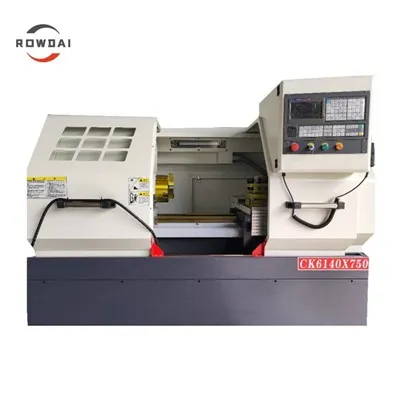
First, let’s get the basics straight: a crankshaft’s job is simple (in theory)—turn linear motion from pistons into rotational power to move a vehicle. But for a crankshaft to do that, every part has to be perfect. The main journals (the round parts that spin in the engine block) and rod journals (the parts that connect to connecting rods) can wear out from thousands of combustion cycles, or get damaged if an engine seizes up. Grinding fixes that by removing a tiny layer of metal to restore those journals to exact size and smoothness. That’s where internal vs. external grinding comes in, and they’re not interchangeable.
Let’s start with what external crankshaft grinding is, since that’s what many of our customers come to us knowing they need. External grinding is the classic method most people picture when they think of crank grinding. The machine holds the crankshaft rigidly between two centers (call it a headstock and tailstock, if you want the tech term) and spins it at a precise speed. Meanwhile, a large grinding wheel—think 12 to 24 inches across, depending on the machine—rotates opposite the crank, pressing against the outside surface of the main or rod journal to shave away material. The goal here is a perfectly round journal, within a tolerance of 0.0001 inches, which is smaller than the thickness of a human hair.
We built our line of external crankshaft grinders for shops that do standard rebuilds: passenger car engines, light-duty trucks, small marine engines, even racing engines that need street-legal specs. Why? External grinding excels at two things: speed and surface finish. For a typical V8, grinding the four main journals and four rod journals takes 20 to 30 minutes start to finish on our entry-level external models. The surface finish we get—Ra 0.2 to 0.4 micrometers—means the bearings that go on top will seat perfectly, hold oil, and last 100,000 miles or more. I had a customer last year, a small rebuild shop in Detroit, tell me his external grinder paid for itself in two months: he used to send crankshafts out to a shop that charged $250 per grind, now he does it in-house for $15 in electricity and wheel costs. That’s the kind of return on investment that makes external grinders the workhorse of the industry.
But here’s the catch: external grinding can only work on surfaces you can reach with the big wheel, right? If your crankshaft has damaged journals that are recessed—say, a center main journal that’s covered by the engine block’s bulkheads, or a rod journal that’s squeezed tight between two connecting rod ends—you can’t get the wheel around it. That’s where internal crankshaft grinding comes in, and it’s a totally different animal.
Internal grinding, as the name implies, works on internal surfaces—but for crankshafts, that means the areas between the journals, or the undercut areas that you can’t access with an external wheel. Wait, let me clarify: I’ve seen too many new machinists mix this up, thinking internal grinding works on the inside of the journals, but really for crank work, it’s about the surfaces you can’t reach externally. The machine setup is totally different: instead of spinning the big wheel, internal grinders use a small grinding spindle—only 3 to 6 inches in diameter, depending on the machine—with a tiny wheel, and that spindle reaches into the gap between journals. The crankshaft spins, and the small wheel rotates at super high speed (up to 20,000 RPM, compared to 3,000 to 5,000 RPM for external wheels) to remove material from that tight space.
We don’t sell as many internal grinders as external ones, but the customers who do need them rely on them for jobs external grinders can’t touch. Think of a heavy-duty truck crankshaft that has a damaged undercut journal, or a marine crank for a big ship engine where the journals are packed so tight there’s no room for an external wheel. Or even vintage aircraft engine crankshafts—those have tight clearances, and one wrong move with an external grinder can cost thousands in parts. Our internal grinders are built for precision in those cramped spaces: the CNC models we have can hold a tolerance of 0.00005 inches, which is twice as tight as what external grinders can do. That’s non-negotiable for heavy-duty or specialty work.
Now, let’s talk about the key differences that matter to you, not just specs. First, accessibility: external grinders can only handle exposed journals. If your work is mostly standard passenger car rebuilds, you’re almost always working with exposed journals, so external is your go-to. Internal grinders are for when you’re dealing with recessed, undercut, or tight-space journals—no exceptions. I once had a customer who tried to use an external grinder on a diesel truck crank with a damaged inner main journal; he scored the crank so bad he had to scrap it and order a new one. That $1,200 mistake could have been avoided with an internal grinder.
Next, speed and output. External grinders are fast. Our top-of-the-line external CNC grinders can do a V8 crank in 15 minutes, which is perfect for a shop that turns around 50 crank jobs a month. Internal grinders are slower—because the small wheel has to work in a tight space, the material removal rate is about half that of external. That means if you’re doing high-volume work, internal grinders will bottleneck your operation. I tell our customers: if you’re not regularly working on cranks with recessed journals, save the money and go external. The extra cost of an internal grinder won’t pay for itself in speed or volume.
Surface finish is another big one. External grinders produce a smoother surface because the big wheel has more abrasive grains in contact with the journal, so it leaves a finer finish. Internal grinders, while super precise, have a slightly rougher finish—Ra 0.4 to 0.8 micrometers, compared to 0.2 to 0.4 for external. Why does that matter? If you’re putting standard bearings on, the rougher internal finish can cause early wear if you don’t hone the bearings extra. For specialty bearings, like tri-metal bearings, you might get away with it, but it’s not ideal. That’s why most heavy-duty shops still use external grinders for the exposed journals, and internal only for the tight spaces.
Then there’s cost. Our entry-level external grinder runs about $18,000, while a basic internal grinder is around $22,000. For CNC models, the gap is bigger: external CNC is $35,000, internal CNC is $48,000. And when it comes to maintenance, internal grinders are more expensive to keep up. The small spindles wear out faster, and the tiny grinding wheels cost two to three times more per piece than external wheels. A set of external wheels costs $150, while a set of internal wheels is $450. That adds up over time, especially if you’re using the grinder every day.
Wait, let’s not forget precision for specialty jobs. I mentioned earlier that internal grinders have a tighter tolerance—0.00005 inches vs. 0.0001 for external. That’s a huge difference if you’re working on racing engines, especially Formula 1 or drag racing, where every thousandth of an inch matters. But even for high-performance street engines, that extra precision can mean more power and longer life. But again, that only applies to the recessed areas. The main journals and rod journals for a race engine are still external, so you’d still need an external grinder for those.
I want to be clear here—this isn’t a “one is better than the other” thing. It’s about using the right tool for the job. I’ve seen shops that bought an internal grinder and didn’t need it, and they regretted it because it sat unused for 80% of the time, taking up floor space they could have used for another external grinder. On the flip side, I’ve seen shops that tried to do heavy-duty truck work with an external grinder, and they ruined three cranks before they finally got an internal one.
Let me give a real example from last year: a shop in Texas that does both standard rebuilds and heavy-duty diesel work. They started with one external grinder, doing 40 jobs a month. Then they started getting more diesel crank jobs, which had those tight inner main journals. They tried grinding one with the external grinder and damaged it, so they ordered a small internal grinder. Now they use the external for all the exposed journal work, and the internal for the diesel undercuts. Their monthly revenue went up 25% because they could take both standard and specialty jobs, and they didn’t have to send any work out. That’s the sweet spot: using both when your work is mixed, but not wasting money on the other if it’s not needed.
If you’re in the market for a crankshaft grinding machine, here’s the advice I give every customer: First, audit your current jobs. Count how many cranks you work on in a month, and how many of them have recessed, undercut, or tight-space journals. If less than 10% of your jobs need that, skip the internal grinder—stick with external. If more than 20% are specialty heavy-duty or racing jobs, then an internal grinder is worth the investment. And if you’re just starting out, start with an external grinder. You can add an internal one later when you have the volume to support it.
I also want to address a common myth I hear: some people think internal grinders are only for new crankshafts, but that’s not true. Most of the time, they’re used for repair work—fixing damaged journals that can’t be reached externally. New cranks are usually made to spec, so they don’t need grinding unless there’s a defect, which is rare. The work our machines do is 90% repair, 10% new parts, so internal grinders are all about repair in tight spots.
At the end of the day, whether you choose internal or external comes down to two things: the work you do, and the return on investment you need. External grinders are fast, cheap, and perfect for high-volume standard work. Internal grinders are precise, for specialty jobs, but slower and more expensive. As a supplier, I’m not here to push one over the other— I’m here to help you pick the one that fits your shop.

If you’re ready to stop sending crank work out and bring it in-house, or you’re looking to upgrade your current setup, we can walk you through your specific needs. We offer demos on our machines, so you can see how they work on your typical jobs, and we provide training so your team can use them safely and effectively. Whether you’re a small one-man shop or a large industrial operation, we have a machine that fits your budget and your work. Don’t waste money on a tool you won’t use, and don’t risk ruining parts with the wrong equipment. Reach out to us today to discuss your requirements and find the right crankshaft grinding machine for your business.
Horizontal Machining Center References:
- Society of Automotive Engineers (SAE). “Crankshaft Machining and Grinding Standards.” SAE International, 2022.
- Machine Tool Builders’ Association (MTBA). “Crankshaft Grinding Machine Capabilities and Specifications.” MTBA Technical Report, 2021.
- Modern Machine Shop. “Internal vs. External Grinding for Crankshaft Repair: A Shop Owner’s Guide.” Modern Machine Shop, Vol. 54, No. 8, 2020, pp. 45-51.
- Heavy Duty Manufacturers Association (HDMA). “Crankshaft Grinding for Heavy-Duty Diesel Engines.” HDMA Engineering Bulletin, 2021.
- Automotive Aftermarket Suppliers Association (AASA). “Equipment Investment Guidelines for Small Engine Rebuild Shops.” AASA Report, 2022.
Henan Rowdai Machinery Equipment Co., Ltd.
As one of the most professional crankshaft grinding machine manufacturers in China, we’re featured by quality products and good price. Please rest assured to buy high-grade crankshaft grinding machine for sale here from our factory. If you have any enquiry about cooperation, please feel free to email us.
Address: Building 9, E-Commerce Industrial Park, High-Tech Zone, Zhengzhou, Henan, China
E-mail: rowdai@rowdai.com
WebSite: https://www.rowdai.com/
